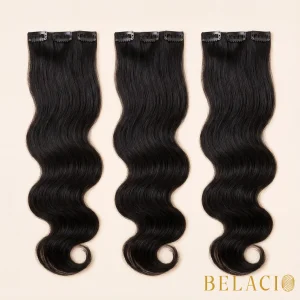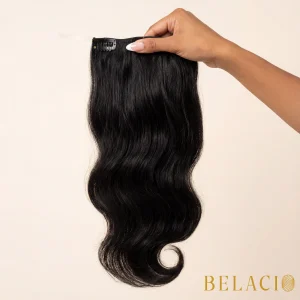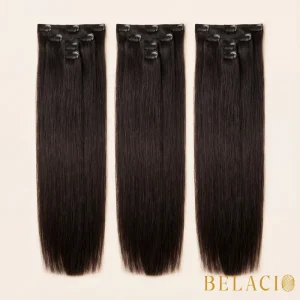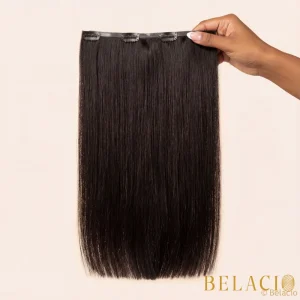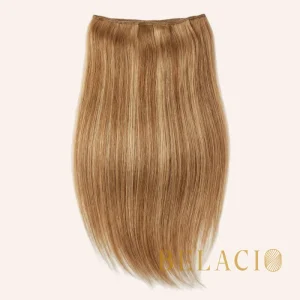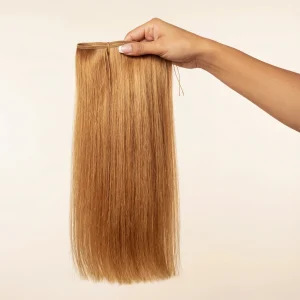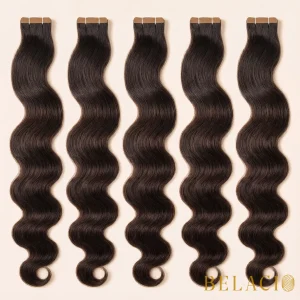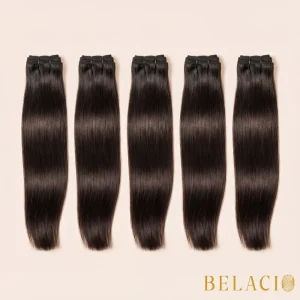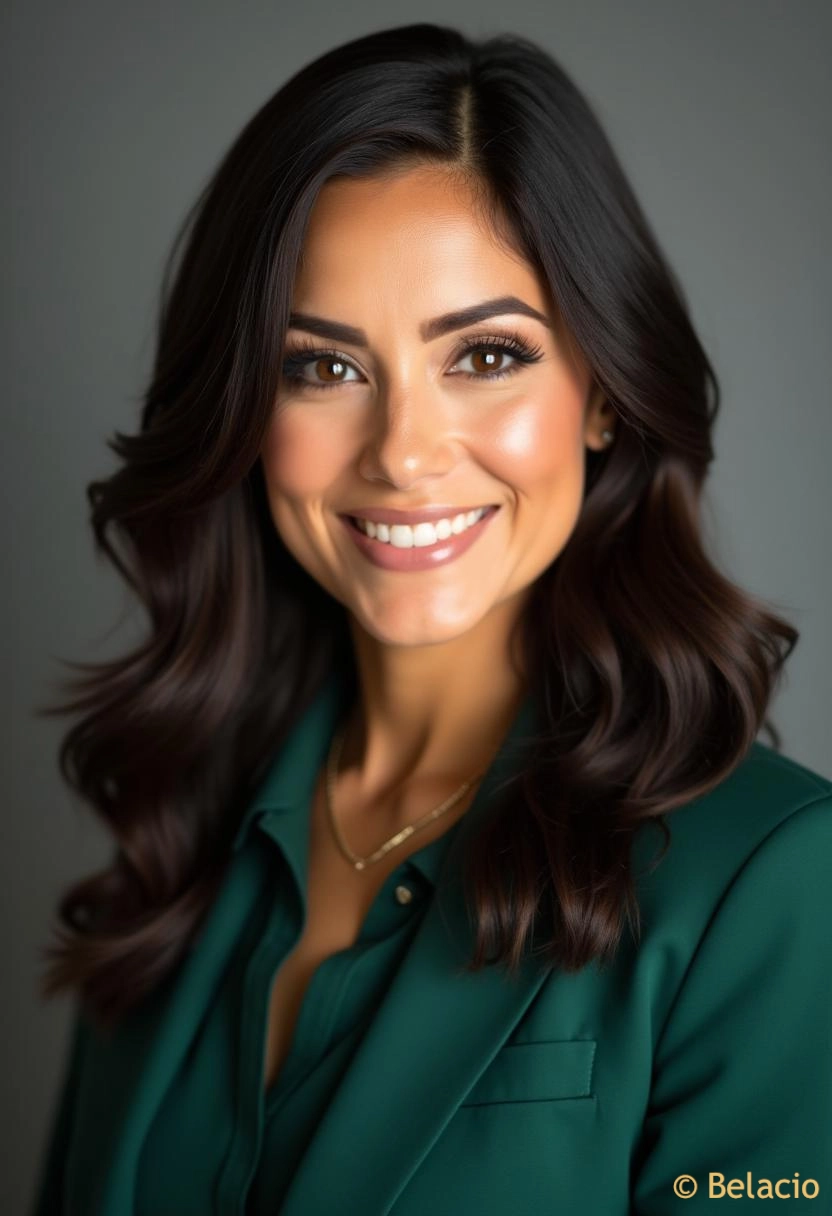
1B suits the broadest range, working as a straight match on cool, neutral, and olive undertones across light through deep complexions. Warm undertones, including many tan and morena skin tones, usually look best with 1B as a base plus caramel, honey, or chocolate dimension rather than as a flat color. The determining factor is undertone rather than depth, and Caribbean sunlight is what reveals it.
Choosing 1B natural black sounds simple until you start wondering whether it will look too cool against warm tan skin, clash with golden undertones, or read harshly in Puerto Rico’s bright tropical sunlight.
Women across the island ask the same questions. Will 1B blend with my natural leave-out, or should I go warmer with shade 2 instead? This guide covers which skin tones and undertones 1B flatters most, how to test for the right match, and when to add highlights or lowlights so your extensions look seamless rather than applied.
1B Compared to the Shades Around It
When shopping for clip in hair extensions or wefts, the difference between jet black, 1B, and shade 2 matters more than most people expect.
Jet black, shade 1, is the absolute darkest option with cool or blue-black reflects. It is rarely seen in natural hair and can look harsh on very fair skin.
1B natural black is softer and more neutral, revealing faint brown undertones in strong light. That subtle warmth is precisely what makes it the closest match to virgin, unprocessed dark hair and what makes it versatile across skin tones.
Shade 2, dark brown or brown-black, sits one step lighter with visible brown warmth. It suits warm undertones and lighter to medium complexions wanting lower contrast.
The quickest way to determine your match is to view your natural hair under bright sunlight. If it still reads black, choose 1B. If brown tones appear, choose shade 2.
How Undertone Determines Your Match
Undertone matters more than skin depth here. Two people with visibly different complexions can share an undertone and suit the same shade, while two people with similar depth and opposite undertones will not.
Cool Undertones
Pink or blue veins at the wrist and rosy skin indicate cool undertones. 1B works beautifully on cool skin because its neutral-to-slightly-warm character does not clash with your natural coloring.
The relative softness compared with jet black prevents the stark contrast that can leave fair, cool-toned skin looking washed out. For light skin with cool undertones, 1B delivers dramatic depth without harshness.
Warm Undertones
Warm-toned skin shows green veins and carries golden or peachy coloring. Warm browns, honey, and caramel tones are typically recommended over very cool blacks for this group.
Pure 1B can work on warm skin, but it usually looks best paired with dimension. Consider adding caramel and honey highlights to a 1B base so the overall palette harmonizes with your skin’s warmth rather than opposing it.
Olive and Neutral Undertones
Olive skin has a distinctive greenish or golden-neutral quality. Avoid overly beige or ashy shades, which can leave olive complexions looking dull or sallow.
1B works well as a base for olive skin, particularly when you add cool or warm accents depending on which direction your olive tone leans. Neutral undertones can carry both warm and cool, which makes 1B an ideal versatile anchor.
1B Across Puerto Rican Skin Tones
The table below summarizes the approach by complexion and undertone.
| Skin tone | Undertone | Recommended approach |
| Very fair, light | Cool or pink | Pure 1B, dramatic but softer than jet black |
| Very fair, light | Warm, peachy | 1B base with caramel or honey face-framing |
| Light-medium, olive | Cool or neutral | Pure 1B, or ash-brown highlights |
| Light-medium, olive | Warm-leaning | 1B root into chocolate or caramel, or shade 2 |
| Tan, morena | Warm golden | 1B with caramel, honey, or reddish-brown dimension |
| Deep, richly melanated | Cool or neutral | Pure 1B, natural and elegant as-is |
| Deep, richly melanated | Warm | 1B with subtle warm highlights for movement |
Very Fair and Light Skin
For fair-skinned Puerto Ricans, 1B provides dramatic contrast that stays softer than jet black. This flatters particularly well with blue or pink undertones.
If your fair skin carries warm peachy or golden tones, 1B as a flat color can read too severe. Adding warmer brown highlights or face-framing pieces in caramel or honey softens the effect and pulls the palette toward your skin’s natural warmth.
Light-Medium and Olive Complexions
This range is common across Puerto Rico and works beautifully with 1B when matched correctly to undertone. For cool or neutral olive skin, the neutrality of 1B produces a polished, cohesive result.
Pair it with ash-brown highlights to maintain a cool palette, or keep it sleek and monochromatic for a sophisticated finish. For warm-leaning olive skin, combine 1B at the root with rich chocolate or caramel through the mid-lengths, or consider shade 2 for a softer overall effect.
Tan and Morena Skin
Tan and morena complexions are extremely common across the island, which makes finding the right dark shade a frequent question. Guidance for morena skin typically favors warm browns, reds, and dark honey tones while advising against very cool blacks.
Black shades that carry warm reflections create a cohesive overall look, one that enhances warm undertones rather than fighting against them. 1B works well on tan skin when combined with dimension, whether through caramel, honey, or reddish-brown accents in balayage or by mixing wefts of 1B and shade 2.
A morena client with warm golden undertones might wear 1B at the roots transitioning to warm chocolate and caramel toward the ends. That sun-kissed dimension complements the skin’s natural warmth while maintaining depth where it matters.
Deep and Richly Melanated Skin
Rich blacks and dark browns are classic, flattering choices that echo the natural depth of melanated skin. For deep skin with cool or neutral undertones, 1B reads as natural and elegant without any adjustment.
For deep skin with warm undertones, black carrying warm reflections enhances that warmth. 1B serves as an excellent baseline, particularly with subtle warm highlights added for movement and dimension.
Why Caribbean Light Changes the Answer
Puerto Rico’s intense year-round sunshine changes how hair color appears. Bright natural light penetrates the hair shaft and reveals undertones far more clearly than indoor lighting does.
In strong Caribbean sun, inky jet black reads cooler and more intense than it does inside. The softer neutrality of 1B feels more wearable and natural against sunlit skin, particularly for everyday wear.
This is why evaluating your natural color indoors produces so many mismatches. What looks uniformly black under a household bulb frequently reveals warm brown outdoors, which changes the recommendation entirely.
Matching to Your Leave-Out
If your style includes leave-out, where some of your natural hair blends with the extensions, correct shade matching becomes critical to avoid a visible transition line.
Match to the mid-lengths or ends of your natural hair rather than the root, since the ends sit directly against the extensions. Roots are almost always darker than the rest of the hair, and matching to them produces extensions that read too dark exactly where they need to blend.
Your eyebrow color is another useful reference. If your hair closely matches your brows, choose 1B or shade 2 rather than jet black to avoid an unnatural disparity between the two.
When to Use Pure 1B Versus Adding Dimension
Choose Solid 1B When
- Your natural hair appears black even in sunlight, with neutral or slightly cool undertones
- You are creating sleek, polished styles like silk presses or smooth blowouts
- You have cool or neutral undertones and want to avoid introducing warmth
- You prefer a classic, monochromatic look with maximum depth
Consider Shade 2 or Brown-Black When
- You have fair skin with warm undertones and want depth without high contrast
- Your natural hair shows warm brown tones in sunlight
- You have warm tan or morena skin and want to enhance rather than contrast with your natural warmth
Adding Dimension to 1B
For warm undertones, incorporate caramel, copper, or warm chocolate highlights into a 1B base. This pulls the overall palette toward your skin’s warmth while maintaining depth at the root.
For cool undertones, add ashy or neutral brown highlights for movement without unwanted warmth, creating dimension while respecting your cool coloring.
Pre-blended options combining dark natural black at the root with lighter brunette and caramel running through the ends suit medium to tan skin wanting sun-kissed dimension while still preserving a dark root at the scalp. Face-framing highlights specifically reduce harshness on fair or very warm skin.
Quality and Durability in Island Conditions
1B is often the closest shade to virgin, unprocessed hair, which means better cuticle health, less tangling, and improved styling performance. All three matter considerably in Puerto Rico’s humidity.
Less processed remy human hair also resists fading and color shifting from sun and saltwater exposure better than heavily dyed blacks do. That makes 1B a sensible long-term choice for island living rather than only an aesthetic one.
Caring for extensions here requires specific habits. Use sulfate-free shampoo and cool water, deep condition weekly, minimize heat styling, apply UV-protectant spray before sun exposure, and rinse immediately after beach or pool time.
For textured hair specifically, moisturize regularly with oils such as argan or coconut and deep condition every week. These keep 1B looking fresh rather than dull as the months pass.
Working with a Caribbean hair extension supplier that sources raw Vietnamese hair means the base color sits naturally in the off-black range rather than being dyed there. Anyone uncertain about their undertone can get shade matching help before ordering rather than guessing from a screen.
Key Takeaways
- 1B suits the broadest range of Puerto Rican skin tones, working as a straight match on cool, neutral, and olive undertones from light through deep complexions.
- Undertone matters more than skin depth. Two people with visibly different complexions can share an undertone and suit the same shade, while similar depth with opposite undertones will not.
- Warm undertones, common on tan and morena skin, usually look best with 1B as a base plus caramel, honey, or chocolate dimension rather than as a flat monochromatic color.
- Test your match in bright sunlight rather than indoors, because Caribbean light reveals undertones that household bulbs completely conceal. Still black in the sun means 1B; brown tones appearing means shade 2.
- Match to your mid-lengths or ends rather than your roots, especially with leave-out, since roots run darker and the ends are what actually sit against the extensions.
- 1B sits closest to virgin unprocessed hair, which means better cuticle health and less fading from sun and saltwater than heavily dyed blacks, making it practical as well as flattering here.
Frequently Asked Questions
What skin tone looks best with 1B hair extensions?
1B suits the widest range, working as a direct match on cool, neutral, and olive undertones across light through deep complexions. Warm undertones typically look best with 1B as a base plus caramel or chocolate dimension.
How do I find my undertone?
Look at the veins on your wrist. Blue or pink veins with rosy skin indicate cool undertones, green veins with golden or peachy coloring indicate warm, and olive skin carries a distinctive greenish or golden-neutral quality.
Does 1B work on warm or morena skin?
Yes, but usually with dimension rather than as a flat color. Adding caramel, honey, or reddish-brown accents through balayage, or mixing 1B and shade 2 wefts, harmonizes with warm undertones instead of opposing them.
Should I choose 1B or shade 2?
Look at your natural hair in direct sunlight. If it still reads black, choose 1B. If brown tones appear, shade 2 will blend more naturally. Shade 2 also suits fair warm skin wanting depth without high contrast.
Why does sunlight matter for matching?
Because bright natural light penetrates the hair shaft and reveals undertones that indoor lighting hides. Hair that looks uniformly black under a household bulb frequently shows warm brown outdoors, which changes the recommendation entirely.
Is jet black ever the right choice?
Occasionally, for hair that reads genuinely ink-black even in direct sun with cool or neutral skin. It is chosen far more often than it suits, and its cool blue reflects can look harsh on both fair and warm complexions.
How do I match extensions with leave-out?
Match to your mid-lengths or ends rather than your roots, since the ends sit directly against the extensions. Roots are almost always darker, so matching to them produces a visible transition line.
Can my eyebrows help me match?
Yes, and it is an underused check. If your hair closely matches your brow color, choose 1B or shade 2 rather than jet black, since a large disparity between brows and hair reads as unnatural.
Does 1B hold up better than other shades in this climate?
Generally yes. Because 1B sits closest to virgin unprocessed hair, it typically has better cuticle health and resists fading from sun and saltwater better than heavily dyed black shades do.
How should I care for 1B in Puerto Rico?
Sulfate-free shampoo with cool water, weekly deep conditioning, minimal heat styling, UV-protectant spray before sun exposure, and a fresh-water rinse immediately after any beach or pool time.
Conclusion
The most useful reframe is that 1B is not a shade for one skin tone. It works across a genuinely wide range, from very fair through richly melanated, because the variable that determines fit is undertone rather than depth. Cool, neutral, and olive undertones wear 1B as a straight match. Warm undertones, which describe a great many tan and morena complexions across the island, wear it best as a foundation with caramel, honey, or chocolate worked through rather than as a flat block of color.
Caribbean light is what makes the difference visible, and it is also what makes indoor shade matching so unreliable here. Hair that reads uniformly black inside routinely shows its brown outdoors, which is exactly the information you need before choosing between 1B and shade 2. Check in daylight, match against your mid-lengths rather than your roots, use your brows as a second reference, and 1B will land right far more often than not.
Find the 1B match that works with your undertone, not against it.
Get shade matching help from the Belacio team.