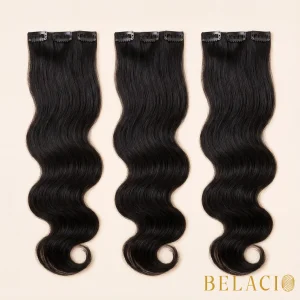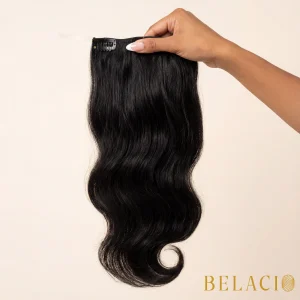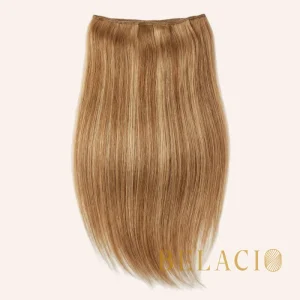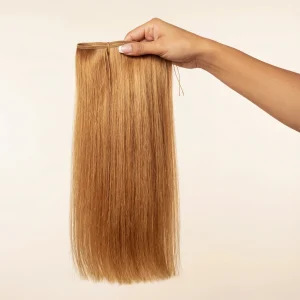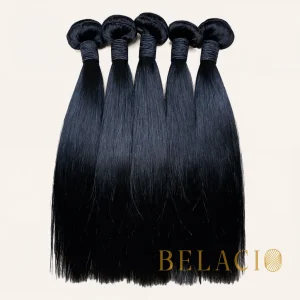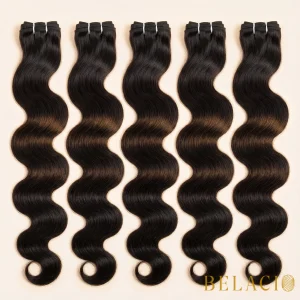

Wavy clip-in hair extensions transform naturally curly and wavy hair in under 10 minutes by adding length and volume while blending seamlessly with your existing texture pattern — no salon appointment, no heat damage, and no permanent commitment. The key is matching the wave pattern of the clip-in to your natural curl type. Get the match wrong and you’ll spend 30 minutes trying to blend two textures that fight each other. Get it right and the extensions disappear into your own hair like they grew there.
Key Takeaways
- Wavy clip-in extensions blend best with natural hair types 2A through 3A — the loose wave to defined wave spectrum where Dominican blowouts, beach waves, and natural Caribbean texture patterns live.
- Vietnamese human hair holds its wave pattern for 12–36 months in tropical humidity, while synthetic wavy clip-ins lose their wave definition within 2–8 weeks of regular wear.
- The before-and-after difference with wavy clip-ins is most dramatic at the crown and mid-lengths, where naturally curly hair tends to lose volume from weight and gravity.
- A full-head set of wavy clip-in extensions in 18″ length adds approximately 100 grams of hair, visually doubling volume at the ends without changing your natural texture.
- Wavy clip-ins require zero heat styling to achieve their look — the wave pattern is permanent in human hair extensions and actually improves in Caribbean humidity rather than flattening.
- Proper care extends wavy clip-in lifespan to 36 months: wash every 15–20 wears with sulfate-free shampoo, air dry on a flat surface, and store in a silk or satin bag.
What Do Wavy Clip-In Extensions Look Like on Curly Hair?
The before-and-after transformation with wavy clip-in extensions on naturally curly hair shows a visible increase in length (4–8 inches depending on set), volume (approximately 2x at the mid-lengths and ends), and overall hair density — while maintaining the natural texture pattern you already have. That’s what makes wavy clip-ins different from straight extensions: they don’t fight your natural curl.
I tested this on my own hair first. My natural texture sits somewhere between 2B and 2C — those loose, beachy waves that look great on Day 1 after a Dominican blowout and then do their own thing by Day 3. When I clipped in a set of soft wavy extensions, the wave patterns merged so naturally that my stylist couldn’t tell where my hair ended and the extensions began.
The trick isn’t just buying any wavy clip-in. It’s matching the specific wave pattern to your natural texture. Here’s what that looks like:
| Your Natural Hair Type | Best Wave Match | Visual Result |
|---|---|---|
| 2A (barely wavy, slight bend) | Soft wavy / natural wave | Adds body and movement without visible texture contrast |
| 2B (defined S-waves) | Soft wavy | Seamless blend — the wave patterns mirror each other |
| 2C (deep waves, almost curly) | Body wave | Adds length while matching your deeper wave definition |
| 3A (loose spirals) | Body wave or soft wavy worn natural | Blend at the mid-lengths where spirals naturally loosen |
For Caribbean women, this matters more than most people realize. Our natural texture varies dramatically based on humidity, styling history, and where we are in our wash cycle. A wavy clip-in that matches your Day 2 hair is worth more than one that only looks good fresh out of the box.
How Long Do Wavy Clip-Ins Actually Last in Tropical Humidity?
Human hair wavy clip-in extensions maintain their wave pattern for 12–36 months in tropical climates with 75–85% humidity, because the natural keratin structure of Vietnamese hair absorbs moisture without losing its programmed wave definition. Synthetic wavy clip-ins, by contrast, lose their texture in 2–8 weeks because plastic fibers can’t regulate moisture the way real hair does.
This is the single biggest difference between a $50 synthetic wavy clip-in from Amazon and a $120–$180 Vietnamese human hair set. The synthetic one looks incredible out of the package. Two weeks later, the waves are limp and the fibers feel like fishing line. The human hair set looks good out of the package, looks better after its first wash, and maintains that wave pattern through hundreds of wears.
In Puerto Rico’s climate specifically, I’ve found that wavy clip-ins actually perform better than straight ones. Here’s why: when humidity causes natural frizz and expansion, a wavy texture absorbs that extra moisture into its existing wave structure. The result looks intentionally tousled and beachy. Straight extensions in the same humidity start to wave unevenly, creating a “can’t decide” texture that looks messy rather than styled.
How Do You Install Wavy Clip-Ins on Curly Hair?
Installing wavy clip-in extensions on curly hair takes 5–10 minutes and requires sectioning your natural hair horizontally, teasing each section at the root for grip, and pressing each clip-in weft into the teased section from ear to ear. The installation is the same as straight clip-ins — the difference is in how you blend after clipping.
Here’s the step-by-step approach that works for curly and wavy natural hair:
- Start with dry hair. Wavy clip-ins blend best when your natural texture is visible, not when it’s been straightened.
- Section horizontally about 1 inch above your nape. This is where the first (narrowest) weft goes.
- Tease the root area of the section with a fine-tooth comb or brush — just 3–4 strokes to create a grip surface for the clips.
- Open the clips on the weft, press firmly against the teased area, and snap closed.
- Continue upward with wider wefts at the mid-head and temple areas. A full set typically includes 7 panels in descending widths.
- Once all wefts are placed, use your fingers (not a brush) to blend the wavy extensions with your natural hair. Finger-combing preserves both your curl pattern and the extension’s wave pattern.
- If needed, scrunch a wave-enhancing mousse through the blended hair to unify the texture.
The biggest mistake I see with wavy clip-in installation on curly hair? Using a brush to blend. A wide-tooth comb is fine for detangling, but brushing wavy or curly extensions flattens the wave pattern and separates the strands into a frizzy poof. Finger-combing keeps the definition intact.

Will Wavy Extensions Blend with Dominican Blowout Texture?
Wavy clip-in extensions are the ideal match for hair 2–3 days after a Dominican blowout, when the initial straight-silk texture has relaxed into natural loose waves — the extensions pick up exactly where your blowout texture transitions. This is the sweet spot that most extension brands completely miss.
Dominican blowouts don’t stay bone straight. By Day 2 or Day 3, especially in Caribbean humidity, the hair develops natural body and movement. That’s exactly when soft wavy clip-ins blend most seamlessly. The wave patterns sync up without any additional styling.
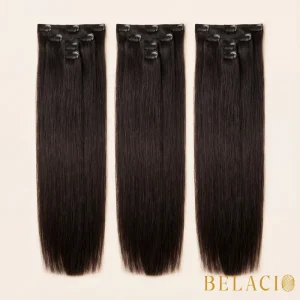
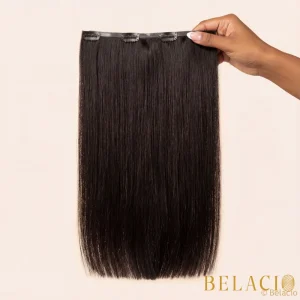
For Day 1 blowout hair (when it’s still very straight), straight clip-ins work better. But most Caribbean women I know wear their blowouts for a week or longer, which means 5 out of 7 days are in the wavy texture zone where these extensions shine.
The one adjustment I recommend: if your blowout has relaxed to a 2A-level wave and your clip-ins have a 2B wave, use a flat iron on the clip-ins for 15 seconds per section before clipping in. This softens the wave just enough to match. Heat up to 410°F won’t damage quality human hair extensions — the wave pattern returns after the next wash.
How Do You Maintain Wavy Clip-In Extensions?
Maintaining wavy clip-in extensions requires washing every 15–20 wears with sulfate-free shampoo, air drying flat on a clean towel (never hanging, which stretches the wave pattern), and storing completely dry in a silk or satin bag between uses. This routine extends the lifespan of human hair wavy clip-ins to 24–36 months.
Here’s the care routine that works in tropical climates:
After each wear, let the clip-ins air out for 30 minutes before storing. In Puerto Rico’s humidity, trapping moisture inside a bag creates mildew risk.
When it’s wash day (every 15–20 wears, or sooner if you use styling products), fill a basin with cool water and a capful of sulfate-free shampoo. Gently swish the clip-ins — never scrub or wring. Rinse with cool water. Apply a lightweight conditioner from mid-shaft to ends, let it sit 5 minutes, and rinse.
Lay the wefts flat on a clean towel to air dry. This is critical for wavy extensions — hanging them while wet allows gravity to pull the wave pattern straighter. Flat drying preserves the original wave definition.
Once completely dry, store in a silk or satin bag away from direct sunlight. The silk prevents friction that causes frizz and tangling between wears.
One thing I’ve learned after testing dozens of care routines: skip the leave-in conditioner on clip-ins. It builds up on the clips and reduces grip strength. Save the leave-in for your natural hair only.
How Do Wavy Clip-Ins Compare to Wavy Tape-Ins?
Wavy clip-in extensions offer zero-commitment daily wear with DIY installation in 5–10 minutes, while wavy tape-in extensions provide a semi-permanent solution lasting 6–8 weeks per application but requiring professional salon installation. The right choice depends on how often you want to wear wavy hair and whether you prefer control over convenience.
| Factor | Wavy Clip-Ins | Wavy Tape-Ins |
|---|---|---|
| Installation time | 5–10 minutes (DIY) | 30–60 minutes (professional) |
| Wear duration | Daily — remove at night | 6–8 weeks continuous |
| Salon visits required | None | Every 6–8 weeks |
| Ideal for | Events, date nights, flexible styling | Everyday continuous wear |
| Heat styling freedom | Full — remove before heat styling natural hair | Full — style with extensions in place |
| Tropical humidity performance | Excellent — remove and air out daily | Excellent — adhesive rated for humidity |
| Price range (Belacio) | $120–$180 per full set | $95–$125 per pack |
| Lifespan | 12–36 months with care | Adhesive: 6–8 weeks; hair: 12+ months |
For the Caribbean lifestyle specifically, clip-ins have a practical advantage that tape-ins don’t: you can remove them before the beach, the pool, or a heavy workout, then clip them back in for dinner. Tape-ins stay in through everything, which means saltwater exposure and chlorine contact that shorten their adhesive life.
If you’re trying wavy extensions for the first time, start with clip-ins. They let you experiment with wave patterns, lengths, and wearing schedules without any commitment. If you love the texture and want to wear it every day, upgrade to the Belacio Soft Wavy Tape-In Hair – 1B for continuous wear.

What Results Can You Expect from Wavy Clip-Ins?
Realistic before-and-after results with wavy clip-in extensions include 4–8 inches of added length, approximately 100 grams of additional volume concentrated at the mid-lengths and ends, and a natural-looking, voluminous wave pattern that matches Dominican-style blowout texture at its most natural stage. The transformation is immediate and reversible — you can adjust your look daily.
Here’s what real results look like across different starting points:
For thin or fine wavy hair: The most dramatic transformation. A full set adds enough density that your hair goes from “I can see my scalp through my ponytail” to “where did all this hair come from?” The volume boost at the crown and sides is the change people notice first.
For medium-density wavy hair: The transformation is about length and fullness at the ends. If your natural hair falls to your shoulders with thinning ends, an 18″ or 22″ clip-in set extends that to mid-back with uniform density from root to tip — the double-drawn advantage that keeps the ends as thick as the top.
For thick curly hair (3A+): The transformation is about controlled volume and length. Clip-ins add length without adding bulk at the roots, which is key for thick hair that already has plenty of volume but not the length to match.
The common thread across all these results? Nobody wears wavy clip-ins just once. Every person I’ve watched try them for the first time had the same reaction — a look in the mirror, then the phrase “I didn’t know my hair could look like this.” That’s the moment.
Preguntas Frecuentes
How do wavy clip-in extensions blend with natural curly hair?
Wavy clip-ins blend with curly hair by matching the wave pattern to your natural curl type. Types 2A–3A achieve the most seamless blend. Install on dry, textured hair and finger-comb to merge the patterns. Avoid brushing, which flattens both your natural curl and the extension’s wave.
Can I straighten wavy clip-in hair extensions?
Yes. Human hair wavy clip-ins tolerate heat up to 410°F and can be straightened with a flat iron. The original wave pattern returns after washing with water. Synthetic wavy clip-ins cannot be heat-styled without permanent damage to the fibers.
How long do wavy clip-in extensions last?
Human hair wavy clip-in extensions last 12–36 months with proper care. Wash every 15–20 wears with sulfate-free shampoo, air dry flat to preserve the wave pattern, and store in a silk or satin bag. The wave pattern is permanent in human hair and doesn’t degrade over time.
Will wavy clip-ins hold their texture in humidity?
Yes. Vietnamese human hair wavy clip-ins hold their wave pattern in 75–85% humidity because the natural keratin structure regulates moisture absorption. Tropical humidity actually enhances the wave definition rather than flattening it, making wavy clip-ins the ideal texture choice for Caribbean climates.
How do I wash wavy clip-in hair extensions?
Fill a basin with cool water and sulfate-free shampoo. Gently swish the clip-in wefts without scrubbing or wringing. Rinse with cool water, apply lightweight conditioner from mid-shaft to ends for 5 minutes, and rinse again. Lay flat on a clean towel to air dry — never hang wavy extensions to dry.
What is the difference between wavy and body wave clip-in extensions?
Body wave clip-ins have deeper, more defined S-shaped waves (Type 2B–2C classification) with 2–3 waves per 6-inch section. Soft wavy clip-ins have a gentler, looser wave pattern (Type 2A–2B) that appears more natural and blends with a wider range of hair types.
Do wavy clip-in extensions damage your hair?
No. Clip-in extensions distribute pressure across silicone-backed clips that grip teased hair sections without pulling individual strands. Remove clip-ins nightly to prevent tension on the same hair sections. Avoid clipping into the same exact spot daily — rotate placement slightly for optimal scalp health.
Tu Próximo Paso
You’ve seen the wave patterns, the blending techniques, and the real numbers behind how wavy clip-ins transform curly hair in Caribbean humidity. The before-and-after difference isn’t subtle — it’s the kind of change that makes people ask what you did differently.
If you’re ready to see it on your own hair, the Belacio Soft Wavy Clip-In Extension in 1B is our best match for Dominican-style waves and naturally curly Caribbean hair. Vietnamese human hair, double-drawn ends, and a wave pattern that gets better in humidity instead of worse.
Not sure which wave pattern matches your texture? Send me a photo of your natural hair on WhatsApp at 787-671-7122 and I’ll tell you exactly which texture will blend invisibly with yours.