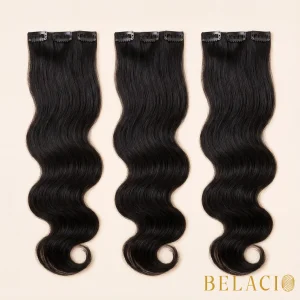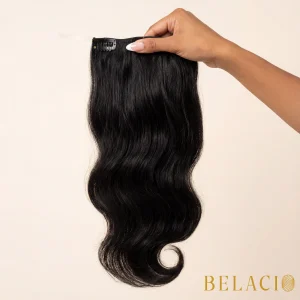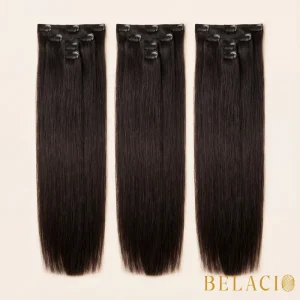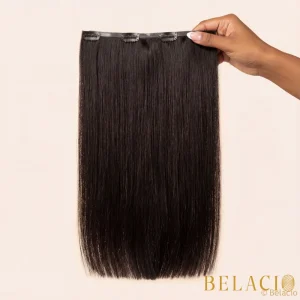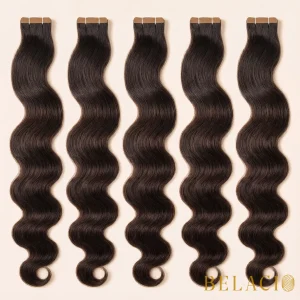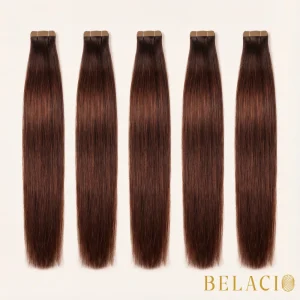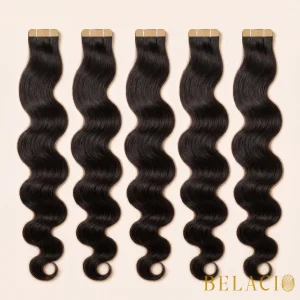

Tape-in hair extensions are semi-permanent weft attachments using medical-grade adhesive tape that bond to natural hair in sandwich formation, lasting 6-8 weeks with proper maintenance and professional reapplication.
Professional hairstyles with tape-in extensions demand systematic protocols rather than guesswork. Sleek low ponytails require horizontal subsection placement, voluminous blowouts need strategic layering, and Hollywood curls demand 70% dampness preparation with diagonal barrel wrapping. Specialty updos succeed through horseshoe patterns and offset positioning that prevent vertical alignment failures, transforming extension styling into measurable results across fifteen documented techniques.
Key Takeaways
- Strategic placement at horizontal subsections and horseshoe patterns prevents tape exposure while maintaining natural blending
- Extensions must be installed 2-3 inches from roots to accommodate ponytails and updos without bending tape bonds
- Apply heat protectant before styling and press bonds at 200°F for optimal adhesion and longevity
- Prepare extensions at 70% dampness for curled styles using diagonal barrel wrapping techniques
- Conceal tape bonds through strategic layering and pancaking techniques while using lightweight finishing sprays
Tape-In Extension Style Overview
| Hairstyle Type | Styling Time | Skill Level | Hold Duration | Best Occasion |
| Sleek Low Ponytail | 10-15 minutes | Beginner | All day | Office, professional settings |
| Voluminous Blowout | 30-40 minutes | Intermediate | 24-48 hours | Daily wear, events |
| Beach Waves | 20-30 minutes | Intermediate | 48-72 hours | Casual, weekend outings |
| Hollywood Curls | 35-45 minutes | Advanced | 12-24 hours | Formal events, galas |
| Braided Crown | 25-35 minutes | Advanced | All day | Weddings, special occasions |
| High Bun | 10-15 minutes | Intermediate | 8-12 hours | Work, formal events |
| Side-Swept Waves | 25-30 minutes | Intermediate | 12-24 hours | Date night, parties |
| Layered Bob | 20-25 minutes | Advanced | All day | Daily professional wear |
Sleek Low Ponytail With Volume Boost
The sleek low ponytail exposes installation failures through visible tape tabs and bulky wefts. Extensions positioned in horizontal subsections parallel to the floor maintain flawless blends while tapes stay flat against the scalp, invisible even when hair pulls tight.
Application Protocol:
- Position extensions in horizontal subsections maintaining parallel alignment to floor
- Use thin subsections to eliminate bulk and concentrate volume at mid-length
- Wrap front sections around elastic to conceal tape edges completely
- Secure with strong elastic bands for structure without compromising extension integrity
- Strategic avoidance of gathering zones prevents tab exposure during styling
Proper application and removal by trained professionals prevents hair breakage and thinning. This systematic approach delivers boardroom-ready results consistently without visible attachment points.
Voluminous Blowout With Layered Lengths
Strategic placement around crown and face-framing areas creates authentic dimension without exposure. Press bonds at precisely 200°F for superior adhesion that withstands professional styling demands.
Blowout Technique:
- Direct airflow downward while lifting roots upward with round brushes
- Cut extensions alongside natural hair to eliminate detectable lines
- Use point cutting and thinning shears for textured, layered lengths
- Re-press bonds every other day for longevity
- Apply heat protectant only to mid-lengths and ends
- Wait 48 hours before shampooing after installation
Dry roots first while pressing panels together to maintain bond integrity. This contradictory technique of opposing movements protects bonds while maximizing volume for professional results.
Textured Beach Waves for Effortless Elegance
Textured waves demand precise sectioning and lightweight products for lasting hold without added weight. Professional styling requires proper preparation to prevent damage to both natural hair and extensions.
Styling Beach Waves Tutorial
Wave Creation Steps:
- Create strategic three-layer sectioning: top, middle, bottom layers
- Work methodically with 1-inch to 1.5-inch curling wand at 300-350°F
- Wrap hair away from face for 5-10 seconds per section
- Alternate curling directions between adjacent sections for natural variation
- Avoid direct heat near tape bonds to preserve adhesive integrity
- Apply texturizing spray and finger-scrunch without brushing
For gentler approaches, the twist-and-pin technique on damp hair creates natural texture overnight. Tape-ins’ comfortable and lightweight fit accommodates both heat and heatless methods seamlessly.
Products for Lasting Texture
Essential Product Requirements:
- Polyurethane-based replacement tapes for textured styles, maintaining bonds through repeated styling
- Extension-grade texture sprays with balanced polymers for wave definition without adhesive interference
- Sulfate-free maintenance systems preserving wave structure and tape security
- Lightweight mousses or sea salt sprays applied to damp hair for hold without weight
Premium products extend styled texture from days to weeks. The difference between failed appointments and client retention hinges entirely on proper product selection and application technique.
Classic Hollywood Curls With Added Thickness
Hollywood curls on tape-in extensions require strategic extension preparation at 70% dampness, precision barrel technique with diagonal wrapping, and aggressive setting protocols. Heat damage prevention demands controlled temperatures and proper preparation techniques.
Preparing Extensions for Curls
Pre-Curl Preparation:
- Use wide-tooth combs on all textures to prevent tangling
- Create horizontal parting with precise one-inch sections from nape upward
- Apply flat iron at medium temperature for 1-2 seconds post-installation
- Eliminate sulfates, parabens, and alcohol from all products
- Prepare extensions at 70% dampness for optimal curl retention
Creating Uniform Barrel Waves
Curl Placement Techniques:
- Position barrel tools one inch from tape adhesive at 300-350°F
- Roll toward roots then unroll while twisting for uniform waves
- Work bottom layers first using 1-2 inch sections
- Curl away from face for front pieces ensuring vertical wave alignment
- Finger-separate cooled curls and apply light texturizing spray
- Avoid heavy products that collapse barrel structure
Setting and Finishing Spray
Proper spray application demands lightweight, extension-safe formulations applied 8-10 inches from curls. Layer spray techniques beginning with heat protectant before curling, setting spray on warm curls, and finishing spray on cooled sections.
Spray Protocol:
- Never saturate or spray directly onto tape bonds
- Use humidity-resistant formulas with heat shield capabilities
- Maintain curl integrity for 48-72 hours minimum with proper application
Braided Crown With Cascading Length
Position extensions toward the lower half of the head beneath layers excluded from the braid. This guarantees complete concealment of attachment points while creating elegant cascading length.
Crown Construction Protocol:
- Divide hair ear-to-ear into three large sections
- Create ¼-inch subsections for precise braid control
- Begin Dutch braid at nape, crossing strands under while maintaining tension
- Wrap completed braid around head securing with strategic bobby pin placement
- Gently pull sections to add dimensional fullness
High Bun With Seamless Fullness
Professional placement demands two to two-and-a-half bundles applied in horseshoe patterns. Position three fingers from hairline with hidden tape placement that disappears under natural hair coverage.
High Bun Application:
- Use brick layering in horseshoe patterns, never vertical stacking
- Apply small to medium sections preventing excessive bulk
- Offset positioning eliminates vertical alignment and pressure points
- Trim and layer post-application for flat positioning against scalp
- Re-tape every 6-8 weeks to preserve structural integrity
Heat Setting Comparison for Extension Styles
| Heat Stage | Temperature Range | Technique | Purpose |
| Bond Activation | 200°F | Brief flat iron press | Spread adhesive evenly for secure attachment |
| Curling/Styling | 300-350°F | Barrel wrapping away from bonds | Create lasting curls without damaging adhesive |
| Straightening | 300-350°F | Single glide passes, roots to ends | Achieve sleek finish while protecting bonds |
| Bond Sealing | 280-300°F | Quick press on tape area | Reinforce adhesion during maintenance |
| Cool Setting | Room temperature | Cold air or natural cooling | Lock style and maximize curl longevity |
Side-Swept Glamour Waves
Strategic sectioning prevents uneven volume distribution that exposes poorly placed tape-ins. Establish profound side part at temple level, then create horizontal subsections from nape to crown at 45-degree angles.
Sectioning for Wave Placement
Strategic Sectioning Steps:
- Begin 1 inch above nape with horizontal sections
- Transition to 45-degree angled placements moving upward
- Maintain thin sections relative to extension width
- Leave 1 cm natural hair between each row for blended hairline
- Use brick-lay overlap patterns positioned behind natural strands
Curling and Sweeping Technique
Glamour Wave Protocol:
- Roll every section away from face for consistent directional flow
- Set ceramic barrel to 300-350°F for damage prevention
- Curl natural hair and extensions together in unified sections
- Pin each curl immediately and let cool completely
- Finger-comb gently after cooling to soften into glamour waves
- Never brush aggressively near tape rows to prevent exposure
Half-Up Half-Down With Natural Blend
Create horizontal teardrop sections narrow at front, wider at back mimicking natural volume distribution. Leave strategic hair strands around part lines specifically to cover tape edges during upward styling.
Blending Technique:
- Never place tapes in leave-out sections for better concealment
- Apply staggered layers for seamless fullness without gaps
- Use single-sided tapes for fine hair to reduce weight
- Check bonds regularly during styling sessions
- Professional reapplication every 6-8 weeks maintains integrity
Sleek Straight Style With Mirror Shine
Achieving professional-grade glossiness requires thorough thermal barrier application and controlled heat distribution. Maintain temperatures between 300-350°F with continuous tool movement for optimal results.
Straightening Technique:
- Apply silicone-free treatments for shine without compromising bond strength
- Use ceramic or tourmaline plates for controlled heat application
- Single glide from roots to ends at initial 300-325°F pass
- Quick press on tape area at 280-300°F for bond sealing
- Light surface passes at 325-350°F for cuticle smoothing
- Lock style with cold air and finish with shine spray at room temperature
Romantic Loose Updo for Special Events
Traditional updos fail because stylists create straight part lines that expose bonds instantly. The solution demands U-shaped sectioning that naturally conceals tapes under twisted layers.
Critical Execution Steps:
- Position tape-ins low on scalp at mid-section areas where twisting covers bonds
- Apply gentle handling during twist-and-pin sequences to prevent slippage
- Install side pieces at upward angles for seamless integration
- Use minimal tension protocol throughout 8-hour events
Fishtail Braid With Enhanced Volume
Secure extensions 2-3 inches from roots and divide into two equal sections. Cross small outer strands alternately while maintaining moderate tension for optimal volume preservation.
Volume Enhancement Protocol:
- Pancake individual braid sections outward to amplify width by 40-60%
- Wrap hair around ponytail bases to eliminate exposed tape tracks
- Use texturizing spray post-braid for hold without weight
- Sleep on silk pillowcases to preserve structure overnight
- Professional reapplication every 6-8 weeks maintains volume consistency
Messy Textured Topknot With Length
The messy topknot exposes tape-in failures faster than any updo. Critical execution prevents catastrophic collapse through strategic bobby pin placement and controlled fluffing technique.
Topknot Construction:
- Apply texturizing spray for grip preventing extension slippage during 8-12 hour wear
- Insert bobby pins at 45-degree angles around tape bonds
- Distribute weight across 6-8 anchor points for structural stability
- Pull bun sections outward systematically to hide tape lines
- Maintain integrity through targeted hairspray application
Frequently Asked Questions
How long does a full tape-in extension application typically take?
A full set of tape in extensions is usually applied in 45 minutes to 1.5 hours, depending on density and styling goals. When working with human hair, professionals customize placement based on types of hair extensions selected and how much volume and length you want to achieve. The process is designed to enhance your natural beauty effortlessly while ensuring long-lasting wear.
Can I wash my hair immediately after tape-in installation?
You should not wash tape in hair extensions immediately after installation, as doing so can weaken the adhesive and affect how the tape in hair bonds. Waiting 24–72 hours allows the adhesive to fully cure, helping the extensions blend naturally with your hair with extensions and maintain a secure, polished finish.
What’s the difference between single-sided and double-sided tape extensions?
Single-sided applications are ideal for finer textures and a softer natural look, while double-sided tapes provide a stronger hold for thicker hair. Both options work well with human hair extensions, but the best choice depends on your type of hair, density, and styling needs. Proper placement ensures the extensions look seamless and balanced.
How often do tape-in extensions need adjustment or reapplication?
Most tape-ins need maintenance every 6 to 8 weeks as growth creates distance between the scalp and the bonded area. During reapplication, stylists work with precise sections of your hair, repositioning each section of hair carefully so the extensions provide consistent fullness without visible tabs, even when styling a high ponytail.
Will tape-in extensions damage my natural hair during removal?
When removed professionally, tape-ins do not cause damage to your natural hair. Stylists use specialized solvents to release bonds safely around the base of each weft. For styling, you can treat them like real human hair—whether worn sleek with straight hair, styled with a curling iron, or finished with loose waves or glamorous waves. Always use a heat protectant spray, work in small sections, and avoid excessive tension to maintain a smooth, polished look while helping enhance your natural hair color and blend.
Conclusion
These fifteen tape-in extension tutorials deliver consistent, client-ready styles that eliminate guesswork and wasted appointment time. Master each technique to expand service offerings and command premium positioning in competitive markets. Technical excellence separates thriving stylists from struggling competitors in an industry that rewards precision and speed. Stop settling for mediocre outcomes when clients expect salon-quality perfection. Elevate your styling expertise with Belacio Hair’s premium tape-in extensions, engineered for professional applications that maintain integrity through demanding styling protocols and deliver transformative results consistently.