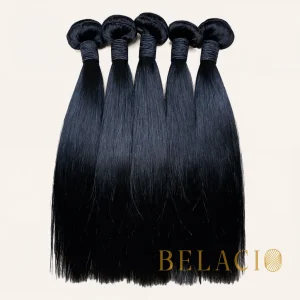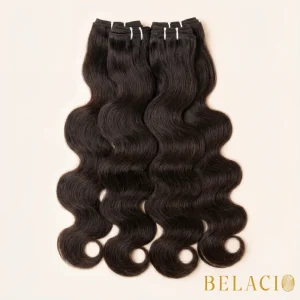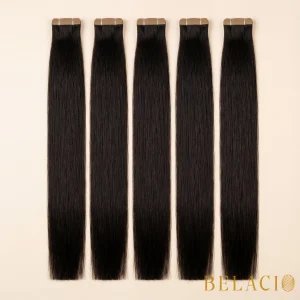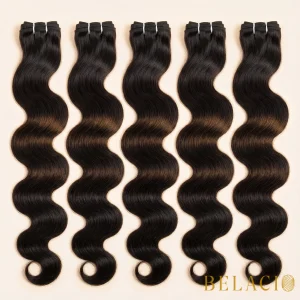

Weft hair extensions require systematic maintenance protocols including professional move-ups every 6-8 weeks, sulfate-free washing twice weekly, and heat styling limited to 300-350°F to achieve a 12-18 month lifespan.
Most extension failures stem from maintenance neglect rather than hair quality issues. When properly cared for through scheduled professional move-ups every 6-8 weeks, appropriate washing protocols twice weekly with sulfate-free formulas, and controlled heat styling at 300-350°F maximum, weft extensions reliably last 12-18 months. This comprehensive care protocol addresses the primary causes of premature extension deterioration: attachment-point loosening, protein structural damage, and cuticle disruption.
Key Takeaways
- Schedule professional move-up appointments every 6-8 weeks to prevent matting, breakage, and visible track growth.
- Wash extensions every 7-10 days using sulfate-free, oil-free shampoo and apply conditioner mid-lengths to ends only.
- Brush 2-3 times daily from ends upward while holding attachment points to prevent bond tension and matting
- Limit heat styling to 300-350°F maximum with constant tool motion and protectant spray before every session.
- Apply deep conditioning masks every 3-4 weeks to maintain moisture balance and structural integrity.
Professional Move-Up Schedule
Natural hair grows approximately 0.5 inches monthly, causing extensions to migrate away from the scalp. Professional move-up appointments every 6-8 weeks prevent catastrophic failures, including visible grown-out tracks, increased tension causing breakage, and matting at loosened attachment points. These appointments enable technicians to check attachment security, remove compromised sections, reattach extensions to proper position, and perform treatments that are impossible between visits.
Skipping this maintenance schedule reduces extension lifespan from the achievable 12-18 months to mere weeks. The systematic repositioning maintains extensions close to the scalp in accordance with professional maintenance standards, preventing excessive pull that can damage natural hair.
Maintenance Task Schedule
| Maintenance Task | Frequency | Purpose |
| Professional Move-Up | Every 6-8 weeks | Reposition wefts closer to scalp, check attachment security, prevent damage |
| Washing | Every 7-10 days (2x weekly) | Remove buildup while preserving natural oils and preventing over-drying |
| Deep Conditioning | Every 3-4 weeks | Restore moisture, repair protein structure, maintain softness |
| Clarifying Treatment | Every 4-6 weeks | Remove product buildup and mineral deposits |
| Daily Brushing | 2-3 times daily | Prevent tangling, distribute natural oils, maintain smoothness |
Washing Protocol
Extensions require washing every 7-10 wears, at most, approximately twice weekly for most weft types. Colored hand-sewn extensions demand no more than two weekly washes to prevent rapid fading. Sulfate-free and oil-free formulations are mandatory, as sulfates destroy adhesive bonds while oils loosen tape tabs at attachment points.
The proper technique involves using cold water exclusively to prevent structural damage, moving downward only without circular patterns, shampooing strands while avoiding attachment zones, and pat-drying with towels. Conditioner applied near the roots destroys tape adhesion, leading to premature replacement.
Proper Washing Steps
- Gently detangle with a wide-tooth comb before wetting hair
- Wet hair with lukewarm water using a downward motion
- Apply sulfate-free shampoo to scalp and roots, working through lengths gently
- Rinse thoroughly with cool water to seal cuticles
- Apply conditioner from mid-shaft to ends, avoiding attachment points
- Leave conditioner for 3-5 minutes for absorption
- Rinse with cool water and gently squeeze excess moisture
- Pat dry with a microfiber towel, never rubbing or twisting
- Air dry or use a low-heat blow dryer with heat protectant
Daily Brushing Routine
Brush extensions 2-3 times daily, starting at the ends and working upward using downward strokes exclusively. Hold hair near attachment points during each pass to eliminate bond tension. Wide-tooth combs and loop brushes glide through extension weft hair without catastrophic snagging, while regular nylon brushes destroy integrity within days.
Never brush wet extensions, as saturated hair stretches and breaks, accelerating replacement cycles by 60%. Research from professional extension care protocols confirms that avoiding brushes with ball-tipped bristles prevents fiber tears. Extension-safe serum applied twice daily between brushing sessions prevents matting entirely, extending lifespan from industry-standard eight months to documented eighteen-month thresholds.
Heat Styling Guidelines
Human hair extensions require flat iron temperatures of 300-350°F, maximum, never exceeding these thresholds. Synthetic alternatives demand strict 250°F limits to prevent melting.
Temperature Guidelines by Extension Type
| Extension Type | Maximum Temperature | Recommended Frequency | Essential Protection |
| Human Hair (Remy/Virgin) | 300-350°F (149-177°C) | 2-3 times weekly maximum | Heat protectant spray before every session |
| Synthetic Extensions | 250°F (121°C) maximum | Minimal use only | Low-heat protectant, test small section first |
| Colored/Bleached Extensions | 300°F (149°C) maximum | 1-2 times weekly maximum | Thermal protectant plus moisture spray |
Heat Styling Best Practices
- Always apply heat protectant to vulnerable mid-lengths before every thermal session.
- Maintain constant tool motion during 8-10 second passes
- Never apply heat directly to bonds or attachment points
- Limit thermal styling to 2-3 weekly sessions as extensions lack protective scalp oils
- Start with the lowest effective temperatures, increasing gradually only when necessary
- Use ceramic or titanium tools that distribute heat evenly
- Allow hair to cool completely before brushing or manipulating
Swimming and Water Protection
Pre-saturate extensions completely with fresh water before pool or ocean exposure to prevent chlorine and salt absorption. Apply leave-in conditioner throughout lengths to create a protective barrier, and secure hair in a braided style to minimize water exposure. Immediately after water activities, rinse thoroughly with fresh water to remove chemical residue, apply a moisturizing treatment to extension points, and gently detangle when slightly damp.
Water Exposure Protocol
- Saturate hair with clean, fresh water before entering the pool or the ocean
- Apply protective leave-in conditioner or oil throughout lengths
- Secure hair ina tight braid or a low bun to minimize water contact
- Rinse immediately with fresh water after swimming
- Use clarifying shampoo if pool swimming was extensive
- Apply deep conditioning treatment to restore moisture
- Never manipulate soaking wet extensions in their most vulnerable state
Product Selection
Professional-grade, extension-specific formulations from Virtue Labs, Kerastase, and Iles Formula deliver sulfate- and paraben-free systems that preserve weft integrity while preventing adhesive breakdown. Apply conditioner exclusively to mid-lengths and ends, never to the roots, as oil-based products near attachment points can cause slippage failure. Deep conditioning treatments every 3-4 washes maintain moisture balance without protein-induced brittleness.
Recommended Product Categories
- Sulfate-free, paraben-free shampoo designed for extensions
- Lightweight moisturizing conditioner for mid-lengths to ends
- Deep conditioning masks with keratin or protein treatments
- Heat protectant spray rated for 350°F or higher
- Leave-in conditioning treatments for daily moisture
- Clarifying shampoo (Malibu C Wellness Hair Remedy) for mineral removal
- Purple shampoo (Unite blonda line) for blonde extensions to prevent brassiness
- Extension-safe serum for detangling and shine
Tropical Climate Considerations
Caribbean and tropical environments with 75-85% humidity year-round require specialized protocols. Virgin human hair naturally adapts to high humidity through keratin matrix flexibility and controlled moisture absorption, while synthetic alternatives fail through material rigidity.
Climate-Adapted Care Strategies
- Increase washing frequency to 2-3 times weekly versus standard twice-weekly due to higher product buildup
- Apply anti-frizz serum weekly to manage humidity-induced texture changes
- Rinse immediately after ocean exposure to remove salt and prevent oxidation
- Use UV-protective spray weekly to reduce color fade from 15-20% to 5-8% annually
- Allow 30-minute air-dry period before heat styling in humid environments
- Store extensions in climate-controlled environment when not wearing
- Schedule more frequent deep conditioning treatments for tropical moisture balance
Frequently Asked Questions
Can I color or bleach my weft extensions at home?
Darkening wefts by one to two shades at home is possible with careful strand testing, especially when working with remy human hair. Bleaching, however, is strongly discouraged because it compromises the structure of even a high-quality weft, dramatically shortening extension lifespan and increasing dryness, breakage, and shedding.
How do I sleep with weft extensions to prevent damage?
To protect your wefts overnight, make sure hair is fully dry, gently brushed, and secured by tying your hair into a loose braid or low ponytail. Sleeping on silk pillowcases reduces friction and supports healthy hair care, helping keep your extensions smooth and tangle-free.
What hairstyles are safe to wear with weft extensions?
Low-tension styles such as loose braids, half-up looks, beach waves, and relaxed buns are safest. Choosing styles that suit your hair type minimizes stress on attachment points and helps prevent unnecessary pulling or exposure of the wefts.
Can I use hair growth products on my scalp with extensions?
Yes, scalp treatments containing biotin or vitamin E are generally safe when used carefully. Avoid heavy oils or sulfur-based products near the wefts, as consistent product control is part of proper maintenance and helps preserve bond integrity.
How long do weft extensions typically last with proper care?
How long weft extensions last depends on quality, usage, and upkeep. In general, weft extensions can last 9–18 months across multiple reapplications when cared for correctly. Scheduling regular maintenance appointments ensures they stay secure, shed less, and last longer without compromising comfort or appearance.
Conclusion
Systematic weft extension maintenance protocols determine whether extensions fail within six months or thrive through 12-18 months of wear. Professional move-ups every 6-8 weeks, sulfate-free washing twice weekly, controlled heat styling at 300-350°F maximum, and climate-adapted care routines prevent the catastrophic failures plaguing improperly maintained extensions. Belacio Hair’s premium Vietnamese weft extensions, combined with these evidence-based protocols, deliver superior longevity and performance across Puerto Rico, Caribbean, and Colombian tropical markets.