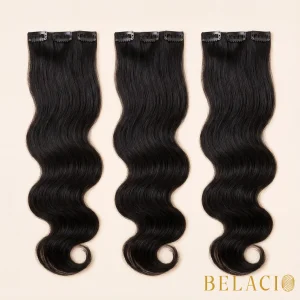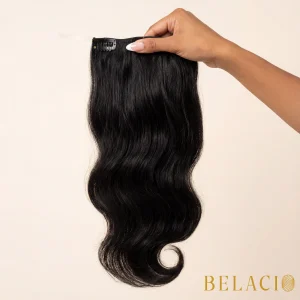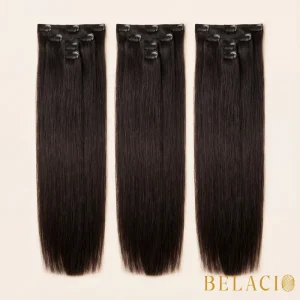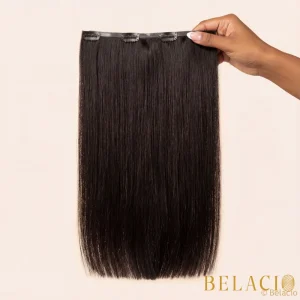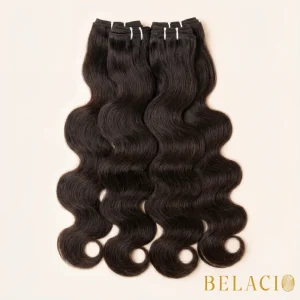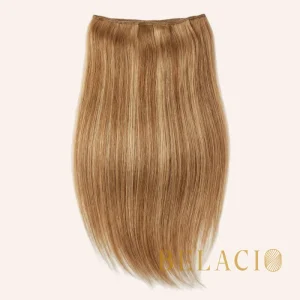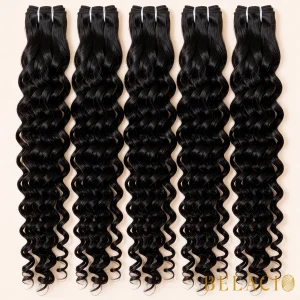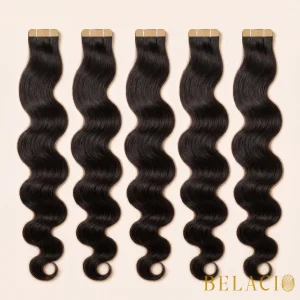
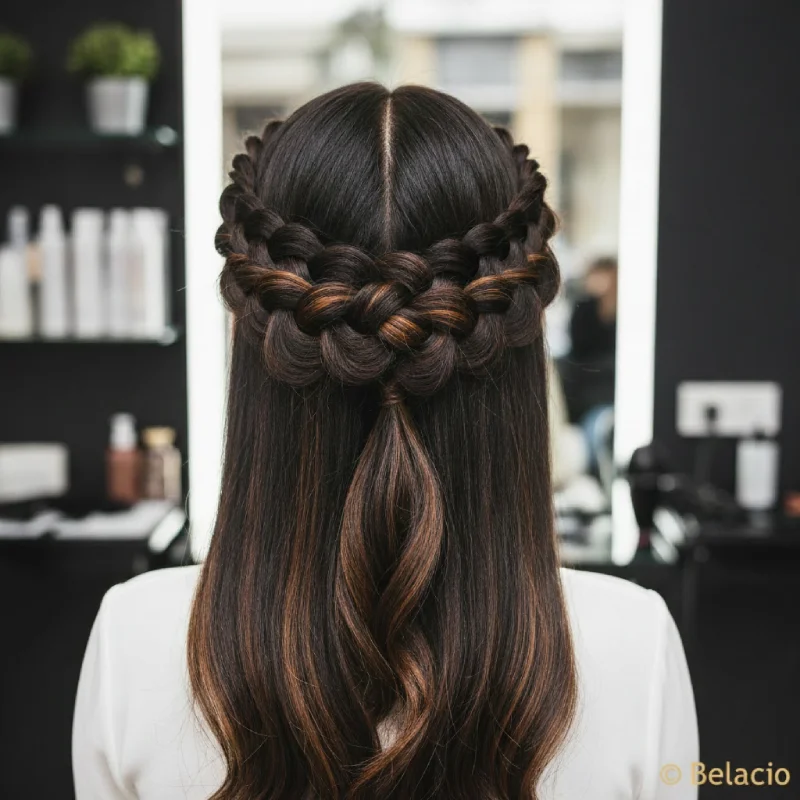
Weft extensions enable versatile hairstyles through seven application methods—sew-in installations with cornrow foundations, quick weave adhesive techniques, voluminous ponytails with crown anchoring, clip-in conversions, U-part blending, halo styles, and hand-tied applications for fine hair—each requiring specific spacing, placement, and securing protocols for professional results.
Weft extensions open dramatic styling versatility through seven distinct application methods that deliver professional volume and length transformation. Sew-in installations with precise 1/8- to 1/2-inch cornrow spacing deliver permanent volume, while quick-weave techniques provide rapid transformation through strategic adhesive layering. Voluminous ponytails require crown anchoring with heavy backcombing, whereas clip-in conversions demand machine-sewn construction with 1-1.5-inch spacing for secure hold throughout extended wear.
Key Takeaways
- Ponytails layer clipped wefts at the crown base, using backcombing and texture powder for volume before curling in small sections.
- Updos require heavy teasing at the sides to conceal wefts, with bobby pins and spray ensuring a secure all-day hold.
- U-Part wigs align openings with natural partings, blending braided bases with heat-styled hair for undetectable transitions.
- Halo extensions distribute weight bottom-to-top, using two-clip nape wefts for stability while avoiding visible top placement.
- Clip-in wefts are positioned 1 inch from part lines and 2 inches above the ears, angling backward along the head’s curvature.
Sew-In Methods for Full Coverage
Professional installation begins with horizontal cornrows measuring exactly 1/8 inch for thick hair, 1/4 inch for medium density, and 1/2 inch for fine textures to ensure proper foundation security. Silicone beads with an internal lining protect hair while providing multiple secure pockets for stitching that prevent slippage during extended wear.
The stitching technique separates professional results from amateur installations through lock and hitch stitches that securely anchor each weft. According to research on traction alopecia prevention, proper tension distribution prevents hair loss when extensions are professionally installed with appropriate spacing.
Strategic Layering Protocol
- Create horizontal cornrows with spacing matched to hair density (1/8 to 1/2 inch)
- Attach silicone-lined beads for secure stitching foundation
- Use a C-needle and thread for the blanket stitch technique, pocket-to-pocket
- Apply extra passes at corners, ensuring flat scalp application
- Place single wefts at the crown to reduce bulk concentration
- Layer multiple wefts below the crown for density and volume
- Secure all endpoints with reinforced stitching for longevity
Quick Weave Applications
Quick-weave installations require multiple reinforced cap layers and strategic weft placement to protect natural hair from chemical adhesives and heat damage. The dual-barrier protection technique delivers professional results in under ninety minutes through systematic layering that maintains bond integrity throughout the 4-5 week wear period.
Machine-tied wefts dominate quick-weave applications because they prevent catastrophic unraveling during customization that hand-tied wefts cannot withstand. Human hair wefts deliver a superior natural appearance but demand obsessive texture matching with existing hair for seamless integration.
| Protection Layer | Application Method | Purpose |
| Black Gel Foundation | Mold natural hair flat | Foundation security |
| Diamond Shield | Direct scalp application | Chemical barrier |
| Black Weave Cap | Secured with rubber bands | Physical separation |
| Bonding Glue | Cap surface only | Extension attachment |
| Hooded Dryer | 15-20 minute intervals | Complete product setting |
Weft Placement Technique
- Begin application at the nape progressing systematically toward the front
- Measure each weft edge-to-edge before cutting for a precision fit
- Allow the glue 70% drying time before final placement for bond strength
- Apply wefts in horizontal sections, maintaining consistent spacing
- Avoid hot styling tools duringthe first 48 hours after installation
Voluminous Ponytails and Updos
The double ponytail technique delivers dramatic volume through strategic weft placement and crown anchor construction. Position the anchor precisely at the desired height, then clip extensions around the bobble structure for layered volume that natural hair alone cannot achieve.
Backcomb heavily until the volume exceeds natural limitations, then apply texture powder liberally throughout the top section. Research on preventing hair damage confirms that proper backcombing technique prevents damage when executed with appropriate tools and tension control.
| Foundation Stage | Volume Enhancement | Finishing Protocol |
| Anchor ponytail at the crown | Backcomb the top section heavily | Wrap hair around the elastic |
| Clip wefts to the base bobble | Apply texture powder liberally | Secure with bobby pins |
| Layer extensions evenly | Tease sides to cover wefts | Spray for all-day hold |
Updo Securing Technique
- Tease sides heavily to conceal all weft attachment points
- Curl extensions in small sections for volumized wave texture
- Use bobby pins at strategic angles for invisible securing
- Apply strong-hold spray, maintaining style throughout extended wear
- Ensure wefts remain completely concealed from all viewing angles
Converting Wefts to Clip-Ins
Converting weft extensions into temporary clip-in pieces delivers absolute control over dimensions, clip spacing, and security that pre-made alternatives cannot match. Machine-sewn wefts provide the foundation for conversion as their 2-3mm thickness supports clip hardware without compromising structural integrity during repeated use cycles.
Hand-tied wefts deliver ultra-thin profiles (0.5-1mm thickness) for discreet attachment when fine hair demands minimal scalp detection. Genius wefts maintain a flexible spine construction, accommodating clip hardware without compromising the natural appearance or movement throughout wear.
Clip Placement Standards
- Position the foundation weft one inch above the nape hairline for invisibility.
- Maintain 1-1.5 inch vertical intervals between horizontal sections
- Place clips one inch minimum from natural part lines
- Keep two inches of clearance above ear level for concealment during movement
- Angle side wefts backward following natural head curvature
- Secure center clips firs,t establishing proper alignment
- Require audible confirmation for each clip against the scalp
Securing and Testing Protocol
- Apply whipstitch techniques using transparent nylon thread
- Attach exclusively to the rubberized weft side for structural integrity
- Use heat application 10-20 seconds per tab, reinforcing connections
- Test with gentle tugging, verifying initial hold strength
- Perform vigorous head shakin, revealing potential slippage
- Conduct 4-8 hour duration testing, exposing attachment failures
- Assess weight distribution, preventing pulling sensations
U-Part and Halo Styles
U-Part wigs eliminate visibility issues by precisely aligning the U-shaped opening with natural partings, creating undetectable transitions that traditional methods cannot achieve. Ultra-flat braided bases and strategic placement of natural hair around facial edges ensure seamless integration throughout extended wear.
Halo extensions revolutionize application through bottom-to-top weight distribution that prevents the density imbalances plaguing conventional techniques. Two-clip wefts at the nape provide foundational stability while avoiding top-head visibility errors that expose amateur installations.
Integration Requirements
- Heat style natural hair to mirror the wig texture exactly
- Finger-blend for invisible transitions between natural and extension hair
- Position two-clip wefts at the nape for a stable foundation
- Avoid top-head clip placement, preventing visibility during movement
- Apply uniform texturizing creating an authentic growth illusion
- Use vertical sectioning to prevent volume disasters
- Work in smaller application sections for superior integration
Adding Body to Fine Hair
Hand-tied wefts revolutionize fine hair extensions by strategically distributing weight across the entire scalp, eliminating dangerous stress points that cause traction alopecia and devastating breakage. Thread-based attachment with silicone-lined rings creates a secure hold without heat, glue, or harsh adhesives that damage delicate strands.
Strategic placement adds volume at mid-lengths rather than delicate root areas, preventing unnatural bulk while maintaining graceful fluidity. These systems remain secure for 8 weeks between maintenance appointments, with customizable weft positioning targeting exact areas that need volume enhancement.
Fine Hair Application Protocol
- Select hand-tied or genius wefts for minimal bulk
- Use thread-based attachment, avoiding heat and adhesives
- Position wefts at mid-lengths, preserving root delicacy
- Distribute weight evenly across the scalp, preventing stress concentration
- Schedule maintenance every 8 weeks for optimal performance
- Customize placement targeting specific volume needs
Choosing the Right Weft Type
Fine hair demands hand-tied or genius wefts exclusively, as thicker alternatives create visible bulk and expose attachment points, destroying the natural appearance. Thick hair requires machine wefts or multiple volume weft layers for proper density matching that blends seamlessly with natural texture and movement patterns.
| Hair Type | Recommended Weft | Key Advantage |
| Fine/Thin Hair | Hand-tied or Genius wefts | Ultra-thin (0.5-1mm) preventing visibility |
| Medium Density | Genius or Volume wefts | Versatile styling with heat capability |
| Thick Hair | Machine or Multiple Volume wefts | Proper density matching natural texture |
| Volume Conversion | Volume wefts triple-stacked | High gram weight eliminates multiple layers |
Maintenance for Longevity
Wash frequency must stay limited to 1-2 times weekly using sulfate-free, paraben-free formulations to preserve extension integrity and adhesive bonds. Daily brushing at least twice prevents tangling that ruins investments, while heat styling should not exceed 350°F and must be followed by a heat protectant applied from mid-shaft to ends.
Professional maintenance appointments every 6-8 weeks prevent damage from natural hair growth by repositioning wefts to maintain a seamless appearance and structural integrity. Satin pillowcases eliminate friction damage during sleep hours that conventional cotton materials create through abrasive contact.
Essential Care Protocol
- Limit washing to 1-2 times weekly with sulfate-free products
- Brush daily, a minimum twice, preventing tangling and matting
- Apply heat protectant before any thermal styling
- Maintain heat tools below 350°F maximum temperature
- Schedule professional maintenance every 6-8 weeks
- Use satin pillowcases, eliminating overnight friction
- Reposition wefts as natural hair grows, maintaining appearance
Frequently Asked Questions
Can I color or bleach my weft extensions at home safely?
Coloring wefts at home can be done safely with semi-permanent dyes, making it easy to refresh a hairstyle without harsh processing. Bleaching should be avoided, as it weakens the hair structure and reduces longevity—especially important for maintaining healthy long hair extensions over time.
How do I sleep comfortably with sewn-in weft extensions?
For comfortable sleep, brush hair gently and secure it in loose braids or a low ponytail to maintain a sleek finish by morning. Using silk pillowcases supports overall hair care by reducing friction and helping extensions stay smooth and manageable overnight.
Are weft extensions suitable for people with very short hair?
Weft extensions generally require at least 3–5 inches of natural length for proper concealment and balance. When installed correctly, they can support hairstyles with extensions that appear chic, balanced, and well-integrated rather than bulky or visible.
Can I swim or exercise while wearing weft extensions?
Yes, with precautions. Secure hair into a half-up style or protective braid to elevate durability during activity. This effortless approach limits tangling and tension while preserving the integrity of the wefts.
How long do different weft extension styles typically last?
Longevity varies by installation method and upkeep. Sew-ins and hand-tied wefts help create a fuller appearance and add length and volume, supporting stylish looks like a messy bun, half-down styles, or a high ponytail when maintained on schedule.
Conclusion
Weft extensions enable dramatic styling versatility through seven professional application methods—from sew-in installations with precise cornrow foundations to quick weave adhesive techniques, voluminous ponytails, clip-in conversions, U-part blending, halo styles, and hand-tied applications for fine hair. Each method requires specific spacing, placement, and securing protocols to prevent damage while delivering natural integration over extended wear periods. Proper weft selection matching hair type, systematic maintenance every 6-8 weeks, and adherence to care protocols ensure 12-month longevity with superior styling flexibility. Belacio Hair provides premium Vietnamese-sourced weft extensions engineered specifically for tropical climates across Puerto Rico, Caribbean, and Colombian markets, with professional installation education and maintenance protocols that guarantee superior performance, natural appearance, and versatile styling capabilities that transform your hair investment into lasting confidence.