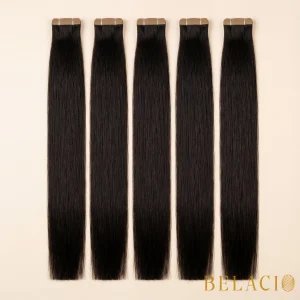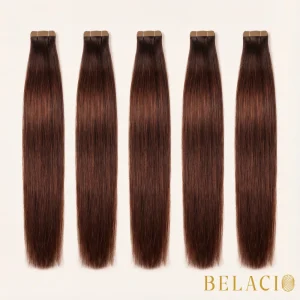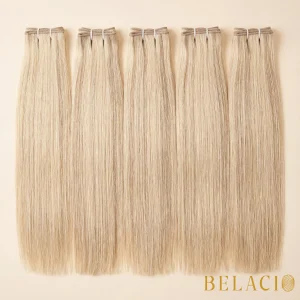
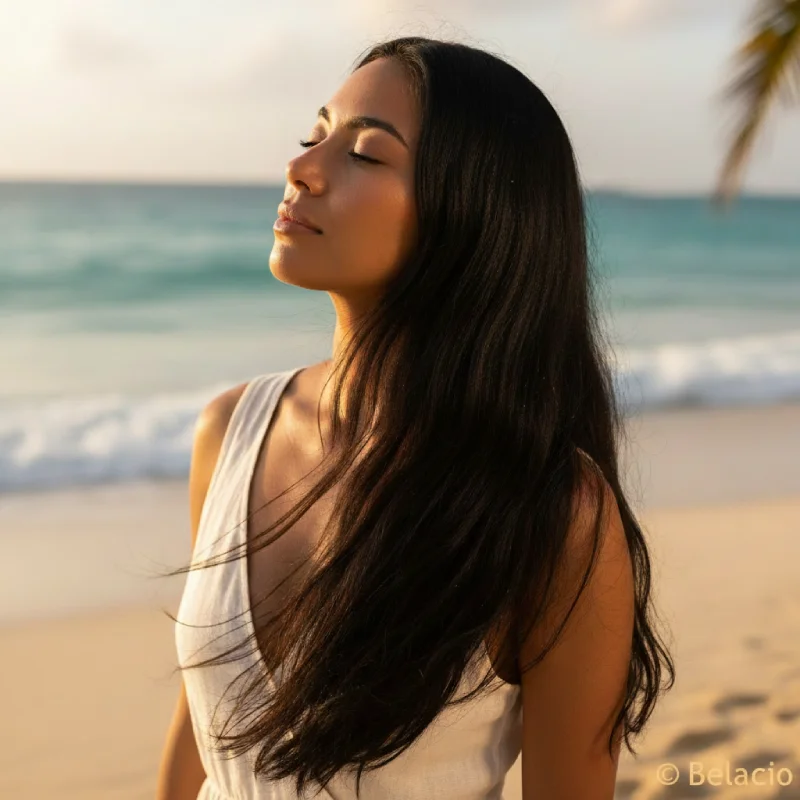
Tape-in extensions in tropical climates require specialized care protocols, including daily UV protection spray with SPF 15+, pre-soaking in fresh water before swimming, sulfate-free products exclusively, and professional maintenance every 4-6 weeks to combat 80%+ humidity and prevent adhesive bond failure.
Tropical climates destroy human hair tape in extensions through unrelenting 80%+ humidity, UV radiation, and saltwater mineral deposits that systematically attack adhesive bonds within weeks. Most wearers skip critical protection steps, such as pre-water saturation. These use sulfate shampoos that strip protective barriers, allowing single-braid styles that concentrate tension on vulnerable tape tabs. The solution demands sulfate-free leave-in conditioners as moisture barriers, immediate 3-minute fresh-water rinses post-exposure, and UV protection sprays with SPF 15+ for comprehensive environmental defense.
Key Takeaways
- Pre-soak extensions with fresh water and sulfate-free conditioner before swimming to create a protective moisture barrier against saltwater and chlorine
- Apply a UV protection spray with SPF 15+ containing avobenzone and octocrylene daily to prevent color degradation and loss of tensile strength.
- Braid hair into multiple small sections using silk scrunchies instead of elastic bands to minimize adhesive stress and slippage
- Rinse extensions immediately after water exposure for 3 minutes, then air-dry thoroughly to prevent moisture retention and tape failure.
- Limit shampooing to 2-3 times weekly with sulfate-free products, avoiding oil-based and alcohol-containing formulas that compromise adhesive bonds.
How Tropical Weather Affects Tape-In Extensions
Consistent 80%+ humidity causes adhesive bonds to absorb atmospheric moisture, weakening structural integrity and causing premature slippage within 3-4 weeks instead of the standard 6-8 week wear period. Temperature extremes between 75-90°F alter adhesive chemistry, creating overly sticky bonds that compromise attachment security.
Direct sun exposure with a UV index exceeding 10 during peak hours strips color while systematically reducing tensile strength. According to research on UV exposure and hair damage, prolonged UV exposure damages hair protein structure and weakens bonds. Saltwater and chlorine complete the assault by stripping protective oils, causing brittleness and accelerating tape tab failure.
| Environmental Factor | Impact on Extensions | Timeline to Damage |
| 80%+ Humidity | Weakens adhesive bonds through moisture absorption | 3-4 weeks vs. 6-8 weeks normal |
| 75-90°F Heat | Alters adhesive chemistry, creates excess stickiness | Immediate ongoing degradation |
| UV Index 10+ | Strips color, reduces tensile strength | 2-3 weeks visible damage |
| Saltwater Exposure | Strips oils, causes brittleness, and tangling | Hours without proper rinsing |
| Chlorine Contact | Chemically attacks tape tabs, causing green tint | Single exposure without protection |
Pre-Swim Protection Protocol
Wet extensions thoroughly with fresh water before any contact with the ocean or a pool. This critical step prevents salt crystallization and chlorine absorption into the hair shaft by first saturating the fibers with clean water. Apply sulfate-free leave-in conditioner from mid-lengths to ends to create an essential moisture barrier.
Braid hair into multiple small sections rather than one single braid, which concentrates tension on tape adhesive points. Tucking everything underneath a high-quality silicone swim cap with adequate volume space and using silk scrunchies exclusively as elastic bands can create damaging tension in humid conditions.
Pre-Water Preparation Steps
- Saturate extensions completely with fresh water from roots to ends
- Apply sulfate-free leave-in conditioner to mid-lengths and ends
- Divide hair into 3-4 small braided sections for even weight distribution
- Secure braids with silk scrunchies, never elastic bands
- Apply UV protection spray formulated for Belacio human hair extensions
- Tuck all hair sections into a silicone swim cap with proper coverage
- Consider applying a protective hair mask for an additional chlorine barrier
Immediate Post-Exposure Care
Within seconds of exiting ocean or pool water, flush extensions with fresh water for 3 full minutes, directing the flow from the roots downward. This removes chlorine particles that create permanent green discoloration and salt crystals that weaken tape bonds within twenty-four hours.
Apply sulfate-free conditioner exclusively to mid-lengths and ends, never touching adhesive tabs. Blot with microfiber towels using downward strokes—rubbing destroys compromised bonds instantly. Research published in dermatology journals confirms that immediate rinsing prevents significant chemical damage from pool exposure.
Post-Swim Rinse Protocol
- Rinse with fresh water for at least 3 minutes immediately after exposure.
- Direct water flow from roots downward to prevent tangling
- Apply sulfate-free conditioner to mid-lengths and ends only
- Avoid all contact with the tape tab adhesive areas
- Blot gently with a microfiber towel using downward strokes
- Air dry completely before styling or sleeping
- Monitor within 12 hours for color shifts or slippage signs
- Apply deep conditioning treatment to restore moisture balance
Daily Maintenance for Humid Climates
Apply UV protection spray directly to tape-in sections before any sun exposure to prevent catastrophic adhesive breakdown. Limit shampooing to 2-3 times weekly, maximum, and wash with the head tilted backward to prevent water from running down toward adhesive bonds.
Apply conditioner only from mid-shaft downward, maintaining 1-inch clearance from bonds. Never sleep with damp extensions as tropical humidity accelerates tape bond failure exponentially overnight through sustained moisture contact.
Morning Protection Routine
- Apply UV protection spray with SPF 15+ before sun exposure
- Plait hair into two protective sections during peak humidity hours
- Use the three-bun technique on the bottom sections to combat frizz
- Employ a lightweight leave-in conditioner for moisture without weight
- Avoid oil-based products near tape attachment points
Washing Guidelines
- Wash maximum 2-3 times weekly with sulfate-free shampoo
- Tilt your head backward while washing to protect adhesive bonds
- Apply conditioner mid-shaft to ends, avoiding the root area by 1 inch
- Use salon-quality products formulated for tape-in extensions
- Rinse thoroughly with lukewarm water, finish with a cool rinse
- Pat dry gently with a microfiber towel, never rubbing
- Air dry completely before sleeping or styling
Product Selection for Tropical Conditions
Select UV-protective leave-in conditioners with SPF 15+ applied daily to mid-lengths and ends, providing continuous defense throughout 12-hour tropical daylight exposure. Lightweight silicones with keratin enhancement maintain extension integrity while resisting 70-90% relative humidity without catastrophic buildup at tape attachment points.
| Product Type | Essential Features | Avoid |
| Shampoo | Sulfate-free, paraben-free, pH-balanced | Sulfates, clarifying formulas, oil-based |
| Conditioner | Lightweight, sulfate-free, keratin-infused | Heavy oils, silicone buildup, and alcohols |
| UV Protection | SPF 15+ with avobenzone, octocrylene | Alcohol-based, heavy oils near bonds |
| Styling Products | Water-based, lightweight, extension-safe | Alcohol, heavy oils, strong-hold gels |
Harmful Ingredients to Avoid
- Sulfate shampoos that strip protective barriers and weaken bonds
- Oil-based tanning products are causing immediate slippage at the roots
- Alcohol-based styling products excessively dry adhesive layers
- Paraben conditioners create molecular interference at bond sites
- Heavy oil formulations create barriers between tape layers
Heat Styling in Tropical Climates
Maintain a maximum temperature of 120-150°F for any heat near the tape adhesive areas. Keep thermal tools at least 1 inch from established bonds during styling, as adhesive fails at 180°F in humid conditions. Wait 48 hours after installation before using any heat styling tools.
Heat-Free Styling Alternatives
- Braid-outs and twist-outs for natural curl patterns without heat
- Foam roller sets generate defined curls overnight
- Gel casting technique for humidity-resistant definition
- Protective updos secured with silk scrunchies during workouts
- Loose buns with moisture-wicking headbands around roots
Professional Maintenance Schedule
Standard 6-8 week maintenance cycles collapse to 4-6 weeks in tropical environments where constant humidity accelerates tape degradation by 25-30%. Coastal regions demand professional check-ups every 3-4 weeks during extended stays, with Caribbean summer months requiring monthly appointments.
Maintenance Timeline
- Schedule appointments every 4-6 weeks in tropical climates vs. 6-8 weeks standard
- Book 1-2 weeks before tropical travel for bond security assessment
- Request a humidity-resistant protective coating during pre-travel visits
- Schedule professional cleansing within 48 hours after saltwater exposure
- Receive demineralizing treatments every 2-3 weeks for mineral buildup removal
- Apply deep conditioning treatments every 2 weeks to counter sun damage
Frequently Asked Questions
Can I get tape-in extensions applied while already living in a tropical climate?
Yes, tape extensions can be successfully applied in tropical climates when professionals use humidity-resistant adhesives and follow strict extension care protocols. Ensuring the scalp is clean, dry, and oil-free before installation supports strong bonding and improves overall longevity in high-moisture environments.
Do synthetic extensions perform better than human hair in Caribbean humidity?
No—synthetic hair performs worse than human hair in humidity and heat. Human hair responds better to moisture balance, especially when products designed for extensions are used to maintain softness and flexibility, helping keep your hair looking natural rather than stiff or artificial.
Will my natural hair growth rate change with extensions in tropical weather?
No, hair growth rates remain unchanged by climate or extensions. Consistent routines—such as knowing when to wash your hair and focusing on gentle detangling—help protect both natural hair and extensions without affecting growth cycles.
Should I remove extensions before a planned Caribbean vacation or beach trip?
Not always. If extensions are relatively new and properly maintained, you can keep them installed with protective habits like wearing a scarf and limiting exposure to salt water. These steps help prevent dryness and keep extensions looking smooth and secure during travel.
Are certain tape adhesive brands more resistant to tropical heat and moisture?
Yes, some brands use advanced, medical-grade adhesives that perform better in heat and humidity. Pairing these adhesives with routines that hydrate the hair and prioritize hydration after sun or water exposure significantly improves wear time and comfort in tropical conditions.
Conclusion
Tape-in extensions in tropical climates require specialized care protocols that differ fundamentally from standard maintenance routines. Daily UV protection with SPF 15+, immediate fresh-water rinsing after exposure, sulfate-free products exclusively, and accelerated professional maintenance every 4-6 weeks help prevent adhesive bond failure in 80%+ humidity. Pre-swim preparation with fresh-water saturation and protective braiding, combined with complete air drying and silk pillowcase sleeping, significantly extends wear periods. Belacio Hair provides premium tape-in extensions, engineered explicitly for tropical climates across Puerto Rico, the Caribbean, and Colombian coastal regions, with humidity-resistant adhesives and professional installation education that guarantee superior performance in challenging environmental conditions where standard extensions catastrophically fail.