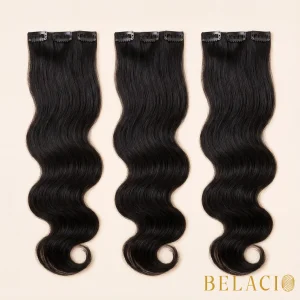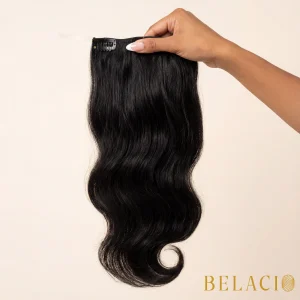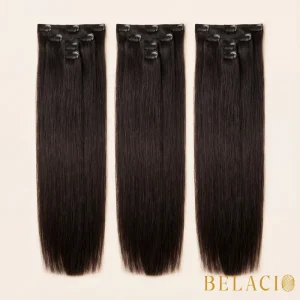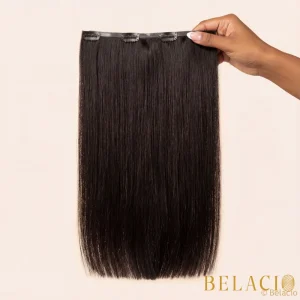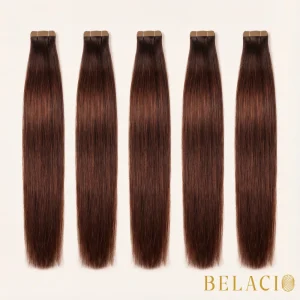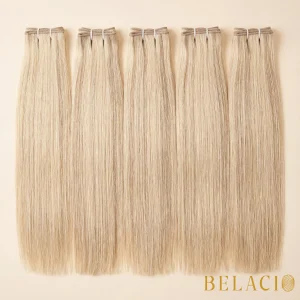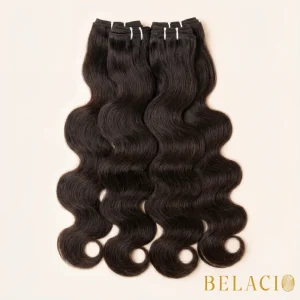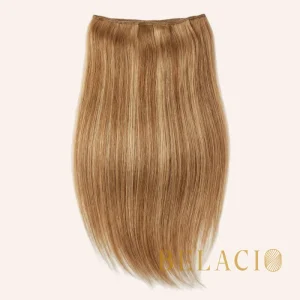

Sewn-in weft hair extensions are hair bundles attached to natural hair through needle-and-thread stitching onto cornrow or beaded foundations, available in machine, hand-tied, and hybrid constructions, lasting 6-12 months with professional repositioning every 6-8 weeks.
Sewn-in weft extensions fall into three construction types: machine wefts for thick hair, hand-tied designs with 50% thinner bands for fine to medium density, and revolutionary Genius hybrid wefts that combine both advantages. Premium selections demand 100% Remy human hair with intact cuticles, lasting 6-12 months with proper care. Professional repositioning every 6-8 weeks maintains structural integrity, while proper texture matching and material quality determine long-term success.
Key Takeaways
- Machine wefts suit thick hair, while hand-tied wefts work best for fine to medium density or chemically treated hair.
- Premium wefts require 100% Remy human hair with intact cuticles; Vietnamese virgin hair represents the gold standard for quality.
- Genius wefts combine hand-tied flexibility with machine-weft durability, offering hybrid construction for optimal performance.
- Professional repositioning every 6-8 weeks is essential; premium Remy hair maintains integrity for 6-12 months with proper care
- LA Weave methodology eliminates traditional braiding tension, preventing scalp discomfort and natural hair breakage during installation.
Types of Sewn-In Weft Extensions
The extension industry offers three distinct construction categories, each serving specific hair types and density requirements. Machine wefts use industrial sewing machines, creating 5-8mm thick seams that provide maximum durability. Hand-tied wefts involve individual strands hand-sewn onto tracks measuring 2-3mm, offering lightweight flexibility for delicate hair.
Genius Wefts represent a hybrid construction combining hand-tied thinness with machine weft cuttability at 3-4mm thickness. This innovation allows customization while maintaining structural integrity that traditional hand-tied methods cannot offer.
| Weft Type | Thickness | Best For | Key Advantage |
| Machine Weft | 5-8mm | Thick, coarse hair | Maximum durability, can be cut |
| Hand-Tied Weft | 2-3mm | Fine to medium hair | Ultra-thin, lightweight, flat lay |
| Genius/Hybrid Weft | 3-4mm | All hair types | Combines flexibility and cuttability |
Installation Method Categories
Salons offer partial, complete, or invisible sew-ins, each with distinct coverage and application requirements. Machine wefts suit medium- to thick-hair exclusively, while hand-tied designs work for fine to medium-density hair, especially chemically treated strands. According to research from dermatological studies on traction alopecia, proper weft selection based on hair density prevents stress-related damage.
Professional Installation Process
Professional installation demands systematic execution, starting with proper foundation preparation. The cornrow foundation requires horizontal braiding patterns secured with anchor stitches at each endpoint, distributing weight evenly across the scalp. Curved needles enable precise thread placement through weft pockets, minimizing tension while maximizing security.
Standard installations use 3-4 rows, achieving complete coverage in 2 hours. LA Weave methodology eliminates traditional braiding tension using beaded foundations with silicone-lined micro rings that distribute weight across natural hair sections without compromising scalp health.
Installation Steps
- Create cornrow or beaded foundation using horizontal patterns
- Secure base with anchor stitches at endpoints for stability
- Thread a curved needle with color-matched nylon thread
- Stitch wefts using the blanket stitch technique through the weft pockets
- Maintain consistent tension, avoiding scalp discomfort
- Layer 3-4 rows for complete coverage and volume
- Secure endpoints with the triple-knot finishing technique
- Blend natural hair over wefts for seamless integration
Material Quality Standards
Premium wefts demand 100% Remy human hair with intact cuticles aligned in a uniform direction, preventing the backwards-facing cuticles that cause matting disasters. The construction method separates professional-grade products from inferior alternatives that shed within weeks.
Vietnamese virgin hair represents the gold standard for hair extension supplier quality. Double-drawn strands maintain consistent thickness root-to-tip, while Advanced Lightening Technology preserves disulfide bonds during color processing. Research published in the International Journal of Dermatology confirms that proper cuticle alignment significantly reduces tangling and extends wearability.
Quality Indicators
- 100% Remy human hair with aligned cuticles pointing in the root-to-tip direction
- Double-drawn construction maintains consistent thickness throughout
- Hand-tied wefts featuring 50% thinner bands lying flat against the scalp
- Machine-sewn constructions with reinforced stitching, preventing shedding
- Double-layer silk wrapping cushions sensitive scalps while maintaining flexibility
- Virgin hair showing white cuticle scales versus brown chemical damage
- Single-donor sourcing guarantees consistent color and texture throughout
Matching Weft Types to Hair Texture
Texture matching requires precise compatibility between natural hair characteristics and weft specifications. Hand-tied wefts with 2-3mm seams relieve scalp stress on fine to medium-density hair thanks to their lightweight construction. Machine wefts with 5-8mm seams deliver durability for thick, coarse textures requiring multiple-layer volume enhancement.
Genius wefts combine hand-tied flexibility with machine-weft strength for versatile texture compatibility across curl patterns. Match the curl diameter precisely—3A, 3B, and 3C classifications require identical bounce characteristics to prevent unnatural layering and visible blend lines.
| Hair Type | Recommended Weft | Reason |
| Fine, thin hair | Hand-tied (2-3mm) | Lightweight, prevents tension and breakage |
| Medium density | Genius/Hybrid (3-4mm) | Balanced weight, customizable length |
| Thick, coarse hair | Machine weft (5-8mm) | Maximum durability, handles volume needs |
| Chemically treated | Hand-tied (2-3mm) | Minimizes stress on compromised strands |
| Curly/coily textures | Match the curl pattern exactly | Maintains shrinkage compatibility and natural movement |
Lifespan and Maintenance Schedule
Sewn-in wefts demand professional repositioning every 6-8 weeks as natural growth creates visible gaps and potential matting. Quality directly determines longevity—premium Remy human hair maintains structural integrity for 6-12 months while inferior alternatives deteriorate within weeks.
Natural hair grows approximately 0.5 inches per month, requiring systematic adjustment to maintain proper positioning and prevent scalp tension. Hand-tied wefts typically last 6-12 months, while machine-tied constructions average 3-6 months before replacement becomes necessary.
Maintenance Requirements
- Professional repositioning appointments every 6-8 weeks for optimal wear
- Sulfate-free shampoo and conditioner preserving bond strength
- Washing once weekly to prevent premature breakdown
- Nighttime protection using silk bonnets or loose braiding
- Professional tightening prevents slippage between appointments
- Deep conditioning treatments twice weekly, maintaining cuticle integrity
- Wide-tooth comb brushing 3-4 times daily, starting at the ends
Daily Care and Protection
Proper maintenance demands strategic washing routines, calculated heat application, and proactive damage prevention. Wash every 7-10 days with sulfate-free shampoo diluted in applicator bottles, using only lukewarm water to prevent cuticle damage and fiber deterioration.
Detangle with wide-tooth combs before water contact to prevent knot formation. Air-dry on low heat, avoiding vigorous towel friction, which disrupts cuticle alignment and causes matting.
Heat Styling Protection
Premium extensions require thermal damage protocols to prevent catastrophic failure. Apply a layered heat protectant from mid-shaft to ends, regulate temperature to below 350°F, and rotate heatless styling techniques to minimize cumulative damage.
Hand-tied wefts require obsessive temperature monitoring as cuticle layers lift under excessive heat. Maintain a 6-8 inch distance from the blow dryer and never compound damage by exposing it to consecutive heat cycles without recovery periods.
Preventing Damage and Tangling
- Limit washing to once every 1-2 weeks, using a downward sulfate-free application.
- Complete microfiber pat-drying before sleep prevents bacterial growth
- Brush 3-4 times daily with wide-toothed combs, starting at the ends
- Secure wefts at attachment points during brushing to avoid tension
- Use silk pillowcases and loose braiding, eliminating friction overnight
- Apply deep conditioning treatments twice weekly for cuticle maintenance
- Avoid circular washing motions that create matting and tangling
Frequently Asked Questions
Can I swim or exercise regularly with sewn-in weft extensions?
Yes, swimming and exercise are possible with sewn-in wefts when precautions are taken. Saturating hair before swimming, braiding for protection, and rinsing thoroughly afterward supports healthy hair care while preserving a high-quality installation that’s designed to be long-lasting.
Will sewn-in extensions damage my natural hair over time?
Sewn-in wefts typically do not damage natural hair when properly installed and maintained. Choosing the right hair extension type for your density and following professional care schedules helps maintain a natural look while supporting scalp health.
Can I sleep comfortably with sewn-in weft extensions installed?
Yes, most people adjust quickly to sleeping with sewn-in wefts. Securing hair loosely at night helps maintain a seamless blend and protects the wefts, especially when your hair type requires lighter tension or finer placement.
How do I find a qualified stylist for weft extension installation?
Look for certified stylists experienced with multiple systems, including tape-in, fusion, and clip-in hair extensions. A skilled professional understands how different extensions offer customization for volume and length based on individual goals.
What’s the difference between Remy and virgin hair extensions?
Remy and virgin hair differ mainly in processing and longevity. Both options can provide length and volume, but virgin hair offers unmatched durability and a way to add fullness that delivers instant length with minimal processing. No matter which you choose, proper routines—such as knowing when to wash your hair—help keep extensions smooth and manageable while adding length.
Conclusion
Sewn-in weft extensions require precise selection matching to the construction type and natural hair density, professional installation, proper tension control, and systematic maintenance every 6-8 weeks for optimal performance. Quality standards demand 100% Remy human hair with intact cuticles, hand-tied construction for fine hair, and machine wefts for thick textures. Proper care, including sulfate-free washing, heat protection below 350°F, and strategic styling, extends lifespan to 6-12 months. Belacio Hair provides premium Vietnamese virgin weft extensions engineered for tropical climates across Puerto Rico, the Caribbean, and Colombian markets, combined with professional installation education that guarantees superior longevity and natural integration for discerning clients who demand excellence.