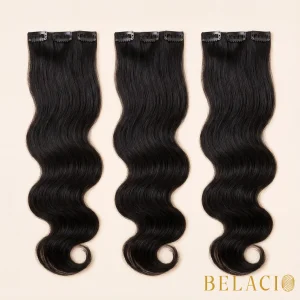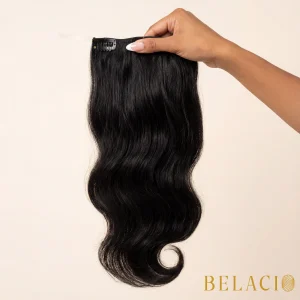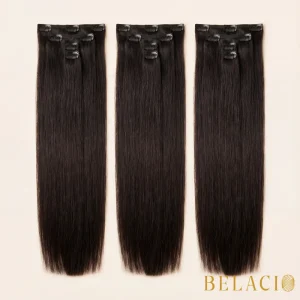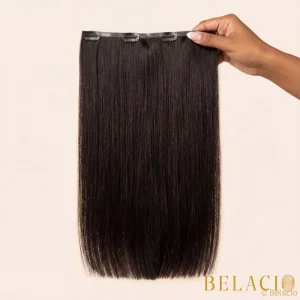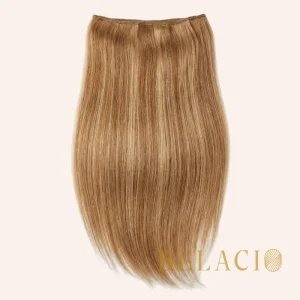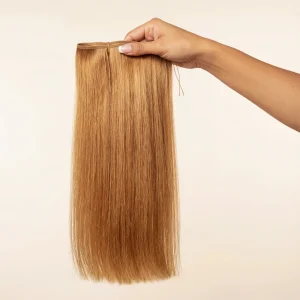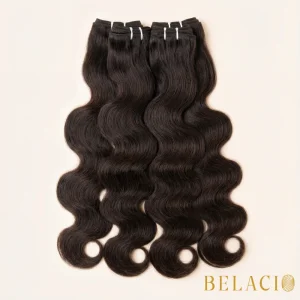
Weft extensions usually stay hidden when the weft sits low enough, your own hair covers it and the color matches. They can show on fine or thin hair, in updos and low buns, or when the weft is placed too high or too close to the hairline, where the band or a ridge peeks through.
Most people who ask whether weft extensions show are not worried about length or volume. They are worried about one moment: a breeze lifts the hair at the part, a friend looks down while you sit, or you twist everything into a bun on a hot afternoon and wonder whether the row underneath is on display. That worry is fair, because a weft is a band of hair worn in a row, and a band can be seen when nothing covers it.
The honest answer is that visibility comes from a handful of things you and your stylist can plan for, not from luck. Your own hair density, the thickness of the weft, where the row sits, how closely the color and texture match, and how you like to wear your hair all decide whether anyone notices. At Belacio, we would rather walk you through those factors plainly, and the Belacio team can help you think through your own hair before you choose a weft.
Results always depend on your hair density and on the person who installs the weft, and most published advice on this topic comes from sellers and stylists rather than independent studies, so read this guide as a planning tool rather than a promise.
In this guide, you’ll learn where a weft is most likely to show, how fine hair and your part line change the picture, why weft thickness and the folded edge matter, how color and texture matching keep a weft hidden, which hairstyles expose a weft in Puerto Rico heat, and a simple checklist you can run at home.
Where a Weft Extension Is Most Likely to Show
A weft extension is most likely to show in a few predictable situations: on fine or thin hair, in updos and low buns, and when the row sits too high or too close to the hairline. Practitioner guides on this topic describe the same pattern, because each of those situations removes some of the natural hair that normally covers the band.
Updos and buns lift the hair away from the nape and sides, which is where many rows sit, and a weft set close to the part or the hairline has very little hair above it, even on a head with plenty of density.
The table below sums up the situations most often described in practitioner guides. Treat it as general guidance rather than a measured rate, since no independent source has measured how often wefts show.
| Situation | Chance the weft shows | Why (general guidance) |
|---|---|---|
| Thick hair worn down, weft placed low | Generally low | Plenty of natural hair lies over the band |
| Fine or thin hair worn down | Higher | Fewer strands cover the top edge of the weft |
| Weft placed too high or near the hairline | Higher | Little natural hair sits above the row |
| Updo or high ponytail | Higher | Lifting the hair exposes the rows underneath |
| Thicker weft in a low bun | Higher | The weft can create a visible bulge in the bun |
How Fine Hair, Thick Hair and Your Part Line Change Visibility
Your own hair density is the biggest single factor in whether a weft shows, because natural hair is what covers the band. On thick hair, a row usually disappears under several layers of your own strands, so the weft blends even when you move or part your hair a little to one side.
Fine or thin hair gives the weft much less cover, and practitioner guides describe this as the most common reason clients see their wefts. On fine hair, the top edge of a weft can show through as a line, or the band can push the natural hair up into a slight ridge. That does not rule out wefts for fine hair, but it does mean placement, weft thickness and styling need more planning.
Your part line matters for the same reason. Rows placed close to your usual part have little hair above them, so a breeze or a glance from above can reveal the track, and if you like to switch your part from side to side, tell your stylist before installation so the rows sit below every part you plan to wear.
Why Weft Thickness and the Folded Edge Matter
Weft thickness matters because a thicker band is harder to cover, and a flatter band lies closer to the head. Machine wefts are generally thicker and bulkier at the top, while hand-tied wefts are generally finer and flatter, so the flatter type tends to blend more easily under thin or fine hair.
Even a flatter weft has a weak spot along its top. Traditional wefts, including hand-tied ones, have a folded edge, sometimes called return hair, where the hair folds back along the top edge. On fine hair, that folded edge can peek through the natural hair, which is why some stylists pay close attention to how high the row sits even when the weft itself is thin.
We do not quote thickness measurements here, because the figures that circulate online come from single vendors and are not verified. The comparison below is the general pattern stylists describe.
| Factor | What helps hide the weft | What makes the weft show |
|---|---|---|
| Weft thickness | A flatter, finer band | A thicker, bulkier band |
| Folded edge (return hair) | Enough natural hair above the row | Fine hair over the top edge |
| Row placement | Rows set lower, away from the part | Rows too high or near the hairline |
| Color match | Shade matched to your roots and lengths | A shade that contrasts with your own hair |
| Texture match | Weft texture close to your own | Straight weft in curly hair, or the reverse |
How Color and Texture Matching Keep a Weft Hidden
Color and texture matching keep a weft hidden because the eye often notices a contrast in shade or texture before it notices a seam. Even when the band is well covered, a shade or curl pattern that differs from your own hair can make the extension lengths look like a separate layer.
Human hair color is set mainly by the ratio of two pigments, eumelanin and pheomelanin, and more than 95 percent of the melanin in black and brown hair is eumelanin. In plain terms, dark hair is rich in one pigment, so a weft shade that is slightly too light or too warm can stand out against it. Matching the weft to both your roots and your lengths gives the eye nothing to catch.
Texture works the same way. A straight weft sewn into naturally wavy or curly hair can look smoother than the hair around it, and a curly weft in sleek hair can look fuller than the rest of the head. Choosing a weft whose texture is close to your own, whether straight, soft wavy, wavy or curly, helps the lengths move with your hair instead of against it.
Which Hairstyles Expose a Weft in Puerto Rico Heat
Hairstyles that pull hair up and away from the head expose a weft more than hair worn down. In Puerto Rico’s heat and humidity, many people tie their hair up for comfort, so it is worth planning your rows around the styles you actually wear most days, not only the style you wear on installation day.
A high ponytail or an updo lifts the hair at the nape and sides, which can uncover the lower rows. A low bun brings a different risk, because a thicker weft folded into the bun can add a visible bulge at the back. Hair worn down, or in a loose half up style that leaves the sides covered, usually gives the weft the most cover. The tips below are general interpretation from how wefts sit, not measured results.
| Hairstyle | Weft visibility risk | Tip (general interpretation) |
|---|---|---|
| Worn down, loose | Generally low | Keep rows below your usual part line |
| Half up, half down | Moderate | Leave enough hair at the sides to cover the rows |
| High ponytail | Higher | Ask your stylist to place rows so the tie covers them |
| Low bun | Higher | A flatter weft is less likely to bulge in the bun |
| Sleek updo | Higher | Plan rows for updos before installation |
A Checklist for Keeping Your Weft Hidden
A short checklist covers most of what keeps a weft hidden, and you can run it at home with two mirrors. These steps follow the factors above, so each one targets a specific reason wefts show.
- Part your hair in each place you usually wear it and look down at the scalp in a mirror to check for a visible track.
- Use a hand mirror to look at the back and sides, then lift your hair as if tying it up and check the nape rows.
- Tie your hair into the ponytail or bun you wear most often and look for a bulge or a line at the base.
- Compare the weft lengths with your own lengths in daylight, checking shade at the roots and at the ends.
- Run your fingers lightly along the top of each row to feel for a ridge that could lift the hair above it.
- Note any spot where the top edge or folded edge peeks through, and take a photo to show your stylist.
If a row shows in the styles you wear most, a placement or matching change from your stylist can often help, so it is not a reason to give up on wefts. Some limits are worth stating honestly: on very fine hair, some updos may still show a little of the row, and no weft is hidden from every angle. If you are unsure which weft suits your density and color, contact Belacio about your hair type before you choose.
Matching Your Hair with Belacio Weft Options
Belacio offers weft extensions in several textures, shades and grades, which gives you room to match the two things that most often give a weft away: color and texture. Every Belacio weft is made from Vietnamese single-donor hair that is cuticle-aligned, meaning the strands come from one person and run in the same direction.
Puerto Rico is where Belacio is based and ships from, not where the hair comes from. We work factory-direct, have visited more than 25 Vietnamese suppliers, and choose hair with island conditions in mind. Belacio hair is marketed as holding its texture and color in 75 to 85 percent humidity and resisting salt air and UV, which matters when you want a color match that lasts through the weather you live in.
| What you are matching | Belacio weft options named on the site |
|---|---|
| Texture | Straight, Soft Wavy, Wavy, Curly |
| Shade | 1B, Dark Brown, Light Blonde, Caramel Blonde, Balayage |
| Grade | Double Drawn, Super Double Drawn, Virgin, Raw |
| Example lines | Straight Weft Double Drawn Virgin 1B, Straight Weft Super Double Drawn Virgin 1B, Straight Weft Double Drawn Raw 1B |
You can compare each line in our weft hair extension collection, where textures and shades are listed separately. Because weft construction details can differ from line to line, we would rather confirm them for your exact choice than guess in an article. For delivery timing, our Puerto Rico shipping details explain how orders reach you, with same or next day delivery in the San Juan metro area and 2 to 3 business days to other towns.
Key Takeaways
- Weft extensions usually stay hidden when the row sits low, your own hair covers the band and the color matches. They show most often on fine hair, in updos and low buns, and when placed too high.
- Your own hair density is the biggest factor, because natural hair is what covers the weft. Fine hair needs more careful placement and styling to keep the band out of sight.
- Machine wefts are generally thicker, while hand-tied wefts are generally finer and flatter. Even a flat weft has a folded edge that can peek through fine hair.
- Color and texture contrast is often noticed before any seam. Match the weft to your roots, your lengths and your natural curl pattern.
- In Puerto Rico heat, plan your rows for the ponytails and buns you actually wear. A thicker weft in a low bun can create a visible bulge.
- A home check with two mirrors catches most visible tracks. Show your stylist a photo of any spot where the edge or a ridge shows.
Frequently Asked Questions
Can people tell you are wearing weft extensions?
Usually not, when the weft sits low, your own hair covers it and the color and texture match. People are more likely to notice on fine hair, in updos, or when a row sits near the part or hairline.
Do weft extensions show when you tie your hair up?
They can, because tying hair up lifts it away from the nape and sides where rows often sit. Planning row placement for your usual ponytail or bun before installation lowers that risk.
Can fine hair hide a weft?
Fine hair can hide a weft, but it needs more planning. A flatter weft, lower rows and a close color match help, because fine hair has fewer strands to cover the band and its folded edge.
Does a hand-tied weft show less than a machine weft?
Generally yes, since hand-tied wefts are usually finer and flatter while machine wefts are thicker. Hand-tied wefts still have a folded edge, so placement matters for both types.
Where should a weft sit to stay hidden?
A weft generally stays hidden when it sits low enough to have plenty of natural hair above it. Rows placed too high or too close to the hairline are the ones most often seen.
Does color matching change how visible a weft is?
Yes. A shade that contrasts with your roots or lengths can make the extension read as a separate layer, even when the band itself is covered. Match both roots and ends in daylight.
Does hair grade change whether a weft shows?
Grade, such as double drawn, super double drawn, virgin or raw, is a separate choice from the band at the top. Visibility at the root generally comes from band thickness, placement and color match.
Can you wear a ponytail with weft extensions?
Many people do, but a high ponytail can uncover lower rows. Tell your stylist you want to wear ponytails so rows can be placed where the tie and your natural hair cover them.
How do you check for a visible track at home?
Use two mirrors. Part your hair where you usually wear it, then lift and tie it as you normally would, and look for a line, a ridge or a bulge at the part, sides and nape.
When should you ask a stylist to adjust the weft?
Ask when a row shows in the styles you wear most, when you feel a ridge lifting your hair, or when the folded edge peeks through. A placement change can often help.
Conclusion
Weft extensions can stay out of sight. They generally stay hidden when the row sits low, your natural hair covers the band, and the shade and texture match your own hair, while fine hair, updos, low buns and high placement are the situations that most often give a weft away.
Plan your rows around the hairstyles you actually wear in Puerto Rico’s heat, run the two-mirror check at home, and bring photos to your stylist if anything shows. If you want help matching shade and texture, ask the Belacio team which weft fits your hair.
Call Belacio at 787-671-7122 today.
Ask Belacio to match a weft to your hair.