
I’m going to be honest with you — I almost ruined a client’s hair with clip-in extensions. She had fine, thin hair, and I used a full-head set designed for medium-thick density. Within two weeks she had breakage at every single attachment point. That experience changed how I think about clip-ins for thin hair, and it’s why this guide exists.
Clip-in hair extensions for thin hair aren’t just “regular clip-ins but lighter.” They require different panel sizes, different placement strategies, different clip mechanisms, and a completely different mindset about how much weight your hair can handle. Here’s what every stylist I’ve consulted — and my own trial-and-error over three years — actually recommends.
Are Clip-In Extensions Safe for Fine or Thin Hair?
Clip-in extensions are the safest extension method for fine and thin hair when you choose the right weight, use proper placement, and remove them nightly. They’re damage-free by design — no adhesives, no heat bonding, no sewing. The clips snap in and snap out in under 10 minutes.
The risk comes from two mistakes: using sets that are too heavy for your hair density, and placing clips directly over fragile or thinning areas without teasing a support base first. Fine hair has 50,000–80,000 follicles versus 100,000+ in medium-thick hair — every gram matters more.
Here’s the honest assessment by extension method for thin hair safety:
| Method | Weight on Hair | Daily Removal? | Adhesive? | Thin Hair Risk Level |
|---|---|---|---|---|
| Clip-in (lightweight set) | 50–80g distributed | Yes — nightly | None | Low |
| Tape-in | 40–60g per set | No — 6-8 weeks | Medical-grade tape | Medium |
| Sew-in weft | 200–400g total | No — 6-8 weeks | None (thread) | High |
| Fusion/keratin bonds | 2–5g per bond | No — 3-6 months | Keratin glue | High |
The verdict? Clip-ins are the only method that gives you full control — you decide when the weight comes on and when it comes off. That control is why stylists recommend clip-ins as the first extension method for anyone with fine hair.
What Should You Look for in Clip-In Extensions for Fine Hair?
The three non-negotiables for thin hair clip-ins are: lightweight panels (under 80 grams for a full set), seamless weft construction that lies flat against the scalp, and silicone-backed clips that grip without creating excessive tension on individual strands.
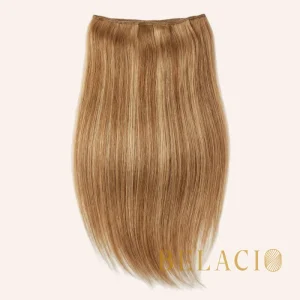
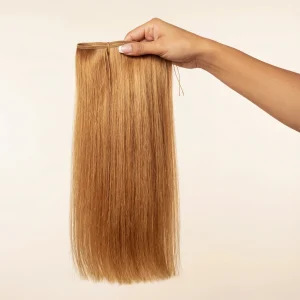
Weight matters more than anything. Standard clip-in sets weigh 120–200 grams — designed for medium to thick hair. That’s too much for fine hair. Look for sets under 80 grams or, even better, individual panels you can customize. Single pieces weighing 10–20 grams each let you add volume exactly where you need it without overloading fragile sections.
Seamless weft construction means the weft base is thin enough to lay flat against your head without creating a visible ridge under your natural hair. Traditional thick wefts create a bump that shows through thin hair — dead giveaway. Look for silicone-injected wefts or ultra-thin machine-pressed wefts. The thinner the base, the more invisible it sits.
Silicone-backed clips prevent the clips from sliding on fine, slippery hair. Fine hair doesn’t grip the way thick hair does — smooth metal clips will slide right out by lunch. The silicone lining creates friction-based hold without requiring you to clamp the clips so tight they cause breakage.
And here’s the one thing most brands won’t tell you: human hair clip-ins outlast synthetic alternatives by 6x to 12x. Our Remy human hair clip-ins last 12–36 months versus 2–6 months for synthetic sets at similar prices. The initial investment is higher, but the cost-per-wear makes human hair the smarter choice — especially when every wear counts for thin hair that can’t afford extra friction from rough synthetic fibers.
Where Should You Place Clip-Ins on Thin Hair?
Placement is where most beginners go wrong with thin hair. The key is to avoid your weakest areas — the temples, the hairline, and the part line — and concentrate clips where your natural hair has the most density to support them.
The golden rule: clip 1 inch behind your hairline and 1 inch from your part line. This buffer zone keeps the clips hidden under your natural hair while protecting the most fragile growth zones. Your front hairline and temple hair are often the thinnest strands on your head — loading them with clip weight accelerates breakage.
Here’s the placement map stylists use for fine hair:
- Back crown area (strongest zone): Place your widest panel here — this section has the most density and can handle the most weight. Tease the roots lightly to create a cushion before clipping.
- Side panels — 1 inch above each ear: Use smaller panels (3–4 inch width). These add fullness where thin hair tends to look most sparse, but position them far enough from the hairline to stay invisible.
- Temple fill-ins (optional): Only if your temple hair is strong enough. Use single-piece panels weighing under 10 grams. If you can see scalp through your temple hair when it’s dry, skip this placement.
- Nape area (underrated): A small panel at the nape adds surprising volume to the overall silhouette without touching any fragile zones. Most people overlook this placement, but it’s a stylist favorite for thin hair.
The teasing technique is non-negotiable for fine hair. Before placing each clip, use a rat-tail comb to gently tease (backcomb) the roots at the attachment point — three quick strokes toward the scalp. This creates a textured base the clips can grip. Without teasing, clips slide out of fine hair within hours.
Which Textures Work Best for Thin Hair Coverage?
Texture choice can make or break scalp coverage with thin hair. Straight extensions on thin, straight hair often reveal the part line and scalp more obviously because there’s no visual disruption. Wavy and textured extensions create natural-looking volume that disguises sparse areas without adding more weight.
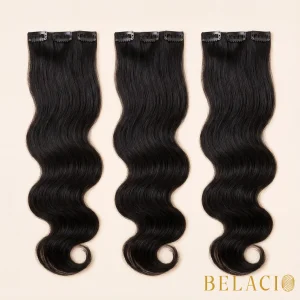
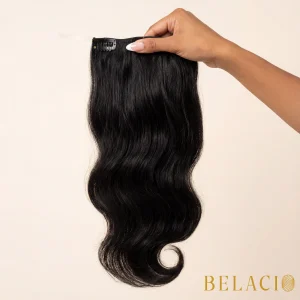
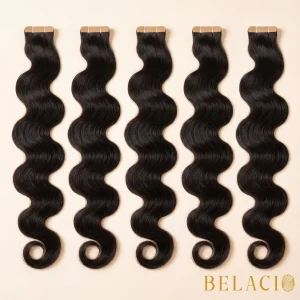
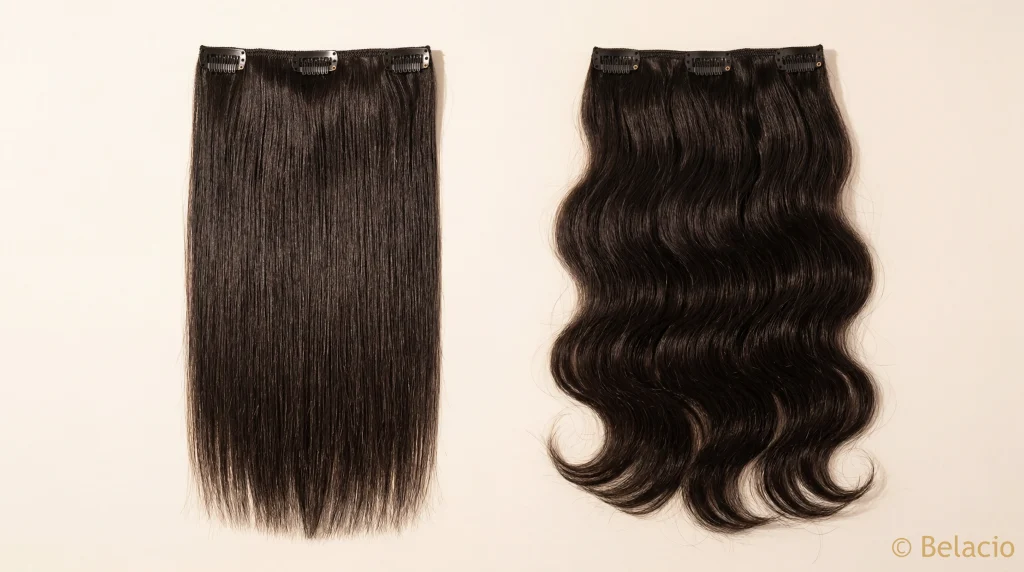
Soft wavy clip-ins are what I recommend most for thin hair. The wave pattern creates visual fullness that straight hair can’t achieve at the same gram weight — your eye sees more volume even though the actual hair weight is identical. The wave also helps disguise where the clips attach, because the natural movement breaks up any visible lines.
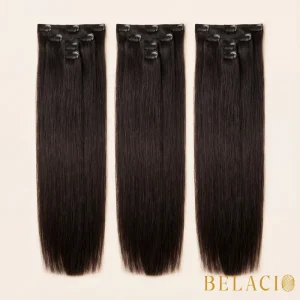
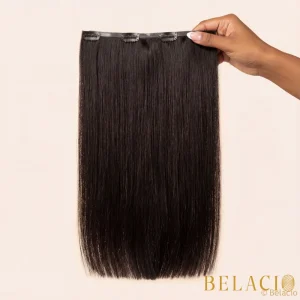
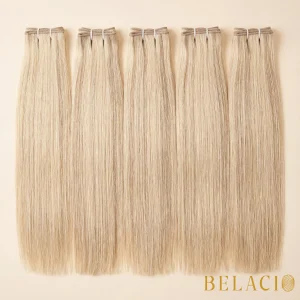
Straight clip-ins work best for fine hair that’s naturally straight and long enough to blend seamlessly. If your natural hair is chin-length or shorter, straight extensions can create a stark length contrast that emphasizes the thin natural sections. Add a soft curl after installation to blur the blend point.
At Belacio, we offer two clip-in textures specifically suited for fine hair: the Straight Clip-In Extension in 1B for a sleek, polished look, and the Soft Wavy Clip-In Extension in 1B for natural-looking volume and movement. Both feature double-drawn Vietnamese Remy hair with silicone-backed clips — the density at the ends means you need fewer panels to achieve a fuller result.
How Many Grams of Clip-In Extensions Do You Need for Thin Hair?
Fine hair requires 50–80 grams total for a full-head enhancement — roughly half of what medium-thick hair needs. Going heavier than 80 grams on fine hair creates traction stress at the attachment points, and your natural hair simply can’t conceal the additional bulk.
| Hair Density | Total Gram Weight | Number of Panels | Result |
|---|---|---|---|
| Very fine/sparse | 30–50g | 2–3 pieces | Subtle fill-in at temples and crown |
| Fine/thin overall | 50–80g | 4–5 pieces | Natural-looking volume boost |
| Fine at temples, medium elsewhere | 60–100g | 5–6 pieces | Targeted enhancement at weak zones |
The single-piece strategy is a game-changer for thin hair. Instead of buying a pre-configured full-head set (which often includes panels too heavy for fine hair zones), buy individual panels in different sizes. This lets you put 20 grams where your hair is strongest and 10 grams where it’s thinnest — customizable weight distribution that a one-size-fits-all set can’t deliver.
I tell my clients to start with less than they think they need. You can always add a panel. You can’t un-damage a hairline from wearing too much weight for three months straight.
Will Clip-In Extensions Cause Traction Alopecia?
Clip-in extensions do not cause traction alopecia when used correctly — they’re the lowest-risk extension method for exactly this reason. Unlike sew-in wefts that apply constant tension 24/7 for weeks, clip-ins come off every night, giving your follicles complete rest.
Traction alopecia from clip-ins only happens in specific scenarios: placing clips over already-thinning areas every single day for months, using sets heavier than your hair density supports (over 100 grams on fine hair), or failing to move clip placement by at least half an inch between wears. The follicle damage from traction comes from sustained, repetitive stress on the same attachment point — daily removal and slight position rotation eliminates this risk.
The prevention protocol is simple: remove every night (no exceptions — sleeping in clip-ins creates tangling and tension), rotate your clip placement by shifting each panel slightly between wears, take 1–2 rest days per week where you skip extensions entirely, and never clip directly onto visible scalp or areas where hair is noticeably thinning.
If you’re experiencing thinning hair from a medical condition (androgenetic alopecia, thyroid issues, postpartum shedding), talk to a dermatologist before adding any extension method. Clip-ins are gentler than alternatives, but they’re not a hair loss treatment — they’re a cosmetic enhancement that works best when your existing hair is healthy enough to support them.
How to Care for Clip-In Extensions and Protect Fine Natural Hair
Caring for clip-in extensions on fine hair is a dual mission — you’re maintaining the extensions and protecting your natural hair simultaneously. The care routine that keeps both healthy is simpler than most people expect.
For the extensions: Wash every 15–20 wears with sulfate-free shampoo. Lay the panels flat on a towel, apply shampoo from root to tip (never scrub), rinse with lukewarm water, and air-dry completely before storing. Store flat or hanging — never bunched in a drawer. Our Belacio clip-ins handle heat styling up to 410°F with protectant, but for maximum lifespan, minimize heat and let the natural texture do the work.
For your natural hair: Focus on strengthening at the attachment points. Use a lightweight protein treatment once every two weeks on the sections where you clip. Avoid heavy oils or serums at the roots — product buildup makes clips slip, which means you’ll clamp harder, which means more tension on already-fine strands. Keep your natural hair trimmed and healthy — split ends at the blend point make extensions obvious.
Caribbean climate tip: In 75–85% humidity, your clip-in panels will absorb ambient moisture faster when stored in the bathroom. Keep them in a cool, dry place — a bedroom closet, a sealed storage case. Humidity accelerates clip corrosion and can cause weft warping over months of exposure.
Frequently Asked Questions
Are clip-in extensions good for thin hair?
Clip-in extensions are the best extension method for thin hair because they’re the only type you control completely — they snap in and out in minutes with zero adhesive, heat, or permanent attachment. Lightweight clip-in sets under 80 grams add natural-looking volume without creating the traction stress associated with sew-in wefts or fusion bonds. The key is choosing panels light enough for your density and removing them every night.
How do I hide clips in thin hair?
Hide clips in thin hair by placing them 1 inch behind your hairline and 1 inch from your part line, using the teasing technique (three quick backcombing strokes at the root) to create a textured grip base before clipping. Choose seamless weft construction that lies flat against the scalp. Wavy textures naturally conceal clip attachments better than straight extensions because the movement breaks up visible lines.
What weight clip-in extensions should I get for fine hair?
Fine hair needs 50–80 grams total for a full-head enhancement — roughly half the weight of standard sets designed for medium-thick hair. Very fine or sparse hair should start with 30–50 grams using just 2–3 targeted panels. Individual panels (10–20 grams each) offer better customizable weight distribution than pre-configured full-head sets.
Can clip-in extensions cause hair loss on thin hair?
Clip-in extensions do not cause hair loss when used correctly. Traction alopecia risk from clip-ins is the lowest among all extension methods because you remove them nightly. Risk only increases with excessive weight (over 100 grams on fine hair), repeated clipping at the exact same point daily for months, or clipping directly onto visibly thinning scalp areas. Rotating placement slightly between wears eliminates this concern.
How long do clip-in extensions last?
Human hair Remy clip-in extensions last 12–36 months with proper care — washing every 15–20 wears, air-drying before storage, and minimizing heat styling. Synthetic clip-ins typically last 2–6 months. Belacio’s double-drawn Vietnamese Remy clip-ins feature uniform density from root to tip, so the ends stay full throughout the lifespan rather than thinning out after a few months of wear.
Your thin hair deserves extensions designed for it — not adapted from thick-hair sets. Browse the Belacio clip-in collection and start with the weight your hair actually needs. Questions about which texture or panel size is right for you? Message me on WhatsApp at (787) 671-7122.