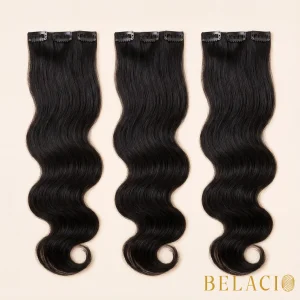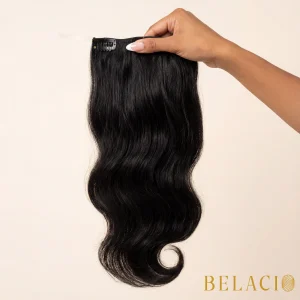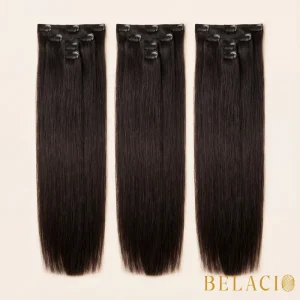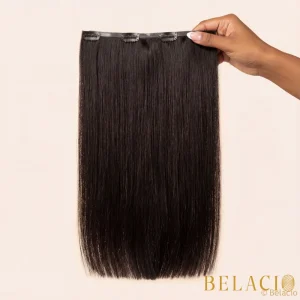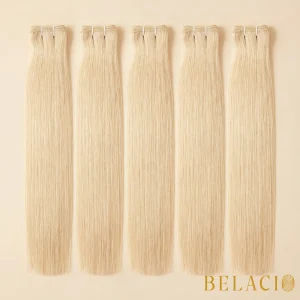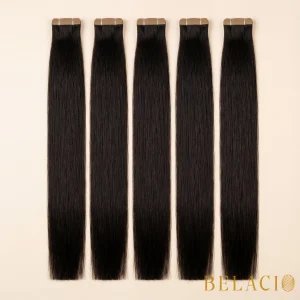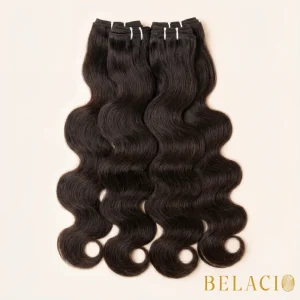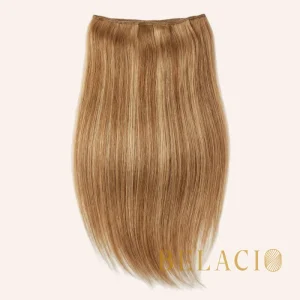
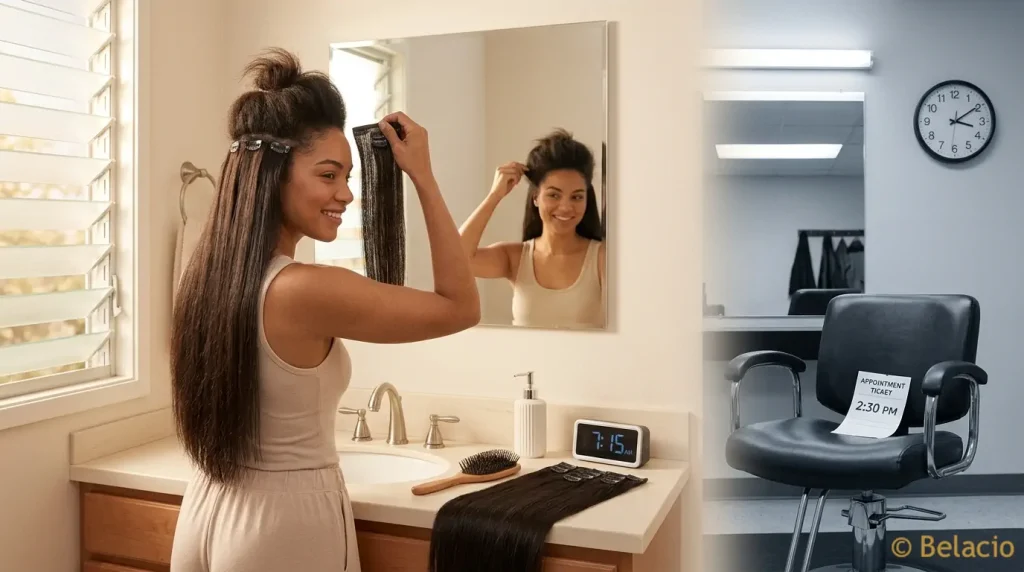
Clip-in hair extensions give you salon-quality volume and length in under 10 minutes at home, without booking an appointment, paying installation fees, or committing to a single stylist in Puerto Rico. For Caribbean women dealing with 75-85% humidity, unpredictable salon schedules, and $150-400 installation costs, clip-ins are the fastest path to the hair you actually want.
Key Takeaways
- Professional salon installation in Puerto Rico costs $150-400 on top of the hair itself, while clip-in extensions require zero installation fees and take 5-10 minutes at home.
- Clip-in extensions made from Vietnamese human hair with cuticle alignment resist Caribbean humidity (75-85%) without tangling, matting, or losing their shape.
- The average salon appointment for extensions in San Juan takes 2-4 hours including wait time. Clip-ins take under 10 minutes, every single time.
- Silicone-backed pressure clips distribute weight across 30-50 natural hair strands per panel, producing zero traction damage when removed nightly.
- A quality clip-in set ($120-180) lasts 12-36 months with proper care, making the cost-per-wear under $0.50 compared to $3-8 for salon-installed methods requiring regular reapplication.
- You control the look: clip-ins let you switch between straight and soft wavy textures without being locked into one style for 6-8 weeks.
What Does “Clip-In Hair Extensions Near Me” Actually Mean in Puerto Rico?
When someone searches “clip in hair extensions near me” in Puerto Rico, they’re looking for either a salon that installs clip-ins or a place to buy them — and most results show product pages, not local guides. That gap in useful information is exactly why this guide exists.
Here’s the reality of the extension market in Puerto Rico right now. Booking platforms like Booksy and Fresha list 50-60 salons offering extension services across San Juan, Guaynabo, and the metro area. Retailers like Sally Beauty, Walmart, and Ulta carry synthetic and low-grade human hair clip-ins between $17-70. And then there’s what you actually need: 100% Remy human hair clip-ins that perform in Caribbean humidity.
I spent two years testing every type of extension in our climate before launching Belacio. The expensive ones from mainland brands that “everyone loves” on Instagram? Half of them turned into a tangled mess after one beach day in Rincón. The cheap ones from the beauty supply store? Don’t even get me started.
How Much Do Clip-In Extensions Cost Compared to Salon Installation?
A full set of human hair clip-in extensions costs $120-180, with zero additional fees. Salon-installed extensions (tape-ins, sew-ins, or keratin bonds) cost $150-400 for labor alone, plus $200-600 for the hair itself.
Let me break down the real numbers:
| Cost Factor | Clip-In Extensions | Salon Tape-Ins | Salon Sew-Ins |
|---|---|---|---|
| Hair cost | $120-180 (full set) | $200-400 (2-4 packs) | $250-600 (3-5 bundles) |
| Installation fee | $0 (DIY, 5-10 min) | $150-300 | $200-400 |
| Reapplication/maintenance | None (daily remove) | $75-150 every 6-8 weeks | $100-200 every 6-8 weeks |
| Annual total (Year 1) | $120-180 | $650-1,200 | $800-1,600 |
| Lifespan of hair | 12-36 months | 6-12 months (hair), 6-8 weeks (bond) | 6-8 weeks per install |
That first column is the reason clip-ins have become the entry point for women trying extensions for the first time. No financial commitment beyond the hair itself. No appointment to cancel when your schedule changes. No stylist dependency.
A customer messaged me last month saying she’d spent $800 on tape-in installation at a salon in Condado. Six weeks later, the bonds started lifting in the humidity. She needed a full reapplication at $150. That’s $950 in less than two months. Her Belacio clip-in set? Still going strong after 14 months.
What Red Flags Should You Watch for at Extension Salons?
The three biggest red flags at Puerto Rico extension salons are: refusing to disclose hair origin, quoting only “per bundle” without explaining total cost, and not asking about your natural hair condition before installation.
I’ve heard enough stories from customers to build a checklist. If you do decide to go the salon route, here’s what to watch for:
- They can’t tell you where the hair comes from. “It’s human hair” is not an answer. Vietnamese hair, Indian hair, Brazilian hair — these are different products with different performance characteristics. If your stylist doesn’t know (or won’t say) the origin, the hair is likely blended or relabeled.
- The consultation skips your natural hair assessment. A good stylist examines your hair thickness, scalp condition, and any damage before recommending a method. Jumping straight to “how long do you want it?” is a red flag.
- Pricing is vague or “per bundle.” You need the total number. How many bundles? What’s the installation fee? What does reapplication cost? Salons that avoid total-cost transparency are counting on you not doing the math.
- They push one method for everyone. Tape-ins work differently than sew-ins. Keratin bonds work differently than both. The right method depends on your hair type, lifestyle, and budget. A stylist who recommends the same method regardless? They’re selling what they know, not what you need.
- No warranty or redo policy. If the installation fails within the first two weeks, what happens? Professional salons in San Juan and Guaynabo that take their work seriously will offer adjustments.
How Long Do Clip-In Extensions Last in Caribbean Humidity?
Quality human hair clip-in extensions last 12-36 months with proper care, even in 75-85% Caribbean humidity. The key factors are hair origin, cuticle alignment, and whether you remove them nightly.
Here’s where hair science meets island life. Vietnamese human hair has naturally thicker strands with intact cuticle layers all facing the same direction — that’s what “cuticle-aligned” means in practice. When the cuticles are aligned, water molecules from humidity can’t penetrate and swell the hair shaft the way they do with acid-washed or non-Remy hair. That’s the difference between extensions that survive a beach weekend and extensions that become a matted disaster by Saturday afternoon.
The lifespan comparison is dramatic:
| Extension Type | Lifespan (Tropical Climate) | Lifespan (Temperate Climate) |
|---|---|---|
| Human hair clip-ins (cuticle-aligned) | 12-36 months | 12-36 months |
| Human hair tape-ins | 6-12 months (hair), 5-6 weeks (bond) | 6-12 months (hair), 6-8 weeks (bond) |
| Synthetic clip-ins | 1-3 months | 1-3 months |
| Sew-in wefts | 6-8 weeks per install | 6-8 weeks per install |
Notice that clip-in lifespan doesn’t change between tropical and temperate climates. That’s because you remove them daily — the hair isn’t exposed to overnight humidity, sweat, or pillow friction the way permanently installed extensions are. It’s one of the biggest advantages nobody talks about.
I tested our straight clip-in set at Playa Sucia for three consecutive weekends. Salt water, full sun, 83% humidity. After washing and air-drying, the hair looked exactly the same. No tangling. No texture change. That’s what cuticle-aligned Vietnamese hair does that cheap alternatives can’t replicate.
Will Clip-In Extensions Damage Your Natural Hair?
Clip-in extensions produce zero traction damage when applied correctly and removed every night. The silicone-backed pressure clips distribute approximately 0.05-0.08 grams of tension per natural hair strand — well below the 0.15-0.20 gram threshold that causes traction alopecia.
This is the question I get on WhatsApp more than any other. And I understand the worry. You’ve seen the horror stories. But here’s the engineering behind why clip-ins are different:
Each clip panel uses silicone-backed metal clips that grip teased hair sections. A standard full-head set has 4-7 panels weighing 100-200 grams total, but that weight is distributed across your entire head. The 8-inch crown panel (the heaviest at 40-60 grams) sits across 30-50 natural strands when properly teased.
Compare that to tape-in extensions, where each 2.5-gram weft panel sandwiches 30-50 strands 24 hours a day, 7 days a week, for 6-8 weeks straight. Or sew-in wefts that create constant downward tension on braided tracks.
The rule is simple: remove clip-ins before bed, every night. No exceptions. That nightly reset is what keeps your natural hair healthy and your extensions lasting longer.

What Questions Should You Ask Before Buying Clip-Ins?
Before purchasing clip-in extensions, ask about the hair origin, processing level (raw, virgin, or Remy), weight in grams, heat tolerance in degrees, and the seller’s return policy.
Not all clip-ins are the same, and the packaging won’t always tell you the truth. Here’s your checklist:
- “Where does the hair come from?” The answer should be specific: Vietnamese, Indian, Chinese, European. “100% human hair” tells you nothing about the source.
- “Is it Remy?” Remy means the cuticles are aligned in the same direction. Non-Remy hair tangles within weeks because the cuticles create friction against each other.
- “How many grams is the full set?” A legitimate full-head set weighs 100-200 grams. Anything under 80 grams will look thin and sparse.
- “What’s the heat tolerance?” Vietnamese Remy hair handles up to 410°F. Synthetic blends (sometimes sold as “human hair”) melt above 300°F.
- “What’s the return window?” Brands confident in their product offer returns. Brands that don’t? They know what happens after the first wash.
Salon Extensions vs. Clip-Ins: Which Method Fits Your Life?
Choose clip-ins if you want daily flexibility, zero commitment, and DIY control. Choose salon installation if you want a set-it-and-forget-it look for 6-8 weeks and don’t mind the maintenance schedule.
This isn’t about one being “better” than the other — it’s about matching the method to your reality:
| Factor | Clip-Ins | Salon Installation |
|---|---|---|
| Best for | First-timers, event styling, flexible lifestyles | Daily wear without removal, consistent look |
| Time commitment | 5-10 minutes daily | 2-4 hours initial, 1-2 hours reapplication |
| Upfront cost | $120-180 | $350-900 (hair + installation) |
| Maintenance cost | $0 (home care) | $75-200 every 6-8 weeks |
| Humidity impact | Minimal (removed nightly) | Bond weakening, tangling risk |
| Natural hair risk | Zero (when removed nightly) | Low-moderate depending on method |
| Style flexibility | Change daily | Locked in for 6-8 weeks |
Living in Puerto Rico specifically, the humidity factor matters more than it does for someone in New York or Los Angeles. The 75-85% daily humidity here puts constant stress on adhesive bonds and braided tracks. Clip-ins bypass that entire problem because they’re not bonded to anything overnight.
Where Can You Find Quality Clip-In Extensions in Puerto Rico?
The best clip-in extensions for Puerto Rico are available through direct-to-consumer brands specializing in Vietnamese human hair, rather than beauty supply stores carrying mass-market synthetic alternatives.
Here’s what the market looks like right now:
Beauty supply stores in San Juan (Sally Beauty, Econo, local shops) carry clip-ins in the $17-70 range. Most are synthetic or low-grade human hair blends. They’ll work for one event but won’t survive a month of Caribbean conditions.
National retailers (Ulta, Walmart) carry mid-range clip-ins ($40-110). The quality varies wildly. Some are legitimate Remy human hair. Others are labeled “human hair” but contain synthetic blends.
Direct-from-source brands like Belacio cut out the intermediaries entirely. Our clip-in extensions use 100% Vietnamese human hair, double-drawn for uniform density from root to tip, with cuticle alignment verified at the factory. Starting at $120, available in straight and soft wavy textures.
The difference isn’t just marketing. It’s whether your extensions can handle a Saturday in Condado beach followed by Sunday brunch in Old San Juan — without you having to think about it.
Preguntas Frecuentes
How much should clip-in hair extensions cost?
Quality human hair clip-in extensions cost $120-200 for a full-head set weighing 100-200 grams. Synthetic clip-ins cost $15-70 but last only 1-3 months. The cost-per-wear for human hair ($0.30-0.50 per day) is lower than synthetic ($0.50-2.33 per day) because the lifespan is 4-12 times longer.
How long do clip-in extensions last?
Human hair clip-in extensions last 12-36 months with proper care. Synthetic clip-ins last 1-3 months. In Caribbean climates with 75-85% humidity, human hair clip-ins maintain the same lifespan as temperate climates because they’re removed nightly, avoiding overnight humidity exposure.
What are the best clip-in hair extensions?
The best clip-in extensions use 100% Remy human hair with cuticle alignment, weigh 100-200 grams per full set, tolerate heat up to 410°F, and come from single-origin sources like Vietnamese factories. Double-drawn processing ensures uniform thickness from root to tip without thin, wispy ends.
Will clip-in extensions damage my natural hair?
Clip-in extensions cause zero traction damage when removed every night. The silicone-backed clips distribute 0.05-0.08 grams of tension per strand, far below the 0.15-0.20 gram threshold for traction alopecia. This makes clip-ins the safest extension method for natural hair preservation.
Can I swim with clip-in extensions?
You can swim with human hair clip-ins, but rinse them with fresh water immediately after salt or chlorine exposure. The cuticle-aligned hair structure resists swelling from moisture, but salt crystals can cause tangling if left to dry in the hair. Air-dry completely before storing.
How do I choose between clip-ins and salon extensions?
Choose clip-ins if you want daily flexibility, zero installation costs, and no commitment to a reapplication schedule. Choose salon-installed methods (tape-ins, sew-ins) if you prefer a set-and-forget look for 6-8 weeks and are comfortable with $75-200 maintenance visits every cycle.
Where can I buy clip-in extensions in Puerto Rico?
Puerto Rico options include beauty supply stores ($17-70, mostly synthetic), national retailers like Ulta and Sally Beauty ($40-110, mixed quality), and direct-to-consumer brands shipping to the island. For Vietnamese human hair clip-ins tested in Caribbean humidity conditions, Belacio ships from Fajardo, PR with no customs delays.
Tu Próximo Paso
Now you know the real math behind clip-ins versus salon extensions in Puerto Rico. You know what questions to ask, what red flags to watch for, and why humidity changes the equation for every extension method.
If you’re ready to try clip-ins, browse the collection or text me directly on WhatsApp at 787-671-7122. I’ll help you pick the right texture and length for your hair — no pressure, no appointment needed. Just a real conversation about what works for your life.