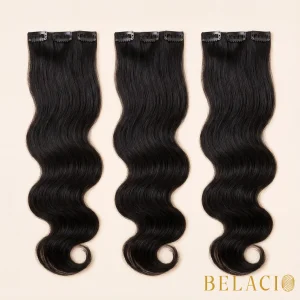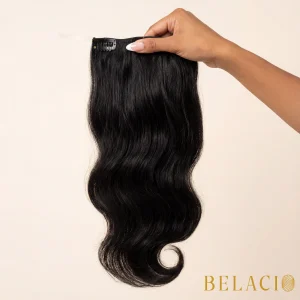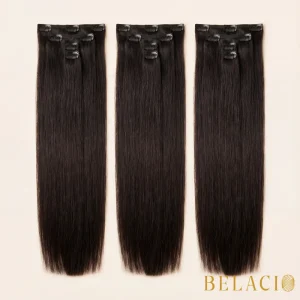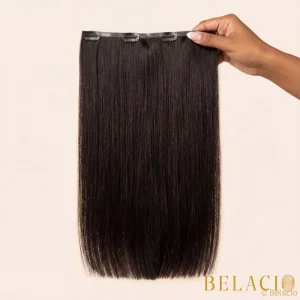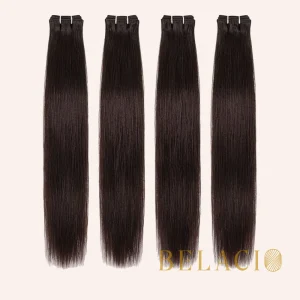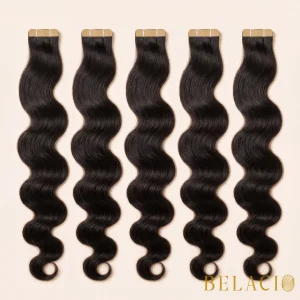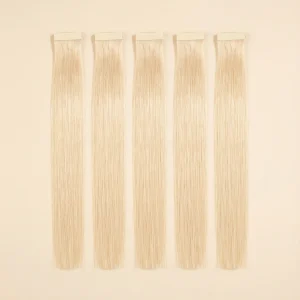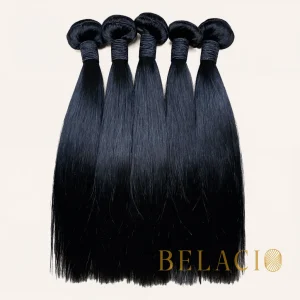
Machine sewn weft is hair stitched by machine onto a cloth or PU strip, so it is generally thicker and can be cut to length. Hand sewn weft, often sold as hand-tied, is stitched by hand onto a thinner base, so it is lighter, lies flatter and is usually folded rather than cut.
If you are choosing weft extensions in Puerto Rico, the label on the bundle often says “machine weft” or “hand-tied weft” without telling you what that changes on your head. The difference is real, and it sits in the strip at the top of the hair, the part your stylist sews onto a braided track. That strip decides how thick the weft feels, whether your stylist can trim it, and how it behaves as your own hair grows.
Most guides online come from sellers with a reason to favour one type, so the advice can read like a sales pitch for whatever is in stock. At Belacio hair extensions, we would rather give you the plain construction facts, the trade-offs each one brings, and the questions that help you choose for your own hair and routine. You stay in charge of the decision, and your stylist gets a clearer brief.
In this guide, you’ll learn how each weft is made, how thickness and weight compare, which type can be cut or resized, how move-up appointments differ, which construction suits which hair and goal, and what to ask before you order wefts shipped anywhere in Puerto Rico.
How Machine Sewn Weft and Hand Sewn Weft Are Made
Machine sewn weft and hand sewn weft start with the same loose human hair, and the difference begins at the moment that hair is joined into a strip. A machine weft is stitched by machine onto a cloth or PU (polyurethane) strip. A hand sewn weft is stitched by hand onto a thinner base along the top of the hair.
The shift from needle to motor is the same one that changed clothing and textiles generally. A sewing machine mechanises the job of joining material with thread, work that was once done entirely by hand, and hair wefts follow that same split. The machine needs enough hair in each pass to catch the stitch securely, which is why machine wefts usually carry a thicker band at the top.
Hand sewing works with less hair along the seam, so the finished edge stays narrow and flexible. Hand sewn weft is usually described as the higher price tier, although we do not quote prices here because they move with length, grade and supplier.
| Feature | Machine sewn weft | Hand sewn (hand-tied) weft |
|---|---|---|
| How it is stitched | By machine | By hand |
| Base at the top | Cloth or PU strip | Thin, hand-built seam |
| Usual thickness of the band | Generally thicker | Generally thinner and lighter |
| Can it be cut to length? | Yes, the stitched edge resists unravelling | Generally not, ends are folded instead |
| Usual price tier | Generally the lower tier | Usually described as the higher tier |
Thickness, Weight and How Each Weft Lies on Your Head
Thickness is the difference most clients notice first, because the band at the top of the weft is what sits against your scalp. A machine weft generally carries a thicker band, since the machine needs a certain amount of hair in each stitch to hold it in place. That extra hair can give you more volume per row, which many people want when they are adding fullness rather than only length.
A hand sewn weft generally feels thinner and lighter along the top, so it tends to lie flatter against the head. For clients who wear their hair sleek, pulled back or parted in several places, that flatter band can be easier to blend under natural hair. The lighter seam also places less bulk on each row your stylist builds.
Neither type is automatically right for everyone, and the honest answer depends on how much volume you want and how much of your own hair will cover the rows. Sellers also disagree about shedding, so we will not tell you one type sheds less than the other. In practice, shedding depends on the quality of the stitching, whether the weft has been cut, and how carefully the hair is washed, brushed and dried.
Cutting, Resizing and Moving Up Each Type of Weft
Cutting is where the two constructions behave most differently, and it affects how your stylist fits the wefts to your head. A machine weft can generally be cut to length across the strip, because its reinforced stitching resists unravelling at the cut. Your stylist can trim a machine weft to fit a narrow nape row or a short section near the temples without losing hair along the edge.
A hand sewn weft generally should not be cut, because the thinner hand stitching can unravel once the seam is opened. Stylists usually adjust the width by folding the ends of a hand sewn weft back on themselves before sewing it in. That works well when your stylist is experienced with the method, but it means planning row lengths with the uncut weft width in mind.
Both types need attention as your natural hair grows and the rows move away from the scalp. One salon guide suggests moving up hand-tied rows roughly every 6 to 8 weeks, and that figure is one source’s guide rather than a fixed rule. Machine wefts are often described by sellers as durable enough to be removed and reused, which can matter if you plan to wear the same set more than once.
| Care step | Machine sewn weft | Hand sewn (hand-tied) weft |
|---|---|---|
| Fitting a short row | Cut to length | Fold the ends back |
| Move-up timing | Set with your stylist as your hair grows | One salon guide suggests about every 6 to 8 weeks |
| Reuse after removal | Often described by sellers as reusable | Ask your stylist whether it can be reused |
| What drives shedding | Stitch quality, cutting and care | Stitch quality, cutting and care |
Which Weft Construction Suits Your Hair and Your Plan
The right construction is the one that matches your hair density, the look you want and how often you plan to see your stylist. A machine weft suits clients who want visible volume, who expect their stylist to cut and customise each row, and who like the idea of reusing a set. Its thicker band works well when your own hair is dense enough to cover the rows comfortably.
A hand sewn weft is generally suited to finer hair, because the thinner seam lies flatter and adds less bulk at the root. Clients who part their hair in different places or wear it tied back often prefer that flatter profile. The trade-off is less freedom to cut, and a seam your stylist needs to handle with care at each move-up.
Your daily routine in Puerto Rico matters as well, because heat, humidity and beach days change how often you wash and restyle. Those conditions do not make one construction right or wrong, but they do make good aftercare and well-chosen hair more important. Talk through your routine with your stylist before you settle on rows and colours.
| Your hair or goal | Construction usually suited | Why |
|---|---|---|
| Fine or thin natural hair | Hand sewn (hand-tied) weft | Thinner, lighter band lies flatter |
| Dense hair, more volume wanted | Machine sewn weft | Thicker band adds fullness per row |
| Rows that need custom lengths | Machine sewn weft | Can be cut, stitched edge resists unravelling |
| Sleek or pulled-back styles | Hand sewn (hand-tied) weft | Flatter seam is easier to blend |
| Plan to reuse the same set | Machine sewn weft | Often described as durable and reusable |
What to Ask About Weft Construction Before You Order
The quickest way to know what you are getting is to ask the seller a few direct questions before any hair is shipped. A clear label saves your stylist time on installation day and stops you from planning cut rows with a weft that should only be folded. These questions also show you how much the seller actually knows about the hair it sells.
| Question to ask | Why it matters |
|---|---|
| Is this weft sewn by machine or by hand? | It decides thickness, cutting and how rows are planned |
| Can my stylist cut this weft? | Cutting a hand sewn weft can make it unravel |
| What is the base at the top, cloth or PU? | The base affects how flat the weft lies |
| Where does the hair come from? | Origin and donor details tell you more than vague quality words |
| Is the hair cuticle-aligned? | It is a specification you can check, unlike a vague quality claim |
| How long does delivery take to my town? | It helps you book your installation appointment with confidence |
If you are shopping for wefts from home, it also helps to have photos of your own hair, your preferred length and your stylist’s row plan ready. With those details, the seller can steer you toward the construction and grade that suit you instead of the one that happens to be in stock. When you compare options, our weft hair human extension collection lists each line separately, so you can bring these questions to a specific weft.
Where Belacio Wefts Fit for Clients in Puerto Rico
Belacio offers its wefts as part of a focused hair extension range, alongside tape-in and clip-in options, with every strand sourced from Vietnam. The weft range covers double drawn, super double drawn, virgin and raw lines, so you can match hair grade to your plan as well as construction. The hair is Vietnamese single-donor and cuticle-aligned, which means the strands come from one person and run in the same direction.
Puerto Rico is where Belacio is based and ships from, not where the hair itself comes from. We work factory-direct, have visited more than 25 Vietnamese suppliers, and choose hair for durability in tropical humidity and salt air, the conditions you live with every day on the island. Cutting out middlemen lets us speak plainly about where the hair started and how it was processed.
Because construction details can differ from one line to the next, we would rather confirm them for your exact order than guess in an article. If you want to know whether a specific Belacio weft is machine sewn or hand sewn, contact Belacio to ask about weft construction before you order. For timing, our page on shipping across Puerto Rico explains delivery, which is same or next day in the San Juan metro area and 2 to 3 business days to outer towns.
Whichever construction you lean toward, the goal is the same: hair that blends with your own, holds up through island weather, and gives your stylist a clear plan from the first row to the last move-up.
Key Takeaways
- Machine sewn weft is stitched by machine onto a cloth or PU strip. That process generally gives it a thicker band and more volume in each row.
- Hand sewn weft, often sold as hand-tied, is stitched by hand onto a thinner seam. It is generally lighter and lies flatter against the head.
- A machine weft can usually be cut to length because its stitched edge resists unravelling. A hand sewn weft is usually folded at the ends instead of cut.
- Sellers disagree about shedding, so neither type wins on that point. Stitch quality, cutting and daily care decide how much a weft sheds.
- Hand sewn weft is generally suited to fine hair, while machine weft suits dense hair and custom row lengths. Your stylist’s plan should match the construction you choose.
- Ask any seller whether a weft is machine or hand sewn before you order. That one answer shapes how your stylist cuts, folds and installs every row.
Frequently Asked Questions
Can you cut hand-tied weft?
Generally no, because hand-tied weft is stitched by hand along a thin seam that can unravel once it is cut. Stylists usually fold the ends back to adjust the width instead, so plan your rows around the full weft length.
Does machine weft shed more than hand-tied?
Sellers disagree on this, so there is no clear winner. Shedding depends mostly on the quality of the stitching, whether the weft has been cut, and how gently you wash, brush and dry the hair.
Which weft is gentler on fine hair?
Hand-tied weft is generally suited to fine hair because its thinner, lighter band lies flatter and adds less bulk at each row. Your stylist can confirm whether your hair density covers the rows well.
How often does hand-tied weft need to be moved up?
One salon guide suggests roughly every 6 to 8 weeks, but that is one source’s guide, not a fixed rule. Your stylist will set timing based on how quickly your natural hair grows.
Can machine weft be reused?
Machine weft is often described by sellers as durable enough to remove and reuse. Whether a set can be reused depends on its condition, so ask your stylist to check the stitching before reinstalling it.
Is machine weft thicker?
Yes, generally, because the machine needs enough hair in each pass to catch the stitch, so a machine weft usually carries a thicker band at the top than a hand sewn weft does.
Which type is easier to install?
Machine weft gives your stylist more freedom because it can be cut to fit short rows. Hand-tied weft needs careful folding and handling, so it suits stylists who are experienced with that method.
Do both types come in virgin or raw hair?
Construction and hair grade are separate choices, so the stitching method does not decide whether hair is virgin or raw. Ask the seller to confirm both details for the exact weft you are considering.
How do I tell which kind of weft I am ordering?
Ask the seller directly whether the weft is sewn by machine or by hand. You can also look at the top band: a thicker cloth or PU strip usually points to machine construction.
Does weft type change the price?
Usually, yes, since hand-tied weft is generally described as the higher price tier. Length, hair grade and supplier also change the cost, so compare like with like.
Conclusion
Machine sewn weft and hand sewn weft use the same hair but behave differently once they reach your stylist’s chair. Machine weft brings a thicker band, more volume and the freedom to cut, while hand sewn weft brings a thinner, flatter seam that is folded rather than trimmed.
The construction that suits you depends on your hair density, the look you want and how you plan your move-up visits in Puerto Rico’s heat and humidity. Before you choose, ask the Belacio team which construction a specific weft uses so your stylist can plan every row with confidence.
Call Belacio at 787-671-7122 today.
Ask Belacio which weft construction suits you.