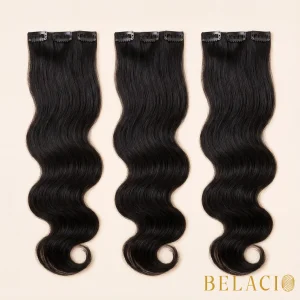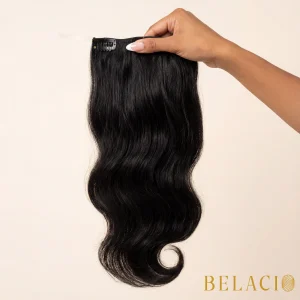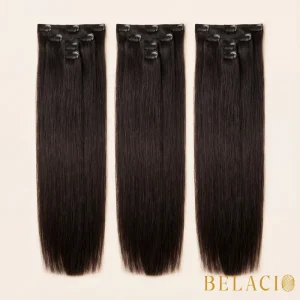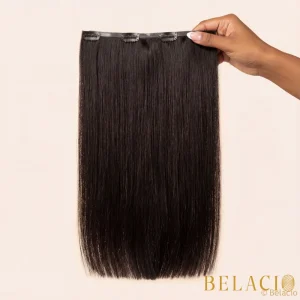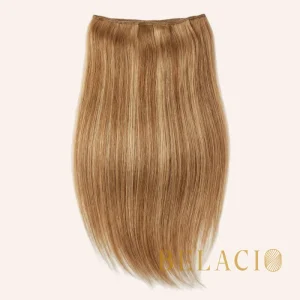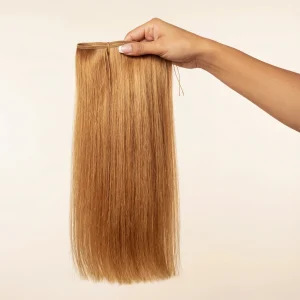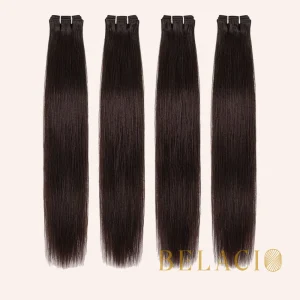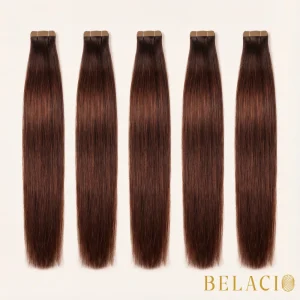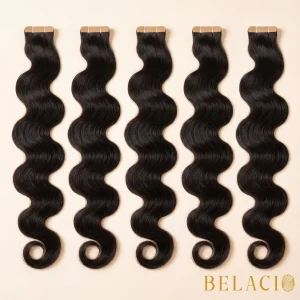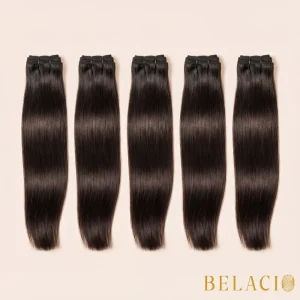

The highest quality available is raw, single donor human hair that is cuticle aligned and double drawn, with Vietnamese hair widely regarded as the top of that tier. Raw means the hair has never been chemically processed, single donor means every strand came from one head so the texture is consistent, cuticle aligned means the strands all run root to tip in the same direction, and double drawn means the short strands have been removed so the hair stays thick from top to end. In Puerto Rico that grade matters more than it does in a dry climate, because humidity, salt air, and sun expose weak hair quickly.
Almost every extension listing claims to be premium, and almost none define the word. That leaves buyers comparing prices without knowing whether they are comparing the same product, which is how a set that looked like a bargain ends up tangling within a month.
Quality in human hair extensions is not a matter of opinion. It rests on four measurable things: whether the hair was chemically processed, whether it came from one donor or many, whether the cuticles run in one direction, and how much of the length carries full thickness. Each has a name in the trade, and once you know the vocabulary a vague product description becomes easy to read.
This guide walks the quality ladder from bottom to top, explains what the grading terms actually describe, and gives you a short list of questions that separate a real supplier from a reseller. It also covers why the same grade behaves differently in Caribbean conditions, which is the part most buying guides written for the mainland leave out.
The Quality Ladder From Lowest to Highest
Extensions fall into five broad tiers. The names get used loosely in marketing, so it helps to know what each genuinely means before reading another product page.
Synthetic Fiber
Synthetic extensions are plastic filaments, usually acrylic or polyester, textured to resemble hair. They hold a set shape and cost very little, which is their only real advantage.
They cannot be heat styled beyond very low temperatures, they cannot be dyed, and they do not reflect light the way hair does, so they read as artificial in daylight. In humid conditions they frizz in a way that will not brush out. They have a place in costume and short term wear, and none in a set you intend to keep.
Non-Remy Human Hair
Non-Remy is real human hair collected without keeping the strands oriented, so roots and tips end up mixed together in the same bundle.
Because the cuticle scales on a strand all point one way, mixing directions makes the scales catch on each other and the hair tangles at the slightest friction. Manufacturers deal with this by stripping the cuticle off with acid and coating the hair in silicone, which produces a bundle that feels wonderful in the package and starts shedding and matting as soon as the coating washes away. Most of the very cheap human hair sold online is this tier, and the silicone is why the first impression misleads so reliably.
Remy Human Hair
Remy hair is collected with the strands kept in alignment, root to root and tip to tip. That single discipline in the collection process is what separates it from the tier below, and the practical difference is large, because aligned cuticles lie flat against each other and the hair moves without catching.
Remy is the genuine entry point for extensions worth owning. It can still be dyed, permed, or steamed to change texture, so Remy on its own tells you about alignment and nothing about processing.
Virgin Human Hair
Virgin hair is Remy hair that has never been chemically treated: no bleach, no dye, no perm, no chemical straightening. The keratin structure inside the strand is intact, which is what gives the hair its strength and its ability to hold moisture, and it is why virgin hair takes color predictably and tolerates heat styling. Processed hair has already spent part of its structural budget, so every subsequent treatment costs more than it would on virgin hair.
Raw Human Hair
Raw hair is virgin hair from a single donor, collected directly rather than assembled from multiple sources. This is the top tier, and the single donor part is what distinguishes it from virgin hair that has been blended.
One donor means one texture, one density, and one natural shade across the entire set. Blended virgin hair can be perfectly good hair and still behave inconsistently, because strands from different heads vary in diameter and porosity, so they take color at slightly different rates and respond differently to heat. Raw single donor hair removes that variable, which is why it is the grade stylists ask for when the result has to be invisible. True high quality hair extensions start here.
| Tier | Cuticle | Processing | Donors | Typical lifespan with care |
| Synthetic | None, not hair | Not applicable | None | Weeks to a few months |
| Non-Remy | Mixed direction, often stripped | Acid bath and silicone coating | Many | 1 to 3 months |
| Remy | Aligned | May be dyed or texturized | Many | 6 to 12 months |
| Virgin | Aligned and intact | None | Often blended | 1 to 2 years |
| Raw | Aligned and intact | None | Single donor | 2 to 3 years or more |
What Double Drawn Actually Means
Tier tells you about the hair itself. Drawing tells you how the bundle was assembled, and it is the single most overlooked spec on a product page even though it determines whether your ends look full or wispy.
Any quantity of hair collected from a head contains strands of many different lengths, because hair does not grow in unison. Drawing is the sorting process that removes the shorter strands so the bundle holds its thickness further down.
Single Drawn
Single drawn hair has had only the shortest strands removed, so the bundle is thick at the top and tapers noticeably toward the bottom. It is not defective hair and it suits a naturally tapered style well, but it is thinner at the ends than most people expect from a set measured at a particular length.
Double Drawn
Double drawn hair has gone through sorting twice, removing both the shortest and the mid length strands, so most of what remains runs close to the full length and the ends sit much nearer the thickness of the roots.
This takes considerably more hair and more labor, which is why double drawn costs more than single drawn of the same tier. A straight super double drawn virgin 1B weft carries noticeably more weight through the bottom third than a single drawn bundle of the same stated length and gram weight.
Super Double Drawn
Super double drawn takes the sorting a step further, producing a bundle close to uniform from top to bottom. It is the thickest option available and the most expensive to make, and it is what blunt cuts and any style needing visible density at the ends call for.
| Drawing | Short strands removed | Thickness at the ends | Relative cost |
| Single drawn | Shortest only | Noticeably tapered | Lowest |
| Double drawn | Short and mid length | Close to the root thickness | Higher |
| Super double drawn | Nearly all uneven lengths | Near uniform top to bottom | Highest |
Grade and drawing are independent of each other, which is worth stating plainly. Raw hair can be single drawn and Remy hair can be double drawn. The best combination is raw, single donor, cuticle aligned, and double or super double drawn, and a product described by only one of those things is telling you about one variable while staying quiet about the rest.
Why Vietnamese Hair Sits at the Top
Raw hair comes from several regions, and Vietnamese hair has the strongest reputation among them for reasons that are practical rather than promotional.
Collection practice. It is typically collected from a single donor in one cut, with the ponytail kept intact and bound at the root, so it arrives already aligned.
Strand characteristics. It tends to run thicker in diameter with lower natural porosity than hair from other sourcing regions, and lower porosity means less water absorbed, less swelling in humidity, and less of the frizz that follows.
Minimal chemical history. Hair that has not been repeatedly colored or relaxed before collection starts with its full structural strength, which is much of why two bundles both labeled raw can perform very differently.
Natural base shade. Vietnamese hair comes in a natural off black rather than a flat jet black, which is the 1B shade, and it sits close to the natural color of most hair in Puerto Rico and across the Caribbean. A straight double drawn raw 1B blends without color work, so the hair never spends any of its structural budget on a dye process.
How to Verify Quality Before You Buy
Grade claims are easy to make and easy to check. The questions below are the ones a genuine supplier answers without hesitation, and the physical tests settle any argument after the hair arrives.
Questions a Supplier Should Answer Directly
- Where was this hair sourced, and is it single donor or blended?
- Is it raw, virgin, or Remy, and has anything been done to the texture?
- Is it single drawn, double drawn, or super double drawn?
- What is the gram weight, and at what length was it measured?
- What is the return policy if the hair does not match the description?
A supplier who cannot say whether their own hair is single or double drawn is reselling rather than sourcing, and that is the clearest signal in the whole conversation. If you want the sourcing chain laid out for a specific set, you can request a sourcing breakdown before committing to a purchase.
Physical Checks You Can Run
- Run your fingers both directions. Smooth downward and slightly resistant upward is the cuticle doing its job. Equally smooth both ways usually means it has been stripped.
- Wash it before you wear it. Silicone coating survives the first impression and not the first shampoo, so hair that turns dry or tangled after one wash was coated rather than cured.
- Check the ends against the roots. Compare thickness at the top with thickness two thirds of the way down. A sharp taper means single drawn, whatever the listing said.
- Test a hidden strand with a flame. Human hair singes and smells of burnt protein, while synthetic melts into a bead and smells of plastic.
- Pull a few strands firmly. Good hair stretches slightly and recovers. Hair that snaps immediately has already lost its structure.
- Look at it in daylight. Artificial light hides the flat, uniform tone that over processing produces.
Keep a small amount aside before installation if you can, since comparing a worn set against an unworn reference strand after three months tells you more than memory ever will.
What Quality Means in Puerto Rico Specifically
The same grade does not perform identically everywhere, and Caribbean conditions are unusually demanding. Weakness that would pass unnoticed in a dry climate shows itself here within weeks.
Humidity works on porosity. Chemically stripped hair is porous, and porous hair pulls moisture from the air until the strand swells and the cuticle lifts, which is the mechanism behind frizz. Low porosity raw hair takes in far less, so it holds a smooth finish through a humid afternoon.
Salt and chlorine draw moisture out. Extensions receive no oil from your scalp, so whatever moisture they have is what you put there, and hair with an intact cuticle holds on to considerably more of it.
Sun exposure is constant rather than seasonal. Ultraviolet light breaks down keratin and fades color over months, and hair never chemically weakened has more structure to spend before the damage shows.
The consequence is that cheap hair fails faster here than the same hair would in a cooler, drier place. A set that might have limped through eight months elsewhere can be finished in three, which changes the arithmetic of buying because the cheaper option gets replaced more often.
Quality Across the Attachment Methods
Grade and attachment method are separate choices. Raw double drawn hair is available as a weft, a tape-in, or a clip-in, and the method affects comfort and maintenance rather than the quality of the hair itself.
Methods that get reused reward quality most, because the hair goes through removal and reinstallation several times over its life. A set of human hair tape in extensions in raw double drawn hair can survive four to eight repositioning appointments, while a cheaper set is often finished after two. If you are weighing methods and shades together, comparing where to buy hair extensions in the same grade across all three is the useful exercise. Salons and stylists face the same question at volume, where a set that fails early also costs the appointment time to replace it, which is why professional buyers tend to settle on wholesale hair extensions in one verified grade rather than sourcing by price per bundle.
Price, Lifespan, and Cost Per Wear
Raw double drawn hair costs several times what non-Remy costs, and comparing the two on sticker price alone produces the wrong answer. The figure that matters is what you spend per month of wear.
| Non-Remy | Raw double drawn | |
| Relative upfront cost | Low | High |
| Realistic lifespan in Caribbean conditions | 1 to 3 months | 2 to 3 years |
| Replacements over three years | Roughly 12 to 36 sets | 1 set |
| Reusable across installations | Rarely | Yes, repeatedly |
| Takes color | Poorly or not at all | Predictably |
Even on conservative assumptions the cheaper hair costs more across three years, and that leaves out the installation fee paid each time a set is replaced. Buying one good set and maintaining it is the less expensive path as well as the better looking one.
Key Takeaways
- The highest quality available is raw, single donor, cuticle aligned human hair that is double drawn or super double drawn, with Vietnamese hair at the top of that tier.
- Remy describes cuticle alignment only, virgin adds the absence of chemical processing, and raw adds single donor sourcing, so the three terms stack rather than compete.
- Drawing determines thickness at the ends and is independent of grade, which is why single drawn raw hair can look thinner than double drawn Remy.
- Caribbean humidity, salt air, and constant sun expose weak hair far faster than a dry climate does, so grade matters more here than most buying guides suggest.
- Verification is straightforward: ask about sourcing, donor count, processing, and drawing, then wash the hair before wearing it and compare the ends against the roots.
- Letter grades such as 8A or 10A are marketing shorthand with no governing standard behind them.
Frequently Asked Questions
What is the highest quality hair extension you can buy?
Raw, single donor human hair that is cuticle aligned and double drawn. Raw means no chemical processing, single donor means one consistent texture throughout, and double drawn means the short strands were removed so the ends stay thick.
Is Vietnamese hair better than other raw hair?
It has the strongest reputation. Vietnamese raw hair tends to be thicker in diameter with lower porosity, is usually collected as an intact single donor ponytail, and comes in a natural off black that suits Caribbean hair without any dye process.
What is the difference between Remy and virgin hair?
Remy describes cuticle alignment, meaning all strands run root to tip in the same direction. Virgin adds that the hair has never been chemically treated. Hair can be Remy and still dyed or permed, so the two terms are not interchangeable.
Does double drawn really make a difference?
Yes, at the ends. Single drawn hair tapers because many strands finish before the stated length. Double drawn hair holds close to full thickness through the bottom third, which is what makes blunt cuts and dense styles look right.
What does 1B mean and is it a quality marker?
1B is the natural off black shade, not a quality grade. It matters because hair that already matches your natural color needs no dye, and skipping that process leaves the strand structure fully intact.
Are 10A or 12A grades meaningful?
No. Those letter grades have no standards body behind them and each seller applies them differently. Judge hair on sourcing region, donor count, processing history, and drawing, which are the specifications that actually describe the product.
How can I tell if hair has been silicone coated?
Wash it before you wear it. Coating survives handling in the package but not shampoo, so hair that turns dry, coarse, or tangled after one wash was coated rather than genuinely high grade.
How long should high quality extensions last in Puerto Rico?
Raw double drawn hair generally runs two to three years with proper care, compared with one to three months for non-Remy. Humidity, salt, and sun shorten both figures, which is exactly why the better grade pays off here.
Is expensive hair always better quality?
No, but very cheap hair is reliably worse. Price alone proves nothing, so check the specifications. The reasonable test is whether the seller can state sourcing, donor count, processing, and drawing without hesitating.
Can I dye raw hair to a lighter color?
Usually yes, and more predictably than processed hair, because the structure is intact. Lifting a dark natural base still requires a professional, and going significantly lighter is best done by a colorist experienced with extensions.
Conclusion
The answer is specific rather than vague. The highest quality extensions available are raw, single donor, cuticle aligned human hair that has been double drawn or super double drawn, and Vietnamese hair holds the strongest reputation within that tier because of how it is collected, how thick and low in porosity the strands tend to be, and the natural off black shade it arrives in. Every word in that description points to something you can verify.
Why it matters more here than elsewhere comes down to climate. Humidity finds porous hair, salt and sun draw moisture out of fiber that gets none from your scalp, and all three work on extensions daily rather than seasonally. Hair that was stripped and coated to look good in the package reveals itself quickly under those conditions, while hair with an intact cuticle holds up for years and can be reinstalled repeatedly along the way. Once you count replacements rather than sticker prices, the better grade is also the cheaper one.
Invest once in raw double drawn human hair.
Ask the Belacio team which grade fits you.