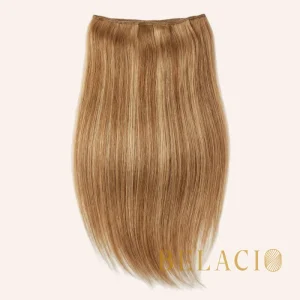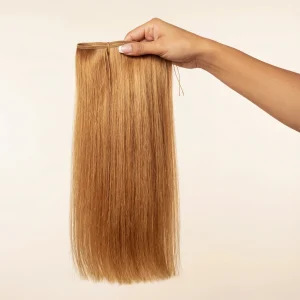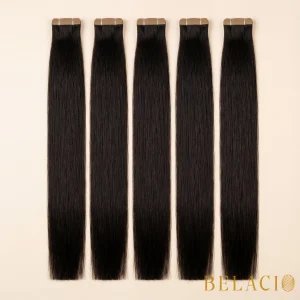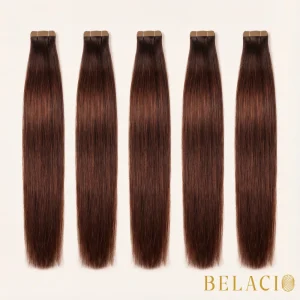
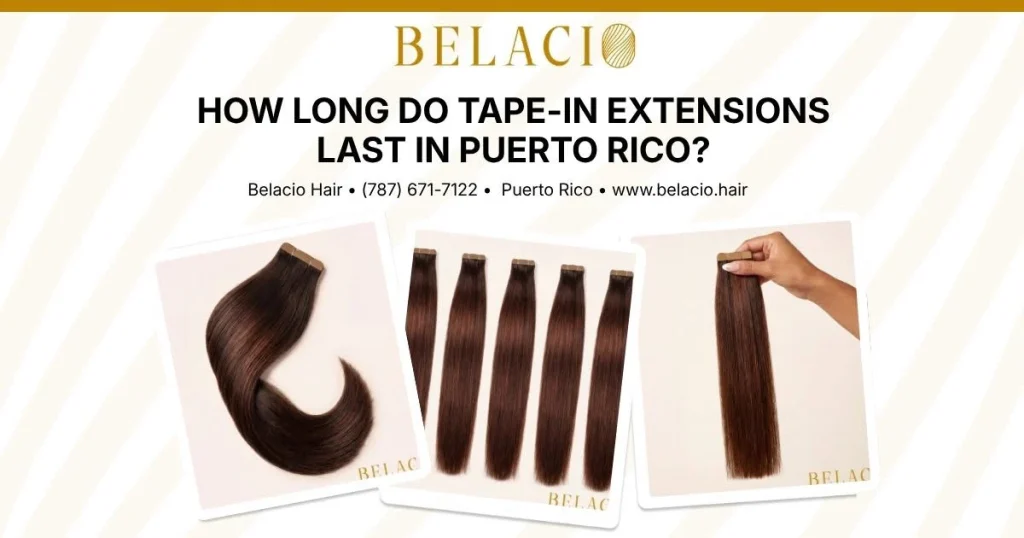
Two timelines matter. Tape-ins need repositioning every six to eight weeks as your natural hair grows out, and the hair itself lasts six months to a year or longer with proper care, reusable across several moves. Puerto Rico’s humidity, salt water, chlorine, and sun exposure push both timelines toward the shorter end, though good hair quality and disciplined care recover much of that difference.
Tape-in extensions carry two separate lifespans, and confusing them is the source of most disappointment. The adhesive holds for a matter of weeks, while the hair itself can serve for a year or more.
Caribbean conditions complicate both numbers. Humidity works against adhesive, salt water and chlorine strip moisture from the hair, and constant sun exposure fades color and weakens fiber. This guide separates the two timelines, explains what shortens each in Puerto Rico specifically, and covers what actually extends them.
The Two Timelines
How Long Between Moves
Tape-in extensions attach using adhesive tabs that sandwich a thin section of your own hair between them. As that hair grows, the tabs travel away from the scalp, becoming visible and putting tension on the roots.
Repositioning is typically needed every six to eight weeks after installation. The interval depends on how fast your hair grows rather than on adhesive failure, since most people’s hair grows roughly half an inch monthly.
Waiting longer than eight weeks risks matting at the attachment point and tension on the follicle. Neither is dramatic in the short term, but repeated over months they contribute to breakage at the root. The schedule exists to protect your own hair rather than to sell appointments, which is worth understanding when the timing feels inconvenient.
How Long the Hair Lasts
The extensions themselves outlive any single application. With proper care, quality tape in hair extensions made from human hair last six months to a year, and often longer.
That means the same set typically survives four to eight repositioning appointments before the hair itself needs replacing. New adhesive tabs are applied at each move, but the hair carries forward. A stylist removes the old tabs with a solvent, cleans the hair, and reattaches it higher on the strand, which is a shorter appointment than the original installation.
The economics follow from this. The upfront cost covers hair that will serve for many months across multiple applications, while the recurring cost is limited to the appointment and a new set of tabs rather than a full replacement of the hair. The table below summarizes both timelines.
| Timeline | Typical duration | What ends it |
| Between repositioning | 6 to 8 weeks | Natural hair growth moving the tabs out |
| Hair lifespan | 6 months to 1 year or more | Cumulative wear, dryness, thinning ends |
| Number of moves per set | Roughly 4 to 8 | Determined by hair condition, not adhesive |
What Caribbean Conditions Do
Humidity and Adhesive
Puerto Rico’s humidity affects adhesive bonds directly. Moisture in the air softens tape over time, and the effect compounds with heat.
This does not usually cause tabs to release outright, but it can shorten the comfortable wear window at the margins. Someone who might stretch to eight weeks in a dry climate may find seven is more realistic here. Heavy sweating from exercise or outdoor work has a similar effect and is worth factoring into scheduling.
Salt Water and Chlorine
Ocean swimming and time in the pool are among the harder conditions for extensions to withstand. Salt draws moisture out of the hair shaft, leaving it dry and more prone to tangling, while chlorine is chemically aggressive toward both hair and adhesive.
Neither means avoiding the water. It means rinsing with fresh water immediately afterward rather than letting salt or chlorine dry in place, which is where most of the damage actually occurs. Wetting the hair with clean water before swimming also helps, since saturated hair absorbs less pool or ocean water.
Sun Exposure
Ultraviolet exposure breaks down pigment and gradually weakens the hair shaft over time. On human hair extensions this shows as gradual lightening and increasing dryness, particularly at the ends.
Extensions are considerably more vulnerable than your natural hair because they receive no oil from the scalp at all. Your own hair is continuously conditioned from the root, while extensions depend entirely on what you apply.
That single fact explains most of the difference in how the two age, and it is the strongest argument for a dedicated care routine rather than treating extensions like the rest of your hair.
What Extends Their Life
Hair Quality at Purchase
The starting quality sets the ceiling on everything that follows. Raw and remy human hair, with cuticles aligned in the same direction along every strand, resists tangling and holds up through repeated washing and styling far better than processed alternatives ever do.
Heavily processed hair may look identical at purchase and diverge quickly. It swells and frizzes after washing, loses movement, and reaches the end of its usable life in months rather than approaching a year. The price difference at purchase often disappears once you account for replacing a set twice as often.
Washing Practice
Wash two to three times weekly rather than daily. Over-washing strips the hair of what little moisture it retains and stresses the adhesive bonds.
Use sulfate-free shampoo and keep it away from the tabs themselves, working it gently through the mid-lengths and ends instead. Cool or lukewarm water is preferable to hot, which softens adhesive and opens the cuticle.
Condition the lengths generously while keeping conditioner well clear of the attachment points, since oils and silicones applied there gradually loosen the adhesive bond.
Drying and Heat
Let hair air dry when practical, and use low heat when it is not. Extensions cannot repair themselves the way growing hair can, so every instance of heat damage accumulates permanently across the life of the set.
Always use heat protectant before styling tools, and keep the temperature lower than you would on your own hair. Avoid going to bed with wet hair, which causes tangling at the tabs and can weaken the adhesive bond over time.
Brushing and Sleep
Brush with a loop brush or soft-bristle brush designed specifically for extensions, working from the ends upward toward the roots rather than pulling downward from the top. Support the hair above the tabs with your other hand to avoid putting tension directly on the attachment.
Braid or loosely tie hair before sleeping, and consider a silk or satin pillowcase. Cotton creates friction that tangles extensions overnight, and tangling at the tab is where damage concentrates. A loose braid also keeps the lengths from wrapping around the attachment points while you move during the night.
Storage Between Sets
Extensions removed and awaiting reinstallation should be washed, fully dried, and stored flat in a soft bag away from heat and light. Damp storage invites mildew and permanently damages hair. In a humid climate this matters more than it would elsewhere, since ambient moisture alone can keep hair from drying fully inside a closed container.
Realistic Expectations for Puerto Rico
Someone who swims in the ocean several times weekly, spends significant time in the sun, and uses heat styling regularly should expect the lower end of the range, perhaps six to eight months of hair life.
Someone with a disciplined routine, sulfate-free products, minimal heat styling, prompt rinsing after swimming, and protective sleep habits can reasonably expect a year or more from quality hair, sometimes considerably longer.
The variables are largely within your control. Climate sets the difficulty, and care determines whether you land at the top or bottom of the range. Two people wearing identical hair in the same city can see their sets last very different lengths of time.
Signs It Is Time to Replace
Hair reaching the end of its usable life shows consistent signals:
- Ends thinning noticeably compared to when new
- Tangling that persists despite proper brushing
- Dryness that conditioning no longer resolves
- Color that has faded unevenly
- Difficulty blending with your natural hair
A stylist can assess condition at a repositioning appointment and tell you whether the set has another move or two remaining. That assessment is worth asking for directly, since it lets you budget for replacement rather than being surprised by it.
Tape-Ins Compared to Other Methods
Tape-ins occupy a middle position on longevity. Clip-ins come out daily and last longest since they experience the least stress, while wefts installed with sewing or beading typically go longer between adjustments than tape.
If you find the six to eight week schedule inconvenient, clip in hair extensions offer full control with no appointments, and weft hair extensions offer longer intervals between salon visits.
Tape-ins earn their place through how they look and feel rather than through convenience. They lie flatter than most alternatives, distribute weight evenly across the head, and are comfortable enough for daily wear that many people accept the maintenance schedule as a fair trade.
Getting the Most From Your Investment
Longevity begins with the purchase. Hair that starts strong tolerates Caribbean conditions in a way that processed hair simply cannot, regardless of how carefully it is treated afterward.
Working with a premium hair extensions supplier that sources raw Vietnamese hair means the fiber begins with aligned cuticles and minimal chemical history. That foundation, combined with the care practices above, is what produces the upper end of the range rather than the lower.
Anyone unsure whether tape-ins suit their routine and climate exposure can speak with the team about which method fits before committing to a set.
Key Takeaways
- Tape-ins have two timelines: repositioning every six to eight weeks as your natural hair grows, and hair lifespan of six months to a year or more, meaning one set typically survives four to eight moves.
- Puerto Rico’s humidity softens adhesive, salt water and chlorine strip moisture from the hair, and UV exposure fades color and weakens fiber, all pushing both timelines toward the shorter end.
- Extensions receive no natural oil from your scalp, unlike your own hair, which is why they require a dedicated care routine rather than the same treatment as the rest of your hair.
- Wash two to three times weekly with sulfate-free shampoo in cool water, keep conditioner off the tabs, air dry when possible, and always use heat protectant when styling.
- Rinse with fresh water immediately after ocean or pool swimming, since most salt and chlorine damage happens while they dry in place rather than during the swim itself.
- Starting quality sets the ceiling. Raw and remy human hair with aligned cuticles reaches the upper end of the lifespan range, while heavily processed hair degrades within months regardless of care.
Frequently Asked Questions
How long do tape-in extensions last in Puerto Rico?
Two timelines apply. Repositioning is needed every six to eight weeks as your hair grows, while the hair itself lasts six months to a year or more with proper care, reusable across several moves.
Why do they need repositioning so often?
Because your natural hair grows roughly half an inch monthly, carrying the adhesive tabs away from the scalp. That makes them visible and puts tension on the roots, not because the adhesive itself has failed.
What happens if I wait longer than eight weeks?
You risk matting at the attachment point and tension on the follicle. Neither is dramatic once, but repeated over months it contributes to breakage at the root, which is the outcome the schedule exists to prevent.
How many times can one set be reused?
Typically four to eight repositioning appointments, depending on hair condition. New adhesive tabs are applied each time while the hair carries forward, which is why the recurring cost is the appointment rather than replacement hair.
Does Caribbean humidity make them fall out?
Rarely outright, but it softens adhesive over time and compounds with heat. The practical effect is a slightly shorter comfortable wear window, so someone who might reach eight weeks elsewhere may find seven more realistic here.
Can I swim in the ocean with tape-ins?
Yes, with a rinse afterward. Salt draws moisture from the hair shaft and chlorine is chemically aggressive, but most damage happens while they dry in place, so rinsing with fresh water immediately prevents the majority of it.
Why do extensions dry out faster than my own hair?
Because they receive no oil from your scalp. Your natural hair is continuously conditioned from the root, while extensions depend entirely on what you apply, which is why they need a dedicated routine rather than the same treatment.
How often should I wash tape-in extensions?
Two to three times weekly rather than daily. Over-washing strips moisture and stresses the adhesive bonds. Use sulfate-free shampoo, keep it away from the tabs, and wash with cool or lukewarm rather than hot water.
How do I know when to replace the hair?
Watch for ends thinning compared to when new, tangling that persists despite proper brushing, dryness conditioning no longer resolves, uneven fading, and difficulty blending. A stylist can assess condition at a repositioning appointment.
Do clip-ins or wefts last longer?
Clip-ins generally last longest since they come out daily and experience the least stress, and wefts typically go longer between adjustments than tape. Tape-ins trade that for lying flatter and feeling more comfortable in daily wear.
Conclusion
The answer depends entirely on which lifespan you are asking about. The adhesive holds for six to eight weeks before your own growth carries the tabs too far from the scalp, and the hair itself runs six months to a year or beyond, moving with you through four to eight repositioning appointments. Confusing the two is why people sometimes think tape-ins wear out far faster than they actually do.
Puerto Rico compresses both numbers somewhat. Humidity works on adhesive, salt and chlorine pull moisture from fiber that has no scalp oil replacing it, and constant sun fades and weakens over months. None of that is prohibitive, and the difference between the low and high end of the range comes down to things you control: the quality of the hair at purchase, rinsing right after you swim, washing two or three times a week in cool water with sulfate-free product, and protecting the hair while you sleep.
Get the full lifespan from tape-ins built for Caribbean conditions.
Speak with the Belacio team about the right method for your routine.