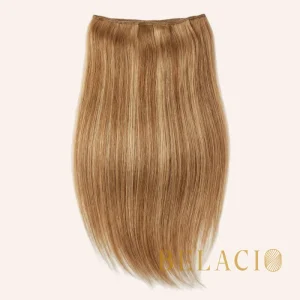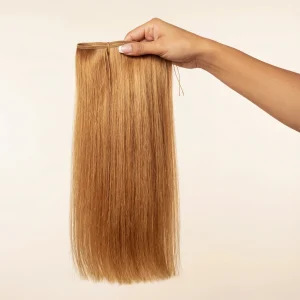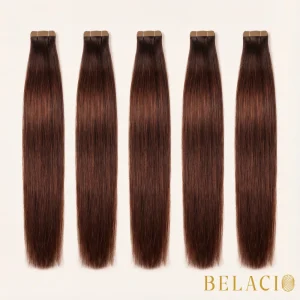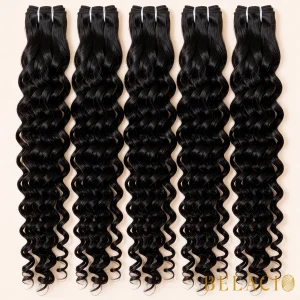
Human hair extensions in Puerto Rico last 4-6 weeks per tape-in installation, 3-12 months for clip-ins, 3-6 months for fusion bonds, and 6-12 weeks for sew-ins. Quality Remy hair lasts 6-12 months overall and virgin hair 9-12+ months. Tropical humidity, saltwater, UV, and 70-80% ambient moisture shorten lifespans by 20-30% versus mainland norms, but climate-adapted care can recover most of that loss.
If you wear human hair extensions in Puerto Rico, you have probably noticed they do not last as long as the packaging promises. Our tropical climate, with relentless humidity, saltwater, and UV exposure, can shorten tape-in lifespans from the standard 6-8 weeks down to just 4-6 weeks. Many of those failures come down to using care routines designed for drier climates.
The good news: with the right tropical-adapted strategies, you can extend your extensions’ life by 20-30 percent and get more wear out of every install. In this guide, you will learn exactly how long different types of human hair extensions last in Puerto Rico’s unique environment, and what you can do to protect your investment in tropical-tested human hair.
How Long Different Extension Types Last in Puerto Rico’s Climate
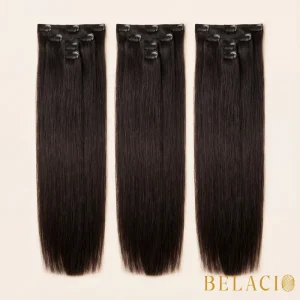
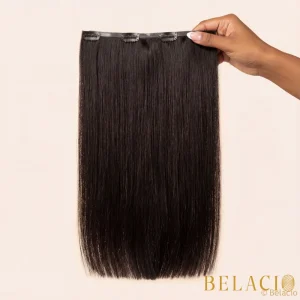
Tape-in extensions face unique challenges in Puerto Rico’s tropical environment. While they normally last 6-8 weeks in temperate climates, they degrade to 4-6 weeks in Puerto Rico’s humid conditions. The good news is that the hair itself can be reused multiple times if carefully removed and retaped, potentially extending useful life to 6-12 months.
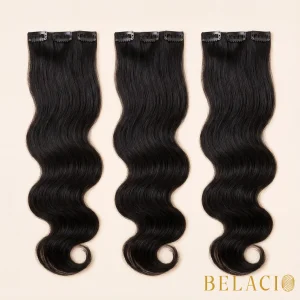
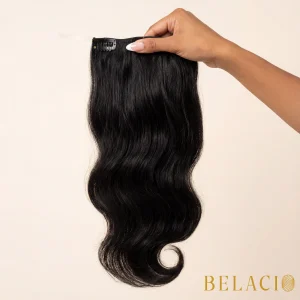
Clip-in extensions offer flexibility for island life. They typically last 3-12 months with careful handling, depending on how often you wear them. The key in Puerto Rico is proper storage. You will need extra protection to prevent moisture-related damage when they are not in use.
Fusion and pre-bonded extensions use keratin bonds that are particularly vulnerable to moisture. These last 3-6 months before requiring professional removal. The keratin bonds struggle in tropical humidity, often weakening faster than they would in drier climates. Sew-in extensions offer better durability. Each installation lasts 6-12 weeks, with the weft hair itself reusable for up to 12 months with proper care.
Table 1: Extension Type Lifespans in Puerto Rico vs. Temperate Climates
| Extension Type | Per Installation (PR) | Per Installation (Mainland) | Total Hair Reuse Lifespan |
| Tape-in | 4-6 weeks | 6-8 weeks | 6-12 months |
| Clip-in | 3-12 months | 6-12 months | 12+ months |
| Fusion / pre-bonded | 3-6 months | 4-6 months | 4-6 months |
| Sew-in / weft | 6-12 weeks | 8-12 weeks | Up to 12 months |
| Synthetic | 1-3 months | 2-4 months | Not reusable |
This makes sew-ins one of the more cost-effective options for Puerto Rico residents who want longer-lasting results without constant maintenance.
Why Hair Quality Matters More in Tropical Climates
Remy hair maintains cuticle alignment, which helps it resist tangling and frizz. It typically lasts 6-12 months with proper maintenance, though improper care can reduce this by up to three months. In Puerto Rico’s challenging environment, properly maintained Remy can deliver 6-9 months of usable life. This makes it the minimum quality level worth considering.
Virgin hair is completely untreated and costs 10-20 percent more than Remy, but offers superior durability. This premium option can last 9-12+ months in Puerto Rico with proper maintenance. For salon professionals or anyone wearing extensions daily, virgin hair often proves more economical over time despite the higher upfront cost.
Synthetic extensions only last 1-3 months before fibers wear and frizz. They perform particularly poorly in tropical climates and are not recommended for Puerto Rico. The humidity causes synthetic fibers to frizz and lose their shape almost immediately, making them a poor investment regardless of the lower price.
Table 2: Hair Quality Tier Comparison for Puerto Rico
| Quality Tier | Tropical Lifespan | Heat-Style Tolerance | Suitable for Daily Wear |
| Synthetic | 1-3 months | Low (most types) | No |
| Non-Remy human | 3-6 months | Moderate | Limited |
| Remy human | 6-9 months | High | Yes |
| Virgin human | 9-12+ months | Highest | Yes |
Construction quality also matters. Double-drawn hair has 70-80 percent of strands at equal length, which helps it last longer and maintain fullness better than single-drawn options.
This even distribution means the extensions look fuller at the ends and resist the thinning that happens as hair naturally sheds over time. For tape-ins specifically, quality tape-ins made from double-drawn Vietnamese virgin hair tend to deliver the longest reuse cycles.
What Makes Puerto Rico’s Climate So Challenging for Extensions
Puerto Rico’s 70-80 percent humidity creates constant stress on extension bonds. Tape-in adhesive bonds absorb atmospheric moisture continuously, weakening structural integrity. Adhesives are engineered for 40-50 percent humidity. At 80+ percent humidity, they systematically degrade faster, which is why maintenance cycles need to be shorter here than on the mainland.
Regular cycling between 75-90°F makes adhesive bonds overly sticky and lose attachment security. This temperature fluctuation happens daily in Puerto Rico, especially if you move between air-conditioned spaces and outdoor heat. The constant expansion and contraction weakens bonds over time, even with the best adhesives available.
Both saltwater and chlorine draw moisture from hair, leaving it dry and brittle. They specifically weaken keratin bonds and tape-in adhesives. Lighter shades can become discolored after extended exposure. Blondes and balayage extensions are particularly vulnerable to greenish tints from chlorine and mineral deposits.
UV radiation effects are cumulative. The Caribbean sun is intense. UV radiation causes color degradation, dehydrates hair by breaking down moisture-binding proteins, and makes hair more porous. Extensions cannot regenerate moisture and oils like your natural hair can, making UV protection critical. The American Academy of Dermatology’s summer hair care guidance covers the same UV mechanisms that affect extension lifespan.
Essential Maintenance Protocols for Tropical Climates
Limit washing to 2-3 times weekly maximum. Tilt your head backward during shampooing to prevent water from running toward adhesive bonds. Apply conditioner only from mid-shaft downward, maintaining 1-inch clearance from bonds. This prevents oil-based ingredients from breaking down adhesives.
Most importantly: dry the tape-in area completely. Never sleep with damp extensions. Damp bonds in humid air create the perfect environment for mold and accelerated degradation.
Pre-soak extensions in fresh water mixed with sulfate-free conditioner to create a protective moisture barrier before swimming. This prevents saltwater and chlorine from penetrating the hair shaft. Wear a swim cap when possible, especially in pools. Rinse with fresh water immediately after saltwater or chlorine exposure. Do not wait until you get home.
Apply daily UV protection spray with SPF 15+ containing avobenzone and octocrylene before sun exposure. Treat your extensions like you treat your skin. Alternatively, use hats or protective braiding when spending extended time outdoors. Physical barriers work just as well as chemical protection.
For night-time care, braid into multiple small sections using silk scrunchies instead of elastic bands to minimize adhesive stress. Elastic bands can pull on bonds and create weak points. Use silk or satin pillowcases to reduce friction. Cotton pillowcases absorb moisture and create friction that leads to tangling and breakage.
Schedule check-ups every 4-6 weeks instead of the standard 6-8 weeks used in temperate climates. This shorter cycle prevents visible degradation and extends the overall life of your hair. During these appointments, stylists can apply humidity-resistant protective coatings and assess bond security before problems become visible.
Use only sulfate-free, paraben-free products formulated for extensions. Avoid oil-based products near tape-in bonds as they dissolve adhesive. Use demineralizing treatments every 2-3 weeks to remove mineral buildup from hard water and ocean exposure.
Common Mistakes That Shorten Extension Life in Puerto Rico
Many believe humidity requires daily washing, but this strips natural oils and leads to dryness and tangling. Counterintuitively, washing less frequently actually improves appearance and longevity. Your natural scalp oils help protect extensions from environmental damage. Washing them away daily leaves the hair vulnerable.
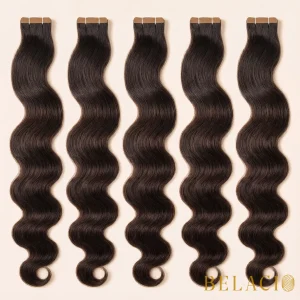
Attempting bone-straight looks through daily heat styling in 80 percent humidity is futile and destructive. The hair will revert within an hour, and you will accumulate heat damage. Body wave and curly extensions maintain better appearance without constant heat damage. Embrace texture instead of fighting it.
Assuming saltwater and chlorine exposure is just part of island life leads to rapid degradation. The “it is unavoidable” mindset costs hundreds in premature replacements. Every swim without protection takes days or weeks off your extensions’ lifespan. The five minutes of pre-swim prep saves months of wear.
Failing to dry the scalp thoroughly after swimming or sweating creates conditions for mold and accelerates tape bond failure. This is especially problematic overnight. Damp extensions in Puerto Rico’s humid air never fully dry on their own. You must actively dry them.
Following 6-8 week cycles instead of the tropical standard 4-6 weeks allows visible degradation before you address it. By week 6 in Puerto Rico, bonds have often loosened enough that you are risking damage to your natural hair or losing sections entirely. For long-wear options, sew-in weft extensions generally tolerate the local climate better than tape-ins between maintenance visits.
Understanding the True Cost in Puerto Rico
Initial costs range from $300-$800 for tape-in installations. Maintenance in Puerto Rico costs $400-$800 annually due to required 4-6 week cycles, compared to $300-$500 in temperate climates. This higher maintenance cost is unavoidable. It is the price of wearing extensions in a tropical climate. Budget for it from the start to avoid surprises.
A $600 Remy set lasting 9 months with maintenance represents roughly $1.30 per day of wear. A $300 lower-quality set lasting 4 months represents $9.17 per day. Higher-quality extensions are dramatically more cost-effective when you calculate actual cost per use. The upfront savings on cheap extensions disappear quickly.
If a $600 Remy tape-in set can be retaped 4-6 times, the same hair provides 24-36 months of wear, reducing effective cost per installation to $150-$200 after the first. This is where quality really pays off. Lower-grade hair cannot be reused as many times, so you are buying new hair more frequently.
Table 3: Cost-Per-Wear Analysis Across Quality Tiers
| Set Quality | Initial Cost | Tropical Lifespan | Cost Per Day | Reuse Cycles |
| Budget non-Remy | $300 | 4 months | $2.50 | 1-2 |
| Mid-grade Remy | $400-600 | 6-9 months | $1.50-$2.20 | 3-4 |
| Premium Remy | $600 | 9 months | $1.30 | 4-6 |
| Virgin double-drawn | $800-1,200 | 12+ months | $1.10-$1.65 | 5-8 |
The reuse advantage compounds over time. A premium set retaped multiple times can deliver three years of wear at a total invested cost lower than buying mid-grade extensions twice and budget extensions four times.
Key Takeaways
- Tape-in extensions last only 4-6 weeks per installation in Puerto Rico (versus 6-8 weeks elsewhere), but the hair can be retaped 4-8 times for 6-9 months total use. Budget for more frequent salon visits, every 4-6 weeks instead of the standard 6-8 week cycle.
- Invest in Remy or virgin human hair extensions for tropical climates. Synthetic options only last 1-3 months and cannot handle the humidity. Virgin hair costs 10-20 percent more but lasts 9-12+ months, making it more economical than cheaper alternatives.
- Pre-soak extensions in fresh water with conditioner before swimming to create a protective barrier, then rinse immediately after. Never skip this step. Every unprotected swim takes days or weeks off your extensions’ lifespan.
- Wash only 2-3 times weekly and always dry completely before bed. Daily washing actually damages extensions despite the humidity. Use only sulfate-free products and keep oils away from tape-in bonds.
- Embrace textured styles like body waves instead of fighting humidity with daily heat styling. Bone-straight looks will not hold in 80 percent humidity and you will accumulate unnecessary heat damage trying to maintain them.
- Calculate cost per day of wear, not just upfront price. A premium set used over 9 months delivers better value than a budget set replaced every 4 months, and the reuse advantage compounds across multiple retaping cycles.
Real-World Lifespan Scenarios
A professional working primarily indoors, using high-quality Remy tape-ins with 4-6 week professional maintenance, can achieve 6-9 months total usable life. This requires consistent protective swimming protocols, tropical-specific care, and avoiding daily heat styling. It is achievable but requires discipline.
Spending 3-4 hours weekly in the ocean without protective protocols, using mid-range extensions, and skipping some maintenance appointments leads to a realistic lifespan of 4-6 weeks per installation with significant degradation by week 4. The extensions remain wearable but lose their premium appearance quickly. You will notice increased tangling, dullness, and texture changes.
Ferry workers, surf instructors, or outdoor sports professionals with extreme chlorine or saltwater exposure may see only 2-4 weeks per installation. At this exposure level, extensions become economically challenging. Protective measures become absolutely critical, or alternative styling options may be more practical.
The pattern across all three scenarios is consistent. Extension lifespan in Puerto Rico is determined less by the hair quality you start with and more by the daily and weekly habits you build around it. Two clients with identical tape-in sets installed the same day can see 3x the difference in usable lifespan based purely on care routines.
Conclusion
Extension lifespan in Puerto Rico is a system, not a single product decision. The tropical climate is non-negotiable, but climate-adapted care, quality hair, and 4-6 week professional maintenance turn it from a constant battle into a predictable rhythm. The same set that lasts 4 weeks for one client can last 9 months for another, and the difference is rarely the hair itself.
If you are ready to invest in extensions that actually last in Puerto Rico’s climate, Belacio specializes in Vietnamese-sourced hair tested for Caribbean humidity, saltwater, and sun. Call 787-671-7122 or visit our website to find the right solution for your lifestyle.
Frequently Asked Questions
How long do tape-in extensions last in Puerto Rico?
Tape-in extensions last 4-6 weeks per installation in Puerto Rico, compared to 6-8 weeks in temperate climates. The hair itself can be retaped 4-8 times, giving 6-12 months of total usable life with proper care and 4-6 week maintenance cycles.
Why do extensions last longer on the mainland than in Puerto Rico?
Adhesives are engineered for 40-50 percent humidity. Puerto Rico runs 70-80 percent, which continuously degrades bonds. Saltwater, chlorine, and intense Caribbean UV add cumulative stress that mainland climates do not produce, shortening every extension type by 20-30 percent.
Are synthetic extensions ever a good choice for Puerto Rico?
No. Synthetic extensions last only 1-3 months in tropical humidity, cannot tolerate heat styling well, frizz almost immediately in Caribbean conditions, and cannot be reused. The cost-per-wear math favors human hair even at higher upfront prices.
How often should I wash extensions in Puerto Rico?
Two to three times weekly maximum. Daily washing strips the natural oils that protect extensions from environmental damage. Use sulfate-free products, keep conditioner one inch away from tape bonds, and dry the scalp area completely before bed.
Do I really need to pre-soak extensions before swimming?
Yes. Pre-soaking saturates the hair with fresh water and conditioner, creating a barrier that prevents saltwater and chlorine from penetrating the shaft. Skipping this step measurably shortens extension life and is the most common avoidable mistake in tropical climates.
What is the difference between Remy and virgin hair?
Remy hair has cuticles aligned in one direction, which prevents tangling and matting. Virgin hair is completely untreated, never colored, permed, or chemically processed. Virgin Remy hair offers the longest lifespan and most natural appearance, especially in tropical conditions.
Can I retape my own extensions to save money?
Not recommended. DIY retaping risks misaligning the bond, applying uneven adhesive, and damaging the hair during removal. Salon retaping costs $100-$200 but preserves the reuse value of a $600 Remy set across 4-8 cycles, which is the math that justifies professional service.
Do darker extensions last longer than blondes in Puerto Rico?
Generally, yes. Blondes, balayage, and lighter shades show UV color degradation faster and are more prone to chlorine discoloration (greenish tints). Darker shades resist visible color change longer, though structural degradation from humidity affects all colors equally.
How do I know when extensions need to come out?
Bonds shifting more than half an inch from the scalp, visible matting near attachment points, scalp tenderness, or persistent itching are all signals. By week 6 in Puerto Rico, most tape-ins have reached this point. Removing on schedule prevents damage to your natural hair.
Are Vietnamese-sourced extensions better for tropical climates?
Vietnamese hair has a denser cuticle structure and tends to handle humidity better than many other origins. The advantage comes from sourcing transparency more than nationality alone. Quality Vietnamese virgin Remy hair, double-drawn, consistently outperforms in Puerto Rico’s climate.
Schedule a consultation today.
Protect your extensions today.