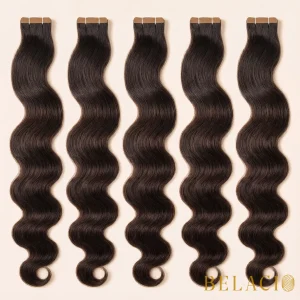

The best human hair extensions for Puerto Rico’s climate are Remy or virgin Vietnamese-sourced hair, applied as tape-ins or sew-in wefts for daily wear or clip-ins for occasional use. Tropical humidity, saltwater, and intense UV degrade extensions faster than mainland conditions, so look for brands that test specifically for Caribbean climate and source transparently. Avoid synthetic alternatives, generic “Remy” labels without sourcing documentation, and any installation method that compromises your natural hair.
If you are shopping for human hair extensions in Puerto Rico or the Caribbean, you have probably noticed that most premium brands are designed for cooler climates and do not address the realities of tropical humidity, curly or coily hair textures, or the cultural beauty standards of Latinx communities.
You might be asking yourself: how do I know if these extensions are actually real Remy hair, will they damage my natural hair, and can they survive the island’s heat and moisture without frizzing or matting?
This guide breaks down what makes quality extensions, how to choose the right type for your hair and lifestyle, and what to look for in brands that truly understand Caribbean needs. Belacio offers extensiones diseñadas para el Caribe and the framework below applies whether you are shopping with us or evaluating any other supplier.
Understanding Hair Extension Types and Application Methods
Choosing the right hair extension starts with understanding the different formats available and how they are applied. Each type offers distinct benefits and trade-offs depending on your lifestyle, budget, and commitment level.
Remy hair has all cuticles aligned in one direction, which means it lasts longer, tangles less, and justifies a higher price point, often 200-500 percent more than non-Remy alternatives. Non-Remy hair is cheaper upfront but tangles faster and has a significantly shorter lifespan. Most premium brands emphasize Remy sourcing as their primary quality signal, though it is important to know that “Remy” labeling is not universally regulated.
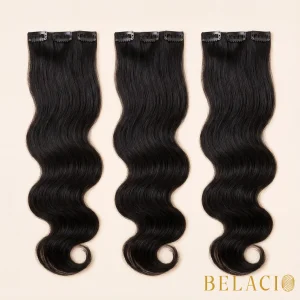
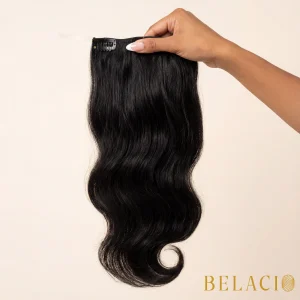
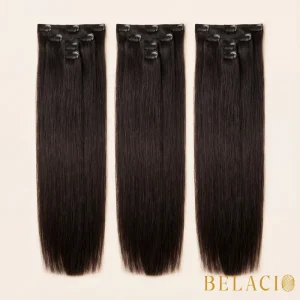
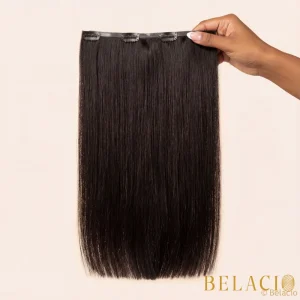
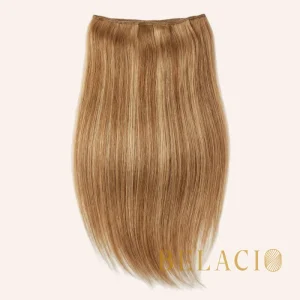
Clip-in hair extensions are the most beginner-friendly option. You can apply them yourself in 5-10 minutes, and they typically cost between $100-$300. They are ideal if you want flexibility to wear extensions only for special occasions or weekends.
With daily use, clip in hair lasts about 3-6 months and is popular among budget-conscious buyers who want to experiment with length or volume without long-term commitment.
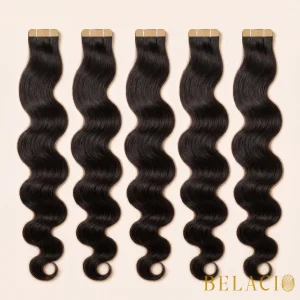
Tape in hair extensions require professional application and take about 45-60 minutes to install. They last 6-8 weeks before needing repositioning. While some people attempt DIY tape-in application, this is risky and can cause traction alopecia if done incorrectly. Tape-ins offer a natural look and feel, but they do require maintenance appointments every 6-8 weeks.
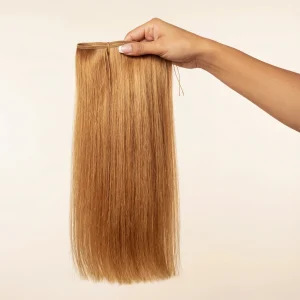
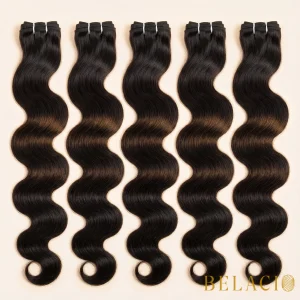
Sew-in weft extensions take 2-4 hours to install and last 8-12 weeks. They are particularly popular for protective styling among women with natural curly or coily hair. Fusion or bonded extensions require the longest installation time (3-6 hours) and can last 3-6 months. However, they carry the highest damage risk if removed improperly. Professional expertise is essential for both application and removal.
Table 1: Application Method Comparison
| Method | Install Time | Lifespan | Skill Required | Best Use Case |
| Clip-in | 5-10 min DIY | 3-6 months | Beginner | Special occasions, weekends |
| Tape-in | 45-60 min professional | 6-8 weeks per install | Salon expertise | Daily wear, natural look |
| Sew-in weft | 2-4 hours professional | 8-12 weeks | Salon expertise | Protective styling, curly hair |
| Fusion / bonded | 3-6 hours professional | 3-6 months | Advanced expertise | Long-wear, requires careful removal |
Why Climate and Hair Type Matter in Puerto Rico
Heat, humidity, salt water, and UV exposure accelerate tangling, frizz, and color fading in extensions. Most mainstream brands do not optimize their products for these conditions. They test in temperate climates and assume standard care routines.
In Puerto Rico and throughout the Caribbean, extensions require extra attention to UV protection, thorough rinsing after salt-water exposure, and humidity control. This is an unmet market need that most major brands have not addressed in their product development.
Puerto Rican and Caribbean populations predominantly have Type III-IV curly and coily hair. Extensions designed for straight hair often look jarring or unnatural when paired with natural texture. For the best blend, look for extensions with deeper waves or curls that complement natural texture. This is especially important for protective styling, where extensions will be braided or twisted alongside your natural hair for 6-8 weeks. Poor-quality extensions tangle during braiding and create an obviously artificial appearance.
Brands that understand this regional specificity, like Puerto Rico-based companies that source Vietnamese hair and test it specifically for tropical climates, offer a culturally-native alternative to mainstream options that were not designed with Caribbean consumers in mind. The differentiation shows up in product lifespan, customer service language, texture matching, and care guidance that anticipates Caribbean conditions rather than treating them as edge cases.
Evaluating Quality and Understanding Pricing
When shopping for human hair extensions, look for transparent specifications: weight (typically 100g per bundle is standard), strand count, texture options (body wave, straight, deep wave, curly), and Remy certification. Reputable brands publish these details clearly.
Vietnamese sourcing dominates the global market. An estimated 70-80 percent of the world’s hair supply comes from Vietnam. Vietnamese-sourced Remy hair is not automatically premium, but it does offer reliable quality consistency when transparently sourced.
Table 2: Extension Pricing Tiers and What You Get
| Tier | Price Per Bundle | Quality Signals | Best For |
| Budget | $50-$100 | Often non-Remy, shorter lifespan, limited shades | Trial use, short-term wear |
| Mid-market | $150-$300 | Remy hair, wider color range, salon availability | Most consumers and salons |
| Premium | $400+ | Hand-tied, luxury branding, exclusive origin | Luxury salons, daily wear |
Most consumers and salons operate in the mid-market range. Caribbean buyers often seek the $80-$250 range that balances quality with affordability.
Caribbean skin tones and undertones vary widely, and a standard 16-shade palette often misses important nuances. Brands offering custom color-blending or a deeper shade range beyond generic “Black, Brown, Blonde” categories have a competitive advantage. Marketing photos use perfectly color-matched models, but in reality, undertones, lighting, and natural hair texture variation mean extensions often look slightly off. Professional consultation in a salon dramatically improves color-matching outcomes compared to DIY online shopping.
The Real Cost: Maintenance and Hidden Expenses
Extensions require more maintenance than many buyers anticipate. You will need sulfate-free shampoo, weekly deep conditioning treatments, heat protection products, and careful daily detangling (2-3 minutes per day for tape-in or sew-in styles). Aftermarket product recommendations like leave-in conditioners, oils, and specialized treatments can add $30-$100 per month to your budget. Factor these ongoing costs into your decision.
Different extension types have different lifespans. Tape-in and sew-in run 6-12 weeks per install. Clip in hair lasts 3-6 months with daily use. Fusion runs 3-6 months. Fading is common, especially with sun and chlorine exposure. Purple shampoo and toning treatments help maintain color but represent additional maintenance costs that are not always explained upfront.
Consumer vs. Salon Professional Perspectives
Hispanic and Latina women in the US and Puerto Rico typically seek extensions for volume, length, protective styling, or damage recovery. Price sensitivity varies. Some want affordable options for experimentation, while others invest in premium quality for special occasions. Key concerns include natural blending with curly hair, durability in heat and humidity, and ease of maintenance. Spanish-language instructions and customer service are important for many Caribbean customers.
Salon professionals need reliable, consistent quality to serve their clientele well. They prefer brands that offer education resources, shade-matching support, and wholesale pricing (typically 40-60 percent off retail). Salons usually buy 5-20 bundles per color at 40-50 percent discounts. Minimum order quantities, return policies, exclusive distribution arrangements, and stylist training programs all influence salon loyalty and brand partnerships.
Buying through a salon costs 2-3 times more upfront, but you get expert color matching, professional installation, quality assurance, and ongoing support. Direct-to-consumer purchasing is cheaper but requires DIY application knowledge and offers limited recourse if quality is poor. For first-time extension wearers, especially those with curly or coily hair, the salon route typically delivers better results and reduces the risk of installation damage.
Table 3: Salon vs. Direct-to-Consumer Trade-offs
| Consideration | Salon Purchase | Direct-to-Consumer |
| Cost | 2-3x markup | Lowest price |
| Color matching | Expert in-person | DIY, harder to verify |
| Installation | Professional included | DIY or separate cost |
| Quality assurance | Salon vouches for product | Buyer assumes risk |
| Return support | Full salon backing | Limited, varies by brand |
| Best for | First-time wearers, complex installs | Experienced buyers, clip-ins |
Key Takeaways
- Remy human hair extensions last longer and tangle less than non-Remy, but the label is not regulated. Many products are mislabeled, so verify sourcing and look for transparent brand information before buying.
- Clip-in extensions are the safest DIY option ($100-$300, last 3-6 months), while tape-in and fusion methods require professional installation to avoid traction alopecia and permanent hair loss from improper application.
- Caribbean climates accelerate frizz, tangling, and color fading due to heat, humidity, salt water, and UV exposure. Most mainstream brands do not design for tropical conditions, so seek extensions specifically tested for these environments.
- Matching texture is critical for natural-looking results. Straight extensions rarely blend well with Type III-IV curly or coily hair common in Puerto Rico. Professional salon consultation dramatically improves color and texture matching compared to online DIY shopping.
- Budget for hidden maintenance costs. Sulfate-free products, weekly deep conditioning, and heat protection add $30-$100 monthly. Extensions require daily detangling and more care than most buyers expect upfront.
- Source from suppliers who test for tropical performance and disclose origin clearly. The FDA regulates cosmetics including hair products, but enforcement is reactive rather than preventive, so brand transparency matters more than packaging claims.
Important Cautions Before You Buy
Tape-in and especially fusion extensions can cause traction alopecia and permanent hair loss if applied too tightly or removed carelessly. Professional expertise matters more than product quality when it comes to preventing damage. Do not let cost savings tempt you into DIY installation for methods that require professional skill. The risk to your natural hair is not worth it.
Many non-Remy products are marketed as Remy hair, and third-party verification is rare. There is no universal certification system, so you must rely on brand reputation, transparent sourcing information, and strong return policies. Ask questions about sourcing and processing. Legitimate brands are transparent about where their hair comes from and how it is prepared.
Mainstream brands test their products in temperate conditions. Extensions exposed to Caribbean salt water, chlorine, and high UV levels fade faster and tangle more easily than the same products used in cooler, drier climates.
Specific testing and care protocols for tropical use are absent from most brands’ research and development. If you live in Puerto Rico or the Caribbean, seek out brands that understand and design for these conditions. It makes a measurable difference in how long your extensions look good.
Beyond performance, regulatory transparency matters. The FDA’s hair products page outlines safety and labeling requirements for cosmetic hair products in the US market, but enforcement is reactive.
Premium suppliers who proactively test for contaminants and provide documentation offer protection that the regulatory baseline does not guarantee on its own. This matters most when extensions sit against your scalp for weeks at a time in tropical conditions where skin permeability may increase.
Conclusion
The best extensions for Puerto Rico are not necessarily the most expensive or the most heavily marketed. They are the ones that match your natural texture, hold up in tropical conditions, and come from suppliers who can document where the hair was sourced and how it was processed. The brands that understand Caribbean buyers are the ones that will give you the longest-wearing, most natural-looking results.
If you are ready to find extensions that actually work in Puerto Rico’s tropical climate and blend beautifully with your natural texture, Belacio is here to help. Call 787-671-7122 for personalized consultations in Spanish or English to match your hair type, lifestyle, and budget.
Frequently Asked Questions
What are the best hair extensions for Puerto Rico’s climate?
Remy or virgin Vietnamese-sourced human hair extensions, applied as tape-ins or sew-in wefts for daily wear or clip-ins for occasional use. Look for brands that specifically test for tropical conditions, source transparently, and offer texture options that match Caribbean curl patterns.
Are Remy extensions worth the higher price?
Yes for daily wear. Remy hair lasts 2-3 times longer than non-Remy, tangles less, and tolerates heat styling. The label is not universally regulated, so verify sourcing transparency. Remy used over 9 months delivers better cost-per-day than non-Remy replaced quarterly.
Can I install tape-in extensions myself to save money?
Not recommended. DIY tape-in application risks traction alopecia, uneven tension, and damage to natural hair during removal. Professional installation costs $200-$600 but protects both your hair and your investment. Clip-ins are the only method designed for safe DIY application.
How do I tell if a brand is actually Remy hair?
Look for transparent sourcing documentation, single-direction cuticle alignment claims with explanation, weight specifications per bundle, and clear return policies. Reputable brands disclose origin country, processing methods, and may offer third-party testing documentation. Generic “100% Remy” without sourcing detail is unreliable.
What extension texture works best for Caribbean hair?
Body wave, deep wave, or curly textures blend most naturally with Type III-IV curly and coily hair common in Puerto Rico. Straight extensions on naturally curly hair create an obvious texture mismatch. Match curl pattern as closely as your natural hair, even if you plan to style it differently.
How much should I budget for extensions in Puerto Rico?
Initial costs range from $400-$1,400 for tape-ins, $150-$500 for clip-ins, and $800-$2,500 for fusion. Add $30-$100 monthly for sulfate-free products, plus $150-$300 every 4-6 weeks for tape-in and sew-in maintenance in tropical conditions.
Why do mainstream extension brands struggle in Caribbean climates?
Most are tested in temperate conditions where humidity averages 40-50 percent and UV is moderate. Caribbean conditions (70-80 percent humidity, intense UV, frequent salt water exposure) degrade adhesives faster, accelerate color fading, and cause more frizz and tangling than mainstream brands designed for.
Should I buy from a salon or direct-to-consumer?
First-time buyers and curly-hair clients benefit most from salon purchase because of expert color matching plus professional installation. Experienced buyers wanting clip-ins can save 50-70 percent direct-to-consumer. Tape-in and fusion methods always require professional installation regardless of where hair was purchased.
Are Spanish-language instructions important?
For Caribbean and Latina customers, yes. Bilingual customer service, Spanish installation guides, and culturally-fluent stylist consultation reduce friction and improve outcomes. Many mainstream brands market in English only, missing this market entirely.
What questions should I ask before buying any extensions?
Ask about origin country, cuticle alignment certification, weight per bundle, available texture and color range, return policy, tropical climate testing, and recommended care products. Reputable brands answer these clearly. Vague answers or refusal to disclose sourcing are warning signs to avoid that brand.
Schedule a consultation today.
Find your perfect match today.