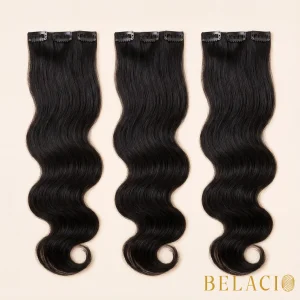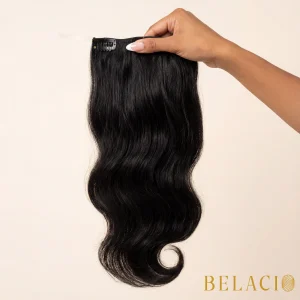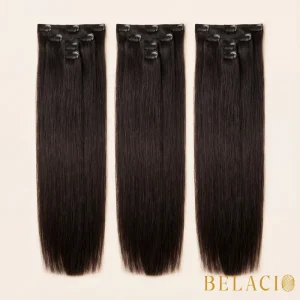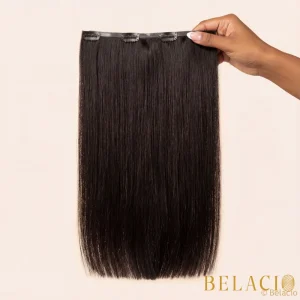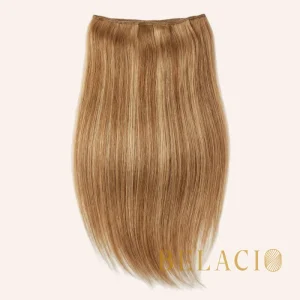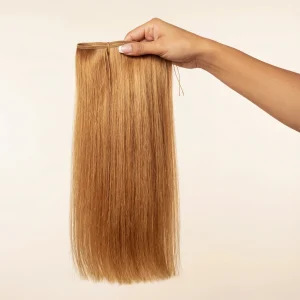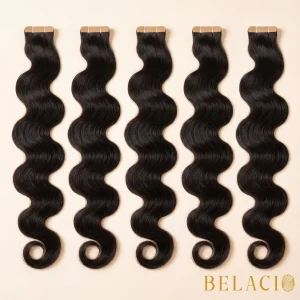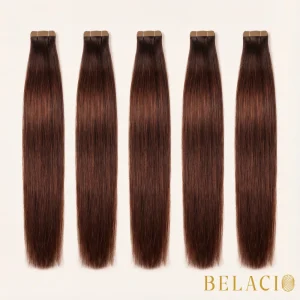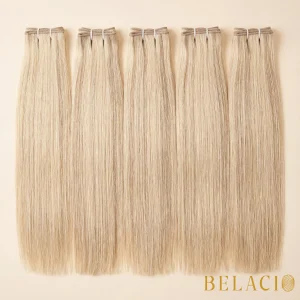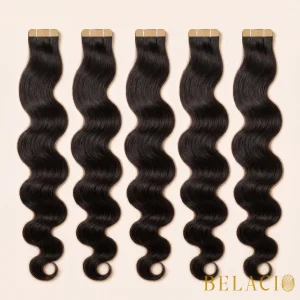
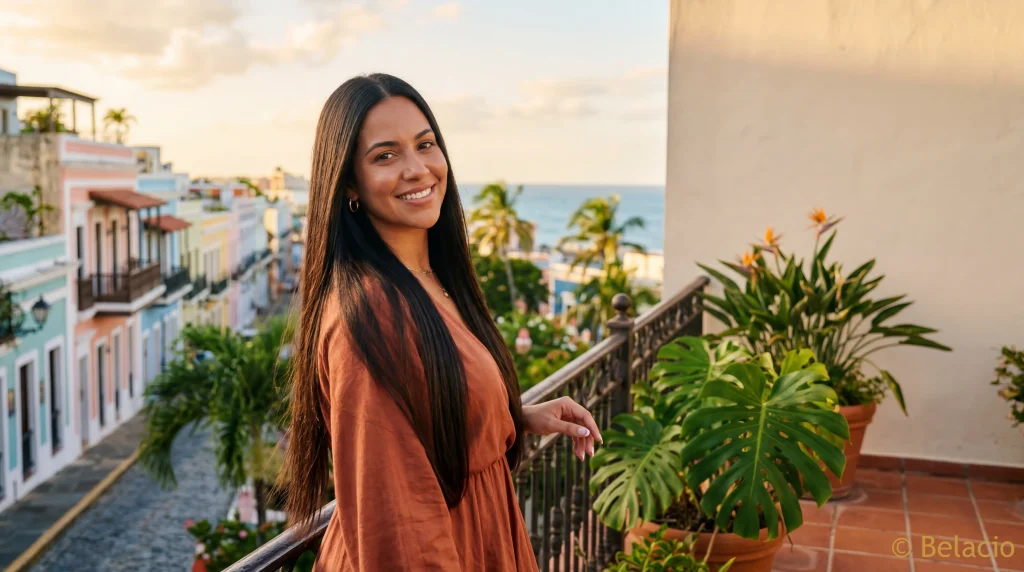
Clip in hair extensions are the fastest, most damage-free method for adding length and volume at home, requiring zero professional help and taking under 15 minutes to install. Vietnamese human hair clip-ins with cuticle-aligned strands deliver 12 to 36 months of performance in tropical humidity, outperforming synthetic alternatives that lose shape within weeks.
Key Takeaways
- Zero-Damage Installation: Clip in hair extensions use silicone-backed pressure clips that snap onto teased sections of natural hair without adhesives, heat, or chemical bonding, making them the healthiest extension method available in 2026.
- 5-Minute Transformation: A full set of clip-ins installs in 5 to 15 minutes at home, transforming thin or short hair into salon-worthy volume and length without a professional appointment.
- Tropical Climate Performance: Vietnamese human hair clip-ins resist Caribbean humidity (75 to 85%) because cuticle-aligned strands prevent the frizz and tangling that destroys synthetic clip-ins in tropical environments.
- Cost Per Wear: At $120 to $180 per set lasting 12 to 36 months, human hair clip-ins cost less than $0.25 per use, compared to $5 to $15 per use for synthetic sets that last 2 to 6 months.
- Total Flexibility: Unlike tape-in or sew-in methods, clip-ins remove in under 2 minutes. Wear them for a date night, a photoshoot, or daily, then store them flat overnight with no commitment.
- Heat Styling Freedom: Real human hair clip-ins tolerate heat styling up to 410°F, allowing flat irons, curling wands, and blow dryers without the melting risk that limits synthetic fiber extensions.
What Are Clip In Hair Extensions and How Do They Work?
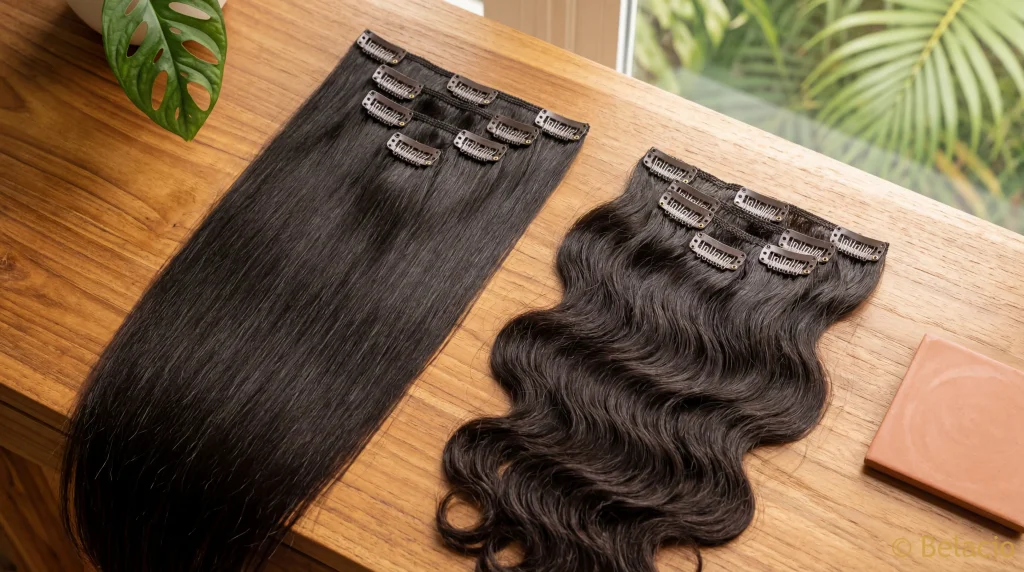
Clip in hair extensions are pre-made weft panels of human or synthetic hair attached to silicone-lined metal clips that snap onto sections of your natural hair. Each set contains 6 to 10 weft pieces ranging from narrow one-clip panels for the temples to wide three-clip panels for the crown.
Installation follows a simple bottom-up layering process. You section your hair horizontally about one inch above the nape, tease the roots lightly for grip, then snap the clips into place. Each layer sits flat against the scalp, hidden under the hair above it.
Natalia Blanco Torres, founder of Belacio Hair, tested over 50 clip-in products across Vietnamese and Brazilian suppliers before selecting panels with reinforced silicone-backed clips. “The silicone lining is the difference between clip-ins that slide out in humidity and clip-ins that stay put through a full day in Fajardo,” she explains.
How Do You Choose the Right Clip In Hair Extensions for Your Hair Type?
Choosing the right clip in hair extensions depends on three factors: your natural hair texture, the desired volume level, and whether you plan to heat-style them. Matching these correctly prevents the visible line between your natural hair and the extensions that makes clip-ins look obvious.
| Factor | What to Match | Why It Matters |
|---|---|---|
| Texture | Choose straight, wavy, or curly to match your natural pattern | Mismatched texture creates visible transitions at the blend point |
| Weight | 95 to 120g for light volume, 120 to 180g for full transformation | Overloading fine hair causes tension headaches and clip slippage |
| Color | Match to the mid-lengths of your hair, not the roots or ends | Root color is usually darker, ends lighter from sun exposure |
| Hair Type | Human hair for heat styling and longevity, synthetic for budget single-use | Synthetic fibers melt above 300°F and tangle in humidity |
| Length | Choose extensions 2 to 4 inches longer than your natural hair | Excessive length difference looks unnatural and adds unnecessary weight |
For Caribbean women dealing with 75 to 85% humidity year-round, human hair clip-ins outperform synthetic alternatives by a wide margin. Cuticle-aligned Remy human hair adapts to humidity naturally, while synthetic fibers swell, tangle, and lose their shape permanently.
How Long Do Clip In Hair Extensions Last?
Human hair clip in extensions last 12 to 36 months with proper care, while synthetic clip-ins typically last 2 to 6 months before the fiber degrades. The lifespan depends on three variables: hair quality, frequency of use, and maintenance routine.
Double-drawn Vietnamese human hair maintains uniform density from root to tip throughout its lifespan. This means the extensions look full even after months of use, unlike single-drawn hair where shorter strands fall out progressively, leaving thin, wispy ends.
Yo sé lo que es invertir en extensiones que se ven espectaculares el primer mes y después parecen una peluca vieja. That frustration is exactly why Belacio sources exclusively from Vietnamese factories with cuticle alignment processing. The cuticle scales all face the same direction, preventing the tangling and matting that shortens extension life in tropical climates.
Do Clip-in Extensions Damage Your Natural Hair?
Clip in hair extensions cause the least damage of any extension method because they use no adhesives, no heat bonding, and no braiding tension. The American Academy of Dermatology identifies traction alopecia as the primary risk from extensions, and clip-ins distribute weight across multiple attachment points rather than concentrating stress on individual strands.
The key to preventing damage is following three rules. First, never sleep in clip-ins because overnight friction and moisture weaken both the clips and your natural hair at the attachment points. Second, move clip placement slightly each day so the same follicles do not bear constant tension. Third, limit daily wear to 8 to 12 hours to give your scalp rest.
Después de probar literalmente todo lo que existe en el mercado, from glue-in tracks that ripped out my edges to micro-links that left bald spots, clip-ins became the only method I recommend for women who want flexibility without sacrificing hair health.
What Makes Remy Human Hair Different from Regular Extensions?
Remy human hair extensions have all cuticle layers intact and aligned in the same direction, from root to tip. This single distinction eliminates the tangling, matting, and frizz that plague non-Remy and synthetic extensions, especially in humid Caribbean climates.
Non-Remy hair is collected from multiple donors and mixed without cuticle alignment. Manufacturers strip the cuticle layer with acid baths, then coat the strands in silicone to create temporary smoothness. That silicone washes out within 5 to 10 washes, revealing dry, tangled hair underneath.
Vietnamese Remy hair holds a specific advantage for tropical environments. The naturally thick strand diameter (70 to 100 micrometers versus 50 to 70 for Indian hair) provides better structural integrity against humidity-induced swelling. When cuticle alignment combines with this strand strength, the result is clip-ins that resist the frizz cycle that ruins thinner hair sources in Puerto Rico’s climate.
How Do You Wash and Care for Clip In Hair Extensions?
Wash clip in hair extensions every 15 to 20 wears using sulfate-free shampoo and lightweight conditioner, then air-dry completely before storing. Overwashing strips the natural moisture balance, while underwashing allows product buildup that weighs down the hair and dulls its shine.
Las 5 cositas que necesitas saber sobre el cuidado de tus clip-ins:
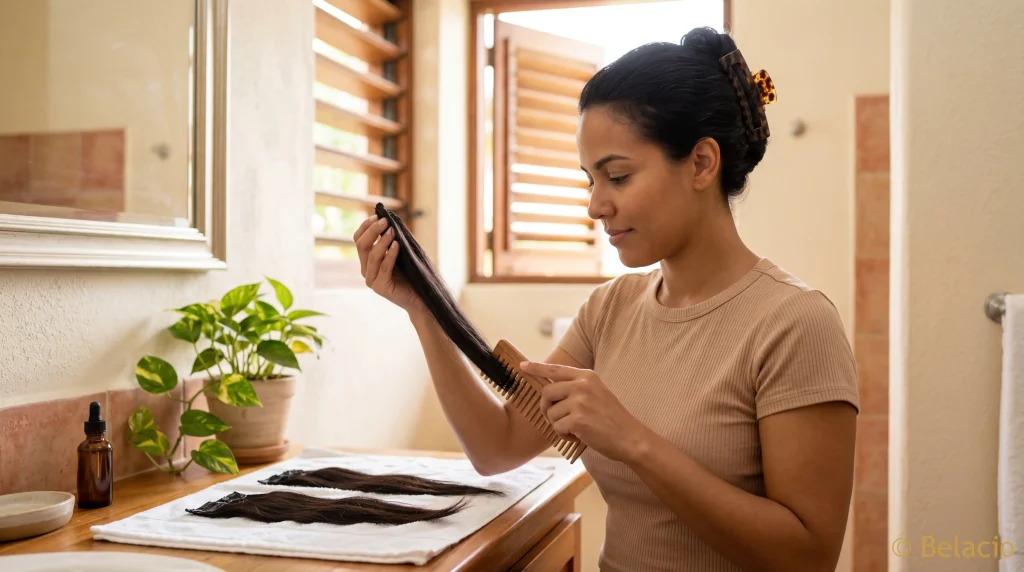
- Detangle before washing. Use a wide-tooth comb starting from the tips and working upward. Never brush wet extensions because wet human hair stretches and breaks more easily than dry hair.
- Wash in lukewarm water only. Hot water opens the cuticle layer and strips moisture. Cold water does not dissolve product buildup. Lukewarm hits the sweet spot for both cleaning and cuticle protection.
- Condition the mid-lengths and ends. Apply conditioner from the ears down, never at the clips or weft attachment. Conditioner near the clips loosens the silicone grip and causes slippage during wear.
- Air-dry flat on a clean towel. Hang-drying can stretch the weft and distort the clip spacing. Lay them flat, flip once, and allow 4 to 6 hours for complete drying before storing.
- Store in a silk or satin bag. Tropical humidity (even in air-conditioned homes) can create moisture in sealed plastic containers. Breathable fabric keeps the extensions dry and tangle-free between uses.
Using heat protectant spray before any hot tool styling extends the life of human hair clip-ins significantly. Belacio’s Vietnamese hair tolerates temperatures up to 410°F, but consistent heat above 350°F without protectant dries the cuticle over time.
How Much Do Human Hair Clip in Extensions Cost?
A full set of human hair clip in hair extensions costs between $120 and $500 depending on hair origin, processing quality, and gram weight. Vietnamese double-drawn clip-ins from Belacio Hair start at $120 per set, positioning them in the mid-range between budget synthetic sets ($20 to $60) and luxury European hair brands ($400 to $700).
The price-per-wear calculation reveals the true value. A $120 human hair set worn twice weekly for 18 months delivers approximately 156 uses at $0.77 each. A $40 synthetic set worn at the same frequency lasts roughly 3 months (26 uses) at $1.54 per use. The synthetic option costs twice as much per use while performing significantly worse in humidity.
For women in Puerto Rico and the Caribbean, the climate factor makes this calculation even more decisive. Synthetic clip-ins that might last 6 months in a dry climate often degrade within 8 to 12 weeks in tropical environments, tripling the effective cost.
Can You Style Clip In Hair Extensions with Heat Tools?
Real human hair clip-ins tolerate curling irons, flat irons, and blow dryers up to 410°F, allowing the same styling versatility as your natural hair. Synthetic clip-ins, by contrast, melt or deform at temperatures above 300°F and cannot be restyled once heat-damaged.
Apply heat protectant spray before every styling session, even on virgin human hair. Set tools between 300°F and 350°F for everyday styling and reserve 400°F+ for stubborn sections only. Lower temperatures preserve cuticle health and extend the total styling lifespan of each set.
One advantage of Vietnamese human hair clip-ins is texture memory. If you purchase soft wavy clip-in extensions and straighten them for an event, the original wave pattern returns after the next wash. This reversible styling is impossible with synthetic fibers, which lose their factory-set texture permanently once heat-altered.
Frequently Asked Questions
How many clip in hair extension pieces do I need for a full head?
A full head typically requires 6 to 10 weft pieces totaling 120 to 180 grams. Fine hair needs fewer, lighter pieces (95 to 120g) to avoid visible bulk, while thick hair can support the full 180g for maximum volume.
Can you wear clip in hair extensions every day?
Yes, daily wear is safe with human hair clip-ins if you remove them every night and limit wear to 8 to 12 hours. Moving clip placement slightly each day prevents repeated tension on the same follicles.
Do clip in hair extensions work on short hair?
Clip-ins work on natural hair as short as 3 to 4 inches. The key is choosing shorter extension lengths (12 to 14 inches) and using smaller weft pieces to avoid visible tracks beneath thin coverage layers.
Will clip in hair extensions set off airport metal detectors?
The small metal clips can occasionally trigger sensitive detectors, but TSA agents are familiar with hair extensions. Wearing clip-ins through security is common and causes no issues beyond a possible brief secondary check.
Can you dye clip in hair extensions?
Human hair clip-ins can be dyed darker successfully. Lightening requires bleach, which damages the cuticle and shortens lifespan significantly. Professional coloring is recommended over at-home kits to avoid uneven results.
How do you blend clip in hair extensions with layers?
Curl or wave both your natural hair and the extensions together after installation. Texturizing creates visual continuity across the blend line. For layered cuts, trim the lowest extension panel to match your shortest natural layer.
What is the difference between seamless and regular clip in hair extensions?
Seamless clip-ins use ultra-thin PU (polyurethane) weft bases that lie completely flat against the scalp, creating an invisible blend line. Regular clip-ins use thicker fabric wefts that are more durable but slightly more detectable under fine hair.
Your Next Step Toward the Hair You Deserve
Clip in hair extensions remove every barrier between you and the hair you want. No salon appointment, no 3-hour installation, no 6-week commitment, no damage. Five minutes in your bathroom mirror, and the transformation is yours.
Ahora que sabes exactamente qué buscar, how to choose the right set, and how to maintain them for years of use, the only question left is which texture speaks to you. Whether you prefer bone-straight panels for a sleek look or soft wavy clip-ins that give you beach waves on demand, the right set exists.
For women in Puerto Rico and across the Caribbean, Belacio Hair offers Vietnamese human hair clip-ins starting at $120 per set, sourced directly from the factories Natalia Blanco Torres personally vetted across 25+ locations in Vietnam. Visit belacio.hair to find your perfect match, or call (787) 671-7122 for personalized texture and color guidance.
The best clip in hair extensions are the ones that make you forget you are wearing extensions at all.