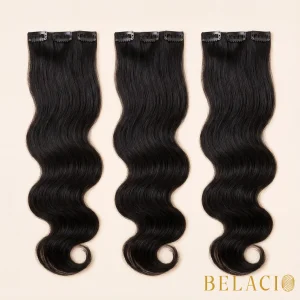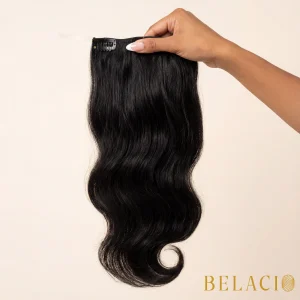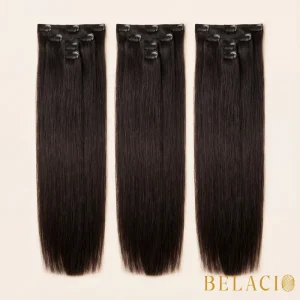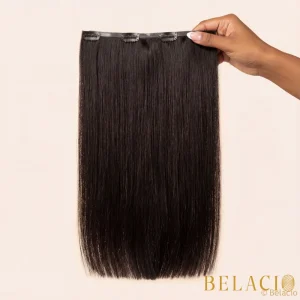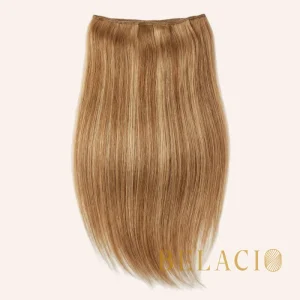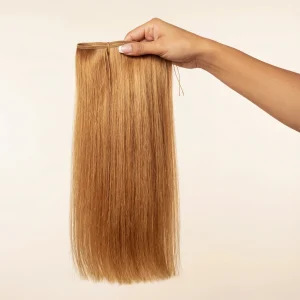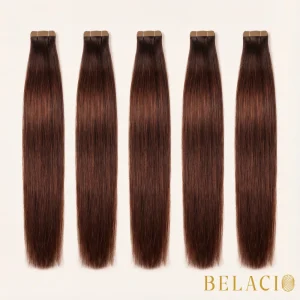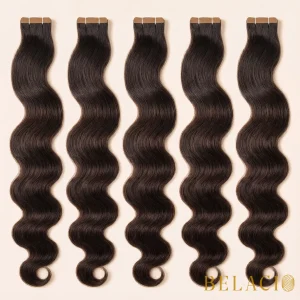
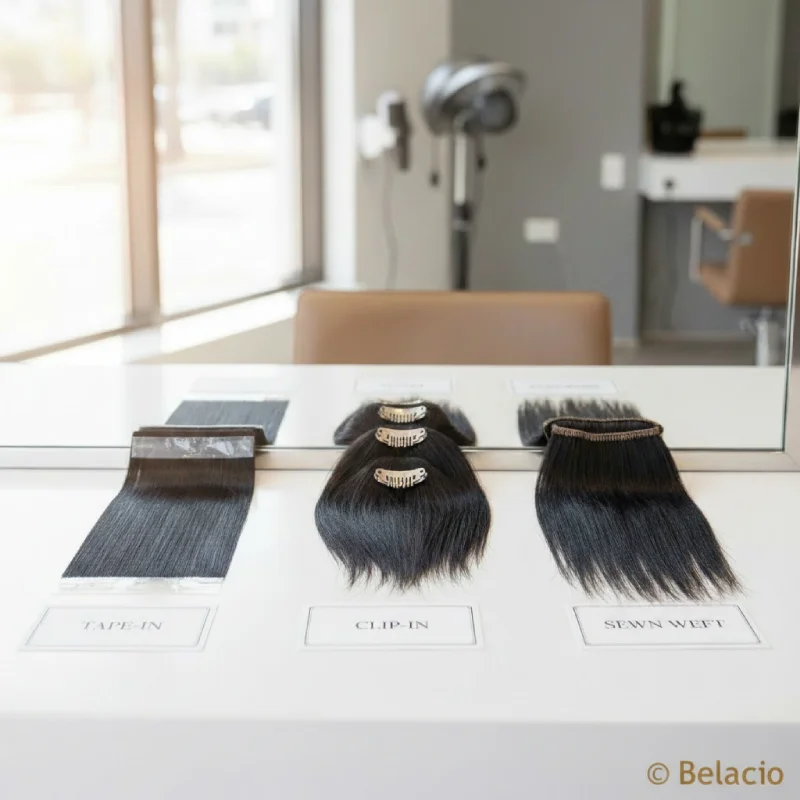
Tape-in extensions use medical-grade adhesive for 6-8 week wear requiring professional application, clip-ins offer temporary 2-3 minute DIY installation for occasional use, while weft extensions provide permanent volume through micro-weaving requiring professional maintenance every 6-10 weeks.
Tape-ins deliver invisible integration through medical-grade adhesive but demand reinstallation every 6-8 weeks and sulfate-free products. Clip-ins install in 2-3 minutes at home, last 6-12 months with occasional use, yet expose visible hardware during updos and windy conditions. Hand-tied wefts provide dramatic volume through micro-weaving that replicates natural root movement, requiring professional maintenance every 6-10 weeks. Understanding proper matching between hair type and extension method prevents the damage that accompanies incompatible products.
Key Takeaways
- Clip-ins offer temporary wear and home installation in minutes, while tape-ins and wefts require professional application taking 1.5-4 hours
- Tape-ins last 6-8 weeks between reinstallations; wefts need maintenance every 6-10 weeks; clip-ins require only daily removal
- Fine hair benefits from lightweight tape-ins or hand-tied wefts; thick hair handles durable K-tip or flat-tip extensions better
- Tape-ins create invisible bonds positioned near the scalp; clip-ins expose visible hardware during movement; hand-tied wefts eliminate tracks
- Clip-ins eliminate maintenance appointments but need daily care; tape-ins and wefts demand professional upkeep and sulfate-free products
Three Main Extension Types
Tape-in extensions feature pre-taped wefts with medical-grade adhesive that attach directly to natural hair sections, creating completely flat, invisible attachment points undetectable when hair is pulled back. They last 4-8 weeks before requiring professional reapplication, with fine to medium hair types particularly benefiting from their lightweight design that minimizes scalp stress.
Clip-in extensions are temporary wefts featuring small pressure-sensitive clips for removable application without adhesive, lasting years with proper care since daily removal minimizes cumulative wear. Weft extensions come in hand-tied configurations with thin, delicate seams or machine-tied with dense, higher gram weight, providing dramatic volume and length changes that last several months with consistent maintenance.
| Extension Type | Attachment Method | Longevity | Best For |
| Tape-In | Medical-grade adhesive strips | 6-8 weeks per application | Fine to medium hair, daily wear |
| Clip-In | Pressure-sensitive clips | 6-12 months occasional use | All hair types, temporary wear |
| Hand-Tied Weft | Sewn onto beaded foundation | 6-10 weeks maintenance cycle | Fine to medium hair, volume needs |
| Machine Weft | Sewn onto cornrow foundation | 6-10 weeks maintenance cycle | Thick hair, maximum volume |
Installation Methods
Clip-ins require zero professional intervention and can be installed at home in 2-3 minutes with integrated pressure-sensitive clips that snap open and closed easily. Tape-ins demand trained stylists for precise horizontal sectioning, heat activation, and optimal placement patterns spanning 1.5-2 hours for complete application. According to research published in the Journal of Clinical and Aesthetic Dermatology, proper installation technique significantly affects scalp health and prevents traction-related damage.
Weft methods necessitate 2-4 hours of professional skill using specialized braiding techniques and curved needles for sewing onto cornrow or beaded foundations. Professional application methods ensure proper weight distribution and avoid damage to natural hair that DIY attempts commonly cause.
Installation Time Comparison
- Clip-In: 2-3 minutes, DIY application at home
- Tape-In: 1.5-2 hours, professional stylist required
- Hand-Tied Weft: 2-3 hours, certified technician needed
- Machine Weft: 3-4 hours, advanced braiding skills essential
Lifespan and Durability
Tape-ins demand reinstallation every 6-8 weeks as adhesive degrades and natural growth creates gaps, though quality human hair survives 9-12 months through reapplication with fresh tape. Clip-ins deliver 6-12 months with occasional use, but daily wear reduces lifespan to 4 months, while synthetic versions barely survive 1-3 months.
Sew-in wefts require maintenance every 6-10 weeks to prevent matting and tension damage, with hand-tied options lasting 6-12 months between complete replacements. Professional installation extends longevity 20-30% compared to DIY applications, while sulfate-free products preserve adhesive integrity and human hair withstands heat styling that destroys synthetic fibers.
| Extension Type | Maintenance Frequency | Hair Lifespan | Daily Care |
| Tape-In | Every 6-8 weeks | 9-12 months with retaping | Sulfate-free washing 2-3x weekly |
| Clip-In | Remove nightly | 6-12 months occasional use | Wash after 15-20 wears |
| Weft (Hand-Tied) | Every 6-10 weeks | 6-12 months before replacement | Weekly washing, daily brushing |
| Weft (Machine) | Every 6-10 weeks | 6-12 months before replacement | Weekly washing, soft-bristle brushing |
Natural Look and Integration
Tape-in extensions create virtually invisible installation through medical-grade adhesive strips positioned 1/8 inch from scalp, remaining undetectable during daily activities including swimming and exercise. Hand-tied wefts eliminate track visibility through micro-weaving that distributes weight evenly, replicating natural root movement without obvious attachment points.
Clip-ins expose visible hardware during windy conditions, pulled-back styles, and updos when crown base plates become obvious to observers. Premium 100% cuticle-intact virgin Remy human hair flows uniformly without the frizz and shine discrepancies that plague low-quality wefts with misaligned cuticles, requiring proper color matching that analyzes undertones and lighting variations beyond surface appearance.
Visibility Factors
- Tape-ins positioned 1/8 inch from the scalp remain invisible in most hairstyles.
- Hand-tied wefts eliminate tracks through the micro-weaving technique
- Machine wefts blend beautifully with thick hair, providing natural coverage
- Clip-in hardware becomes visible during updos and windy conditions
- Strategic placement avoids hairline proximity, preventing obvious grid patterns
Matching Extensions to Hair Type
Fine hair requires tape-ins with medical-grade adhesive that distributes tension across 2-3 inch sections, preventing breakage that point-attachment methods cause. Hand-tied wefts work through even weight distribution across multiple attachment points, minimizing stress on delicate strands. Research from dermatological studies confirms that proper extension matching prevents traction alopecia.
Thick hair demands K-tip extensions with keratin bonds lasting 3-6 months, withstanding density that crushes weaker adhesives, while flat-tip bonds reduce bulk by 40% compared to traditional round attachments. Curly textures need Remy human hair matched precisely to natural curl patterns to prevent obvious demarcation lines.
Hair Type Recommendations
- Fine Hair: Tape-ins or hand-tied wefts for even tension distribution
- Medium Hair: All extension types work with proper application technique
- Thick Hair: K-tip keratin bonds or machine wefts for maximum durability
- Curly Textures: Remy human hair matching the exact curl pattern
- Damaged Hair: Halo extensions with zero direct attachment or gentle tape-ins
- Chemically Treated: Hand-tied wefts minimize additional stress
Daily Care and Maintenance
Tape-ins demand obsessive brushing protocols 2-3 times daily using loop brushes that won’t stress bonds, requiring sulfate-free washing 2-3 times weekly after a mandatory 48-hour waiting period post-installation. Maintenance appointments every 6-8 weeks include complete tape replacement to maintain adhesive integrity and proper positioning.
Clip-ins eliminate professional maintenance through nightly removal, washing after 15-20 wears, and zero required salon appointments. Weft extensions fall between these extremes, demanding weekly washing, daily brushing with soft-bristle tools, and adjustment appointments every 6-10 weeks for repositioning as natural hair grows.
Care Requirements
- All types prohibit sleeping with wet hair to prevent matting
- Silk pillowcases reduce friction and to avoid tangling overnight
- Heat styling below 360°F with protectants prevents damage
- Sulfate-free, paraben-free products preserve extension integrity
- Daily brushing prevents tangling and extends wearability
- Professional adjustments maintain proper positioning and tension
Lifestyle Considerations
Active professionals requiring continuous wear should choose tape-ins with a 45-60 minute installation, providing 6-8 weeks of maintenance-free volume, as the medical-grade adhesive withstands daily washing without replacement. Weekend warriors and occasional users need clip-ins that install in minutes and remove easily, preventing unnecessary daily strain on natural hair.
Athletic lifestyles demand specific consideration as tape-ins maintain hold through sweat and frequent washing, while clip-ins fail under intense physical conditions. Weft extensions serve clients committed to 2-3 month wear cycles, requiring professional installation with advanced braiding skills; hand-tied variations minimize tension-related damage.
Lifestyle Matching Guide
- Daily Wear: Tape-ins or wefts for continuous 6-8 week wear periods
- Occasional Use: Clip-ins for special events and weekend styling
- Active/Athletic: Tape-ins withstand sweat and frequent washing
- Low Maintenance: Clip-ins eliminate professional appointments
- Maximum Volume: Machine wefts provide a dramatic transformation
- Budget Conscious: Clip-ins offer the lowest long-term investment
Frequently Asked Questions
Can I swim or exercise with tape-in, clip-in, or weft extensions?
Swimming and exercise are possible with all three extension types, though limitations vary significantly. Weft extensions offer superior water resistance for regular swimming; tape-ins require protective measures like braiding and immediate fresh-water rinsing; and clip-ins must be removed before water immersion to prevent detachment and permanent damage to clips and hair.
Will hair extensions damage my natural hair or cause hair loss?
Extensions don’t inherently damage hair when professionally installed with proper weight distribution and maintenance schedules. Damage typically occurs from excessive tension, improper application technique, extended wear beyond manufacturer recommendations, or harsh removal methods rather than the extensions themselves. Proper care prevents traction alopecia and breakage.
Can I color or heat style different types of hair extensions?
Human hair extensions can withstand heat styling across all types up to 360°F with a proper protectant, though results vary by quality grade. Remy human hair handles heat tools best with minimal damage. Coloring potential differs significantly—virgin hair colors better than pre-processed extensions, and tape-in adhesives require careful heat application to maintain bonds during styling.
How do I sleep comfortably with each type of extension installed?
Clip-ins must be removed nightly to prevent tension damage and allow natural hair rest. Tape-ins and wefts require completely dry hair and loose braiding before sleep to prevent tangling and matting. All permanent extensions benefit from silk pillowcases to reduce friction by 43%, prevent tangling, and maintain bond integrity overnight.
What happens if I need to remove extensions during an emergency?
Clip-ins detach instantly by opening pressure clips in under 30 seconds. Tape-ins require oil-based remover application and gentle separation, taking 10-15 minutes for complete removal. Sewn wefts need careful thread cutting along tracks with specialized scissors. Emergency removal without proper technique risks significant hair damage and incomplete adhesive dissolution requiring professional intervention.
Conclusion
Choosing between tape-in, clip-in, and weft extensions demands honest assessment of lifestyle demands, maintenance capacity, and hair type compatibility rather than aspirational fantasies. Tape-ins provide invisible integration for daily wear requiring professional maintenance every 6-8 weeks, clip-ins offer flexible temporary styling with zero professional appointments, and wefts deliver dramatic volume through micro-weaving requiring systematic care protocols. Fine hair benefits from lightweight tape-ins or hand-tied wefts distributing tension evenly, while thick hair handles durable K-tip bonds or machine wefts. Belacio Hair provides premium extension options across all three categories, engineered specifically for tropical climates in Puerto Rico, Caribbean, and Colombian markets, with professional consultation ensuring proper method selection, installation excellence, and maintenance education that protects your natural hair investment while delivering superior results.