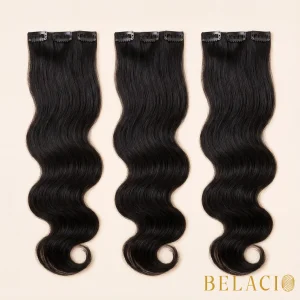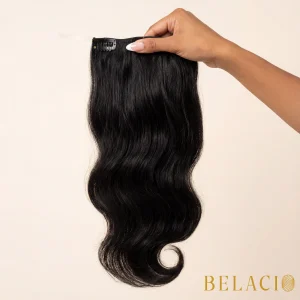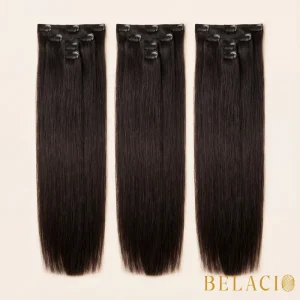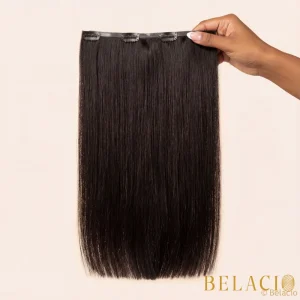
Clip-in hair extension care involves systematic maintenance protocols including sulfate-free washing every 7-10 wears, heat protection below 350°F, proper detangling from ends upward, and breathable storage to preserve fiber integrity and extend lifespan beyond 12 months.
Premium clip-in extensions require professional-grade maintenance to prevent rapid deterioration. Sulfate-free formulas protect investment-grade hair during washing, while extension-specific detangling brushes prevent irreversible damage through proper end-to-root technique. Heat protection requires professional-grade polymers that withstand high temperatures, applied 60 seconds before styling at manufacturer-specified settings, never exceeding 350°F for Remy hair.
Key Takeaways
- Wash extensions only when product builds up, using sulfate-free shampoo on hair lengths while avoiding clips and wefts.
- Detangle from ends upward in two-inch sections using extension-specific brushes, never starting at roots or brushing when bone-dry
- Apply heat protectant to mid-lengths and ends, wait 60 seconds before styling, and limit temperatures to 350°F maximum.
- Store extensions in breathable, compartmentalized containers in cool, dry locations away from humidity and direct sunlight
- Keep styling tools six inches from attachment points and limit heat exposure to 8-10 seconds per section
Proper Cleansing and Washing Techniques
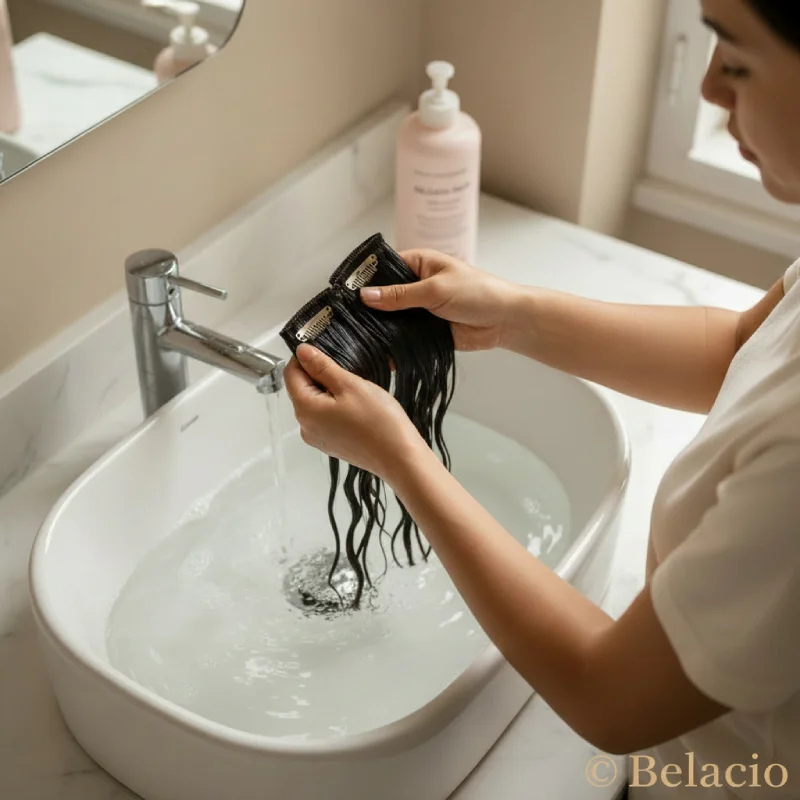
Improper washing destroys premium hair faster than any other factor. The solution requires precision: wash only when product build-up appears, using sulfate-free formulas specifically engineered for human hair extensions.
Washing Protocol:
- Submerge hair lengths exclusively, never soak clips or wefts, which loosen attachments
- Apply 2-3 pumps of sulfate-free shampoo using gentle downward motions along hair shafts
- Target conditioning treatments to mid-lengths and ends only, avoiding tracks completely
- Leave conditioner for 3-10 minutes, then rinse with cold water to seal cuticles
- Detangle extensions thoroughly before washing begins to prevent stress during cleaning
Drying Technique:
- Squeeze gently and blot with microfiber towels, never rubbing vigorously
- Air dry on specialized hangers in well-ventilated areas
- Never brush wet extensions to prevent cuticle damage and shedding
Mastering Brushing and Detangling Methods
Wrong brushing patterns create irreversible damage to expensive extensions. The solution demands systematic detangling protocols that preserve fiber integrity and extend lifespan significantly.
Proper Detangling Steps:
- Start at the ends, never the roots, working upward in two-inch increments
- Use extension-specific detangling brushes with flexible bristles
- Hold weft bases firmly while brushing to prevent clip tension and shaft stress
- Detangle before washing, after removal, and during slight dampness
- Never brush bone-dry or waterlogged extensions
- Apply leave-in conditioner for slip and easier manipulation
- Separate individual wefts for thorough, gentle treatment
Severe Mat Treatment:
- Soak extensions in deep conditioner for 15-20 minutes
- Use fingers first to gently separate tangles
- Follow with wide-tooth comb for moderate detangling
- Finish with detangling brush for final smoothing
- Store extensions on dedicated hangers between uses to prevent tangling
Heat Styling Guidelines and Protection Strategies
Reckless heat application destroys extensions within weeks. The industry has failed to educate consumers about three non-negotiable protection standards that distinguish professionals from amateurs who frequently replace damaged hair.
Essential Heat Protectant Application
Heat styling without proper protection can permanently damage clip-in extensions. Premium extensions demand durable formulas with polymers that withstand high temperatures without degrading.
Application Protocol:
- Spray mid-lengths to ends, avoiding roots and clip areas
- Wait 60 seconds minimum for product activation before heat contact
- Comb through with wide teeth for uniform distribution across all fibers
- Reapply between styling passes as protection degrades with repeated exposure
- Choose formulas with argan oil, vitamin E, and heat-resistant polymers
Optimal Temperature Settings
When styling irons exceed 350°F, you’re damaging extensions beyond repair. Human Remy hair tolerates maximum 180°C (350°F) while non-Remy requires 150-170°C (300-340°F).
Temperature Guidelines by Hair Type:
- Start at 200°F and increase only when necessary for styling
- Limit each section to 8-10 seconds maximum exposure
- Fine extensions demand 150°C-170°C ranges for safety
- Medium textures handle 170°C-190°C safely with protectant
- Thick hair tolerates 180°C-210°C with extreme caution
- Keep tools 6 inches from attachment points to protect bonds
- Work small sections methodically for even heat distribution
Post-Styling Moisture Restoration
Extensions survived the styling process, but real recovery work begins immediately. Post-heat recovery prevents extensions from drying out within months through cuticle strengthening protocols.
Moisture Restoration Steps:
- Apply leave-in conditioners formulated specifically for extensions after heat exposure
- Use weekly deep hydration masks for mandatory extension longevity
- Never apply oil-based products near clips to prevent slippage
- Detangle using wide-tooth brushes exclusively with gentle strokes
- Store extensions in cool, dry environments away from humidity
Extension Care Schedule
| Maintenance Task | Frequency | Critical Action | Purpose |
| Brushing | Daily | Wide-tooth comb, ends upward | Prevent tangles and matting |
| Washing | Every 7-10 wears | Sulfate-free shampoo only | Remove buildup without stripping oils |
| Moisture Assessment | Weekly | Argan oil application | Maintain fiber flexibility and shine |
| Deep Conditioning | Bi-weekly | Intensive hydration mask | Restore moisture and strength |
| Storage Check | After each use | Completely dry, tangles removed | Prevent mildew and damage |
| Clip Inspection | Monthly | Check for wear and tear | Ensure secure attachment |
Optimal Storage Solutions
Most extension owners ruin their investment within months by ignoring three critical storage factors. Proper container selection, climate control, and pre-storage preparation determine whether extensions maintain salon-fresh appearance or deteriorate rapidly.
Proper Container Selection
Selecting the wrong storage container destroys clip-in hair extensions faster than any styling tool. The solution starts with breathable materials that prevent moisture death traps while protecting delicate fibers.
Container Requirements:
- Breathable cotton blends or soft mesh materials preventing suffocation
- Transparent designs enabling immediate identification without handling
- Compartmentalized interiors separating each weft to prevent tangling
- Reinforced secure closures maintaining protection during storage
- Structured edges maintaining flat positioning to eliminate deformation
Climate and Environment Control
Three environmental enemies silently destroy clip-in hair extensions in storage: uncontrolled humidity, temperature extremes, and persistent UV exposure. Premium extensions demand specific conditions for longevity.
Environmental Requirements:
- Maintain temperatures between 60°F and 75°F consistently
- Keep humidity levels steady at 40-60% to prevent mold and brittleness
- Use climate-controlled rooms, never attics or bathrooms with fluctuations
- Store in opaque containers blocking UV radiation that fades color
- Include silica gel sachets for humidity control without suffocating fibers
- Ensure proper air circulation with breathable silk or satin storage
Pre-Storage Preparation
Before extensions touch any storage container, they demand painstaking preparation. Proper conditioning begins with sulfate-free cleansing that strips accumulated oils without destroying delicate fibers.
Preparation Checklist:
- Air dry completely on flat surfaces as moisture breeds mold
- Detangle methodically using wide-tooth combs, working ends to roots
- Apply minimal leave-in conditioner for moisture balance without buildup
- Close all clips to prevent mechanical damage and fabric snagging
- Secure wefts with loose braids using silk materials eliminating friction
- Roll extensions into gentle waves preserving natural fall and styling memory
Storage Solutions Comparison
| Container Feature | Inferior Products | Premium Solution | Impact on Lifespan |
| Material | Plastic suffocation bags | Breathable cotton blend | +40% moisture control |
| Closure System | Weak zippers | Reinforced secure flaps | +25% protection |
| Interior Design | Single compartment chaos | Multiple separated sections | +60% tangle prevention |
| Size Options | One-size-fits-none | Customized length-specific | +30% preservation |
| UV Protection | Clear exposure | Opaque blocking material | +50% color retention |
Common Damages to Avoid
Clip-in extensions promise effortless beauty, yet most users unknowingly compromise their natural hair through improper practices. Understanding critical damage factors prevents permanent hair loss and maintains scalp health.
Major Damage Factors:
- Traction alopecia from excessive tension and improper clip placement near sensitive follicles
- Severe dryness when extensions block natural oil distribution to hair roots
- Irreversible breakage during forceful removal without professional guidance techniques
- Scalp irritation requiring immediate removal and professional consultation
- Uneven tension patterns from low-quality clips with inadequate gripping mechanisms
Prevention Strategies:
- Rotate wear patterns, never wearing extensions consecutively without rest periods
- Distribute weight evenly across multiple attachment points for balanced tension
- Remove extensions before sleeping and water activities to prevent matting
- Use premium materials with gentle yet secure clip mechanisms
Recommended Products for Extension Care
Most extension owners unknowingly destroy their investment through product misuse. Essential products actually protect your investment when chosen carefully and applied correctly.
Essential Care Products:
- Sulfate-free shampoos and conditioners enriched with argan or jojoba oil
- Heat protectant sprays designed specifically for extensions when hair is completely dry
- Leave-in treatments and hydrating sprays applied mid-length to ends
- Weekly intensive conditioning masks restoring resilience beyond standard products
- Wide-tooth combs and extension-specific detangling brushes with flexible bristles
Products to Avoid:
- Alcohol-based formulas degrading fibers rapidly through excessive drying
- Sulfate shampoos stripping protective oils and accelerating deterioration
- Heavy silicone products causing buildup near clips and attachment points
- Oil-based treatments applied directly to wefts causing slippage issues
Extending Extension Lifespan
Premium extensions fail prematurely because owners ignore fundamental maintenance protocols. Most damage occurs during transportation, storage, and improper daily handling rather than actual wear time.
Longevity Factors:
- Washing frequency every 10-20 wears prevents fiber degradation significantly
- Sulfate-free formulas preserve cuticle integrity and natural shine
- Limited heat styling prevents molecular-level bond destruction
- Daily wear reduces lifespan to 3-6 months versus occasional use extending to 12-18 months
- Regular clip inspection catches wear early before complete failure
- Premium Remy human hair resists damage better than inferior alternatives
Transportation Protection:
- Use moisture-barrier packaging preventing compression damage during transit
- Store in rigid protective cases maintaining shape and preventing tangles
- Keep extensions in cool, dry locations using compartmentalized containers
Frequently Asked Questions
Can I color-match clip-in extensions to my natural hair at home?
Yes, home color matching is possible using swatches tested in natural lighting conditions at different times of day. Compare extensions against the mid-lengths and ends of your natural hair rather than roots for best results. However, hair with multiple undertones, highlights, or dimensional coloring may require custom color blends or professional salon consultation to achieve seamless integration that perfectly mimics natural hair’s complexity and variation across different sections.
How do I prevent my natural hair from breaking under clips?
Preventing breakage requires minimizing stress on roots through proper clip placement techniques and gentle handling throughout wear. Distribute weight evenly across multiple attachment points rather than concentrating extensions in few areas. Avoid overnight wear completely as prolonged tension damages follicles. Use supportive brushing techniques that don’t pull on clip areas, and maintain well-moisturized, strengthened natural hair through regular deep conditioning treatments and protective care routines.
Are clip-in extensions suitable for fine or thinning hair types?
Clip-in extensions suit fine or thinning hair, offering lightweight, seamless designs with gentle silicone-backed clips that grip without excessive tension. They integrate without chemicals or permanent attachment methods that could further damage delicate strands. Select extensions with smaller wefts for better weight distribution, and position clips strategically where you have enough natural hair density to support them comfortably. Avoid wearing daily to give fine hair regular rest periods for recovery.
Can I wear clip-ins during exercise or sports activities?
Clip-ins can be worn during moderate exercise when secured properly to prevent slippage and damage. Tie hair in secure ponytails or buns, positioning clips away from high-tension areas. Use sweatbands to minimize moisture exposure, which can weaken bonds and cause frizzing. However, removing extensions before intense workouts, swimming, or high-impact sports preserves their quality and longevity significantly while protecting your natural hair from excessive stress during physical activity.
How do I travel with clip-in extensions without damaging them?
Travelers protect clip-in extensions by storing them in breathable, satin-lined pouches inside padded protective cases within carry-on luggage for temperature control. Ensure extensions are completely dry and detangled before packing to prevent mildew and matting during transit. Include silica gel packets for moisture absorption and pack in structured containers to prevent crushing. Avoid checking luggage extensions, as temperature extremes and rough handling can cause irreversible damage to delicate fibers and attachment mechanisms.
Conclusion
Premium clip-in extensions demand uncompromising care protocols to maintain investment-grade quality for years. Superior maintenance through proper washing, strategic heat protection, and optimal storage prevents six-month deterioration and ensures multi-year performance. The difference lies entirely in the disciplined execution of proven systems rather than luck or hoping for the best results. Extension longevity requires a systematic methodology applied consistently throughout the entire ownership period. Implement these professional-grade strategies to protect your investment and maintain salon-fresh quality indefinitely. Discover Belacio Hair’s premium Vietnamese clip-in extensions, explicitly engineered for tropical climates and designed to withstand rigorous maintenance protocols when owners follow proven care systems. Transform your extension care routine today and experience lasting quality that rewards proper attention with years of flawless performance.